Corymbia ptychocarpa
(F. Muell) K.D. Hill & L.A.S. Johnson
Swamp Bloodwood, Spring Bloodwood
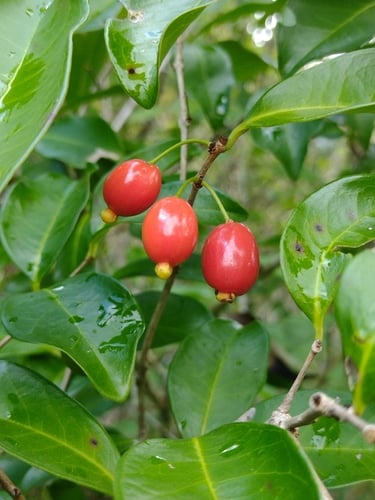
iNaturalist· cc-by-nc
(c) lyka101, some rights reserved (CC BY-NC)
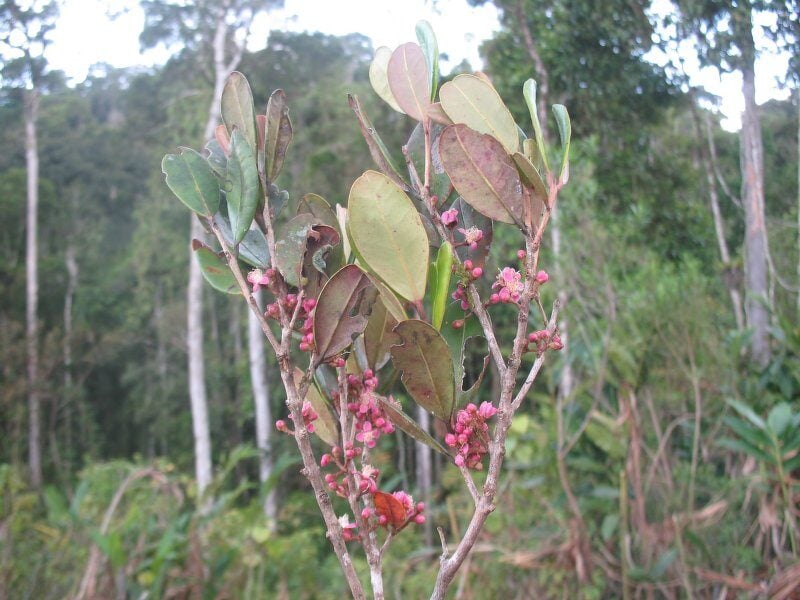
iNaturalist· cc-by-nc
(c) Yvette, some rights reserved (CC BY-NC)
iNaturalist· cc-by-nc
(c) Yvette, some rights reserved (CC BY-NC)
Summary
Source: WikipediaCorymbia ptychocarpa, commonly known as swamp bloodwood or spring bloodwood, is a species of tree that is endemic to northwestern Australia. It has rough bark on the trunk and branches, broadly lance-shaped adult leaves, flower buds in groups of seven, creamy yellow, pink or red flowers, and barrel-shaped, ribbed fruit.
Description
A medium sized tree. It grows to 8-15 m tall. It spreads 3-10 m wide. The bark is rough. The young branches droop. The leaves are large and leathery. The blade is 10-30 cm long by 4-10 cm wide. The midrib is prominent. The young leaves are much larger. The flowers are large and white or pink. They are in groups of 3-7 on short thick stalks. The occur at the ends of branches. The fruit is a thick barrel-shaped woody capsule. It is 3.5-4 cm long by 2.5-3 cm wide. Sometimes the fruit has ribs.
Edible Uses
The seeds are eaten.
Traditional Uses
The seeds are eaten.
This uses section is brief — help expand it
Distribution
A tropical plant. It is native to NE Australia. It grows in warm temperate regions but can grow in the tropics and subtropics. It needs well drained soils. It is associated with permanent freshwater springs. It can grow in full sun or light shade. It suits hardiness zones 11-12. Mt Cootha Botanical Gardens. In Townsville palmetum.
Where It Grows
Australia*,
Cultivation
It can be grown from seed.
Notes
There are at least 500 Eucalyptus species mostly originally in Australia.
Synonyms
References (15)
- Barwick, M., 2004, Tropical and Subtropical Trees. A Worldwide Encyclopedic Guide. Thames and Hudson p 172
- Bodkin, F., 1991, Encyclopedia Botanica. Cornstalk publishing, p 444
- Brock, J., 1993, Native Plants of Northern Australia, Reed. p 179
- Cherikoff V. & Isaacs, J., The Bush Food Handbook. How to gather, grow, process and cook Australian Wild Foods. Ti Tree Press, Australia p 200
- Cundall, P., (ed.), 2004, Gardening Australia: flora: the gardener's bible. ABC Books. p 423
Show all 15 references Hide references
- Elliot, W.R., & Jones, D.L., 1992, Encyclopedia of Australian Plants suitable for cultivation. Vol 4. Lothian. p 187
- Hearne, D.A., & Rance, S.J., 1975, Trees for Darwin and Northern Australia. AGPS, Canberra p 63, Pl 17
- Hibbert, M., 2002, The Aussie Plant Finder 2002, Florilegium. p 98
- Lazarides, M. & Hince, B., 1993, Handbook of Economic Plants of Australia, CSIRO. p 107
- Molyneux, B. and Forrester, S., 1997, The Austraflora A-Z of Australian Plants. Reed. p 91
- Paczkowska, G . & Chapman, A.R., 2000, The Western Australian Flora. A Descriptive Catalogue. Western Australian Herbarium. p 359
- Telopea 6:250. 1995
- Tiwi Plants and Animals. 2001, Aboriginal flora and fauna knowledge from Bathurst and Melville Islands, northern Australia. Northern Territory Botanical Bulletin; No. 24 p 51
- Townsend, K., 1994, Across the Top. Gardening with Australian Plants in the tropics. Society for Growing Australian Plants, Townsville Branch Inc. p 201
- Wheeler, J.R.(ed.), 1992, Flora of the Kimberley Region. CALM, Western Australian Herbarium, p 524