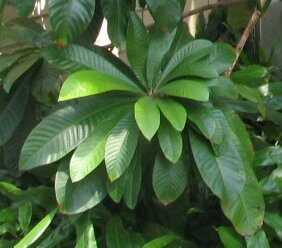
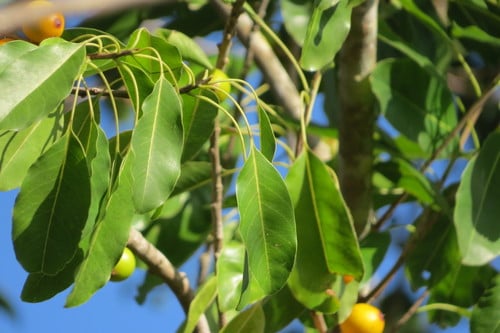
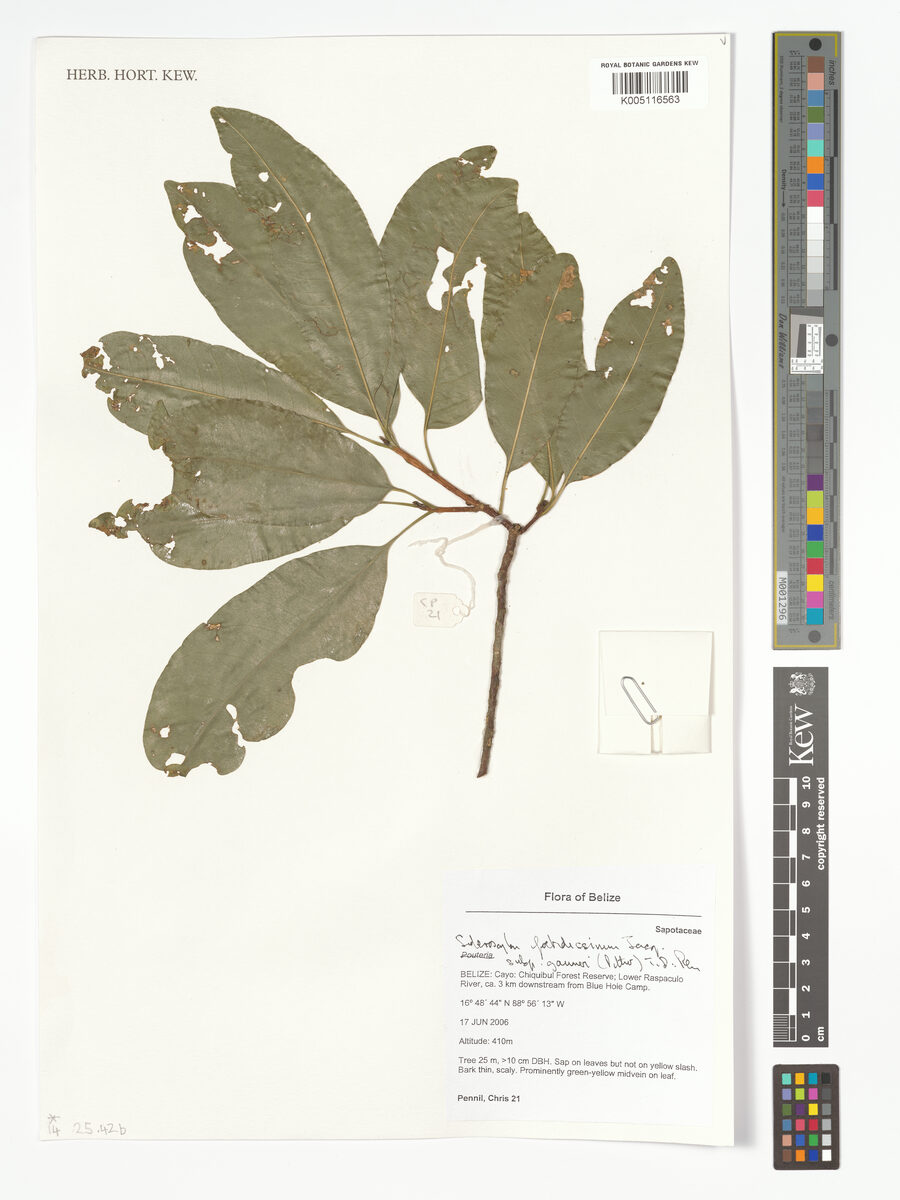
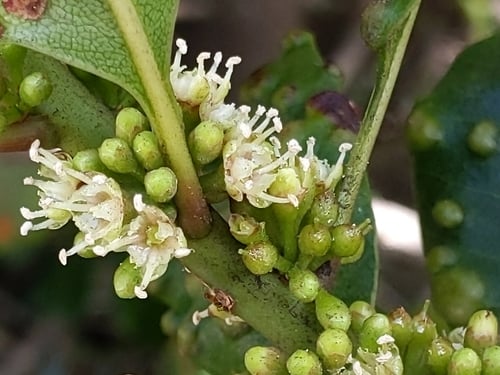
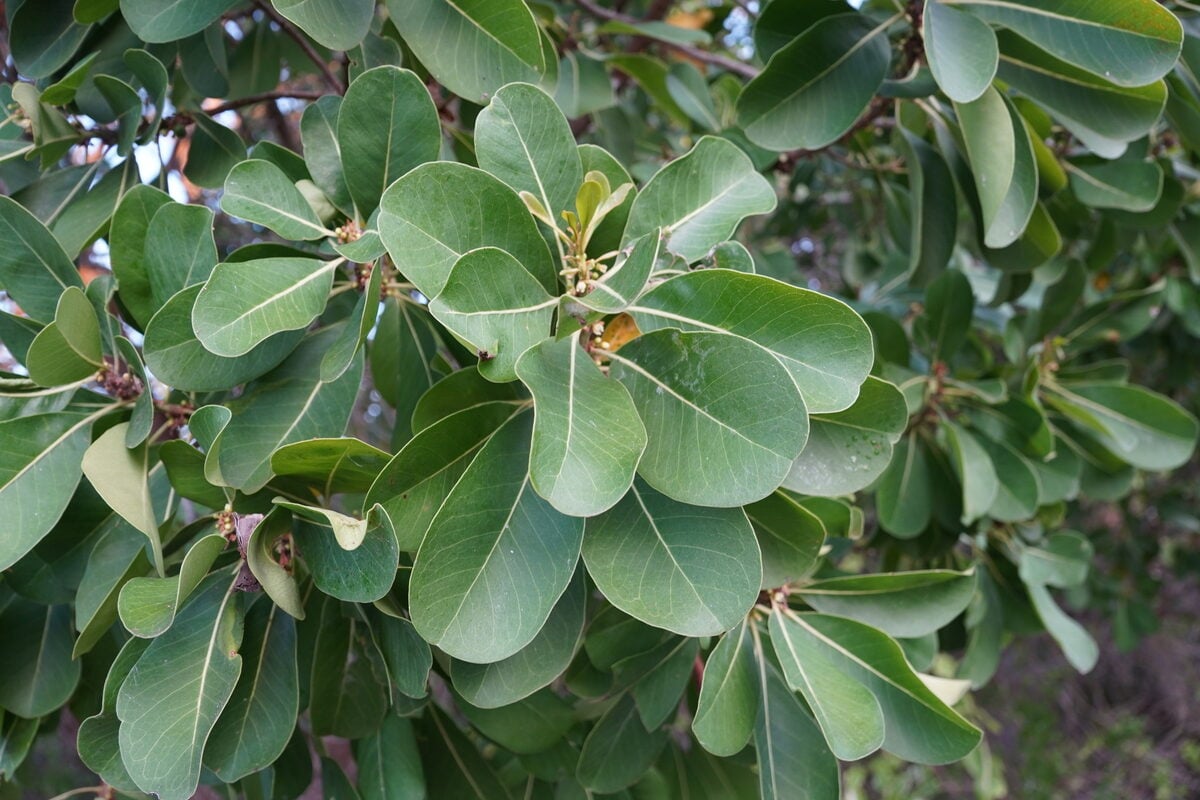
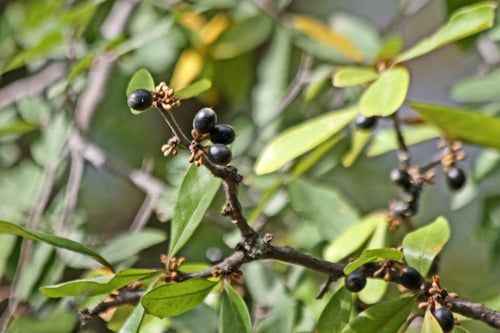
Payena leeri - (Teijsm. & Binn.) Kurz
(Teijsm. & Binn.) Kurz
Balam suntei tree, Getah sundek
gbif· cc-by-nc
Hani Ristiawan
gbif· cc-by-nc
Hani Ristiawan
gbif· cc-by-nc
Hani Ristiawan
Description
Payena leeri is an evergreen Tree growing to 30 m (98ft) by 25 m (82ft) at a medium rate. See above for USDA hardiness. It is hardy to UK zone 10. Suitable for: light (sandy), medium (loamy) and heavy (clay) soils and prefers well-drained soil. Suitable pH: mildly acid, neutral and basic (mildly alkaline) soils. It cannot grow in the shade. It prefers moist soil.
Edible Uses
Fruit - raw. A sweet flavour.
Distribution
Southeast Asia - Myanmar, Malaysia, Indonesia, Philippines.
Where It Grows
TROPICAL ASIA: Myanmar, Indonesia (Kalimantan, Sumatera), Malaysia (Malaya), Philippines (Autonomous Region in Muslim Mindanao, Mimaropa (Region IV-B), Mindanao)
Cultivation
Industrial Crop: Hydrocarbon Management: Standard Regional CropA plant of the lowland moist tropics. In a plantation in West Java trees of P. leerii flower and fruit already at an age of about 7 years. Although the tree can be found flowering and fruiting year-round, major flowering time is April-August in Malesia. The yield of gutta-percha of P. leerii is generally low: only 60-270 g of gutta-percha could be obtained from felled trees of 17-26 cm in diameter. Tapping trials gave only 3-22 g of gutta-percha per tree.
Propagation
P. leerii can be propagated by seed; propagation by cuttings is possible but difficult. Seed loses its viability in 2(-8) weeks and should be sown in deep nursery beds, as the seedlings form a well-developed taproot. Young plants need shade and plenty of water.
Other Uses
A gutta-percha of good quality is obtained from the plant. Gutta-percha is a natural latex obtained from the sap of the tree. Allowing this fluid to evaporate and coagulate in the sun produces a hard and durable latex which can be made flexible again with hot water, but which does not become brittle. Prior to the advent of synthetic materials, gutta-percha had a wide range of uses - most particularly as an insulating material for electricity wiring and for underwater telegraph wires, a purpose for which it is very well suited since it is bio-inert and so is not attacked by marine plants or animals. Gutta-percha can be moulded into any shape and has been used to make items such as ornate furniture, pistol grips, acid-resistant receptacles and ‘mourning’ jewellery, where its dark colour was an advantage. It has been widely used as the core of golf balls and is still used in modern dentistry where its bio-inertness makes it ideal as a temporary filling for teeth and as a filling material inside tooth fillings. The wood is used for house building.
Synonyms
Also Known As
Balam chabe, Balam pipi, Balam sonte, Balam sundek, Beringin, Getah sundek, Jiput beringi, Kolan, Kulan, Mergatahan, Nyatu, Pohon balam beringin, Pohon balam suntei, Semaram, Surin, Tembaga