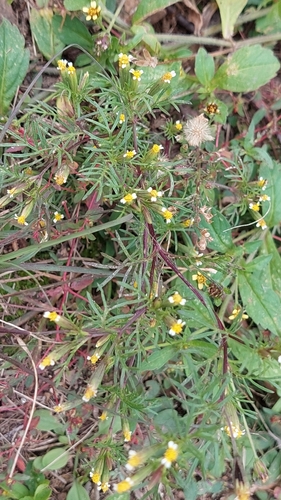
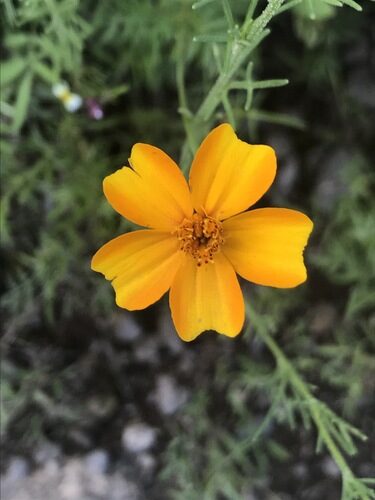
Onopordum acanthium
L.
Scotch Thistle, Scotch cottonthistle
iNaturalist· cc-by-nc
(c) James Bailey, some rights reserved (CC BY-NC), uploaded by James Bailey
iNaturalist· cc-by-nc
(c) Lane, some rights reserved (CC BY-NC), uploaded by Lane
iNaturalist· cc-by-nc
(c) redhat, some rights reserved (CC BY-NC), uploaded by redhat
Description
Onopordum acanthium is a BIENNIAL growing to 1.5 m (5ft) by 1 m (3ft 3in) at a slow rate. See above for USDA hardiness. It is hardy to UK zone 6. It is in flower from July to September, and the seeds ripen from August to October. The species is hermaphrodite (has both male and female organs) and is pollinated by Bees. The plant is self-fertile. It is noted for attracting wildlife. Suitable for: light (sandy), medium (loamy) and heavy (clay) soils, prefers well-drained soil and can grow in nutritionally poor soil. Suitable pH: mildly acid, neutral and basic (mildly alkaline) soils. It can grow in semi-shade (light woodland) or no shade. It prefers dry or moist soil.
Edible Uses
Oil. Flower buds - cooked. A globe artichoke substitute, though they are much smaller and very fiddly to use. Stems - cooked. Used as a vegetable, they are a cardoon (Cynara cardunculus) substitute. The stems are cooked in water like asparagus or rhubarb. They are best if the rind is removed. Leaves and young plants - cooked. They are harvested before the flowers develop and the prickles must be removed prior to cooking. The petals are an adulterant for saffron, used as a yellow food colouring and flavouring. A good quality edible oil is obtained from the seed. The seed contains about 25% oil.
Medicinal Uses
Astringent Cancer Cardiotonic. The flowering plant is cardiotonic. It is used in some proprietary heart medicines. The juice of the plant has been used with good effect in the treatment of cancers and ulcers. A decoction of the root is astringent. It is used to diminish discharges from mucous membranes.
Distribution
Europe, possibly including Britain, from Scandanavia south and east to Spain and W. Asia.
Where It Grows
TEMPERATE ASIA: Afghanistan, Iran, Iraq (north), Turkey, Russian Federation-Ciscaucasia (Ciscaucasia), Armenia, Azerbaijan, Georgia, Russian Federation (Dagestan), Kazakhstan, Kyrgyzstan, Tajikistan, Turkmenistan, Uzbekistan, China (Xinjiang Uygur Zizhiqu (north)) TROPICAL ASIA: India (Jammu and Kashmir), Pakistan (north) EUROPE: Austria, Switzerland, Czech Republic, Germany, Hungary, Netherlands, Slovakia, Belarus, Moldova, Ukraine (incl. Krym), Albania, Bulgaria, Bosnia and Herzegovina, Greece, Croatia, Italy, North Macedonia, Montenegro, Romania, Serbia, Slovenia, Spain, France, Portugal AFRICA: Algeria
Cultivation
An easily grown plant, it succeeds in almost any ordinary garden soil. Requires a well-drained soil, preferably in full sun though it tolerates light shade. Prefers a slightly alkaline soil. Grows very well in poor soils, succeeding in hot dry situations and tolerating drought when it is established. A slow-growing plant. Hardy to about -15°c. A very ornamental plant, the flowers are very attractive to bees. Plants are prone to slug and snail damage. Often self-sows, sometimes to the point of nuisance, though the seedlings can easily be hoed out and can also be transplanted if they are moved whilst still small.
Propagation
Seed - sow spring in situ. The seed can also be sown in situ in autumn. If the seed is in short supply then it can be sown in a pot in the greenhouse in the spring. Prick out the seedlings into individual pots as soon as they are large enough to handle and plant them out into their permanent positions in early summer.
Other Uses
Oil Oil Stuffing. The stem hairs are sometimes collected and used to stuff pillows. An oil obtained from the seed is used as a fuel for lamps.