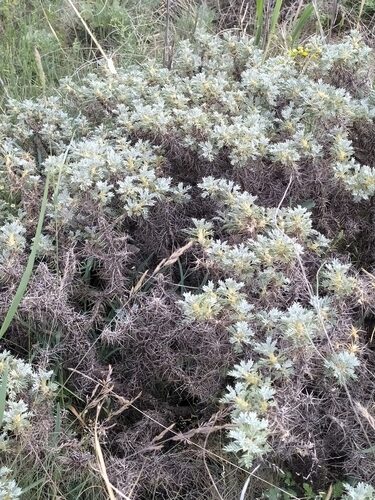
Lathyrus nervosus
Lam.
Lord Anson's Pea
iNaturalist· cc-by-nc
(c) Mona Phipps, some rights reserved (CC BY-NC), uploaded by Mona Phipps
iNaturalist· cc-by-nc
(c) Mona Phipps, some rights reserved (CC BY-NC), uploaded by Mona Phipps
Description
Lathyrus nervosus is a PERENNIAL CLIMBER growing to 0.5 m (1ft 8in). See above for USDA hardiness. It is hardy to UK zone 9. It is in flower from June to September, and the seeds ripen from August to October. The species is hermaphrodite (has both male and female organs) and is pollinated by Insects. It can fix Nitrogen. Suitable for: light (sandy), medium (loamy) and heavy (clay) soils. Suitable pH: mildly acid, neutral and basic (mildly alkaline) soils. It cannot grow in the shade. It prefers moist soil. The plant can tolerates strong winds but not maritime exposure.
Edible Uses
Seed - cooked. Some caution is advised, see the notes above on toxicity.
Known Hazards
Although no records of toxicity have been found for this plant, the seed of some species in this genus contain a toxic amino acid that can cause a severe disease of the nervous system known as 'lathyrism' if they are eaten in large amounts (although small quantities are said to be nutritious). Great caution is advised.
Distribution
S. America - Chile, Argentina, Uruguay, Brazil.
Where It Grows
SOUTHERN AMERICA: Brazil (south), Argentina, Chile, Uruguay
Cultivation
An easily grown plant, succeeding in any moderately good garden soil but preferring a position in full sun. Prefers a rich soil in a cool position in sun or semi-shade with plenty of moisture in the growing season. Plants are hardy to about -10°c. A very ornamental plant it is a short-lived perennial. Plants scramble through other plants, supporting themselves by means of tendrils. There has been much confusion in the naming of this plant, two separate names (L. nervosus and L. magellanicus) having been given to what was believed to be different plants. According to one report, L. magellanicus is a distinct species with minor botanical differences and is somewhat hardier than L. nervosus. The two species now seem to have been united under this name. Young plants are extremely attractive to rabbits. This species has a symbiotic relationship with certain soil bacteria, these bacteria form nodules on the roots and fix atmospheric nitrogen. Some of this nitrogen is utilized by the growing plant but some can also be used by other plants growing nearby.
Propagation
Pre-soak the seed for 24 hours in warm water and then sow in early spring in a cold frame. When they are large enough to handle, prick the seedlings out into individual pots and plant them out in the summer. If you have sufficient seed, then it can also be sown in situ in mid spring.