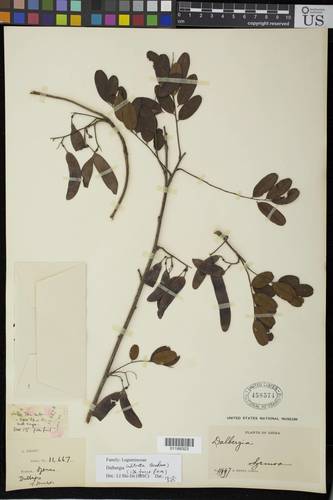
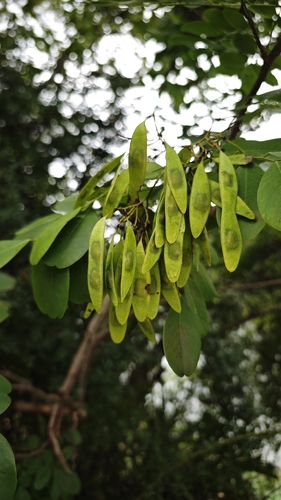
Kummerowia striata - (Thunb.)Schindl.
(Thunb.)Schindl.
Common Lespedeza, Japanese clover
gbif· cc-by-nc
quinkin
gbif· cc-by-nc
yerbasanta
gbif· cc-by-nc
yerbasanta
Description
Kummerowia striata is a ANNUAL growing to 0.2 m (0ft 8in). It is in flower from August to September, and the seeds ripen from October to November. The species is hermaphrodite (has both male and female organs) and is pollinated by Insects, Cleistogomy (self-pollinating without flowers ever opening). It can fix Nitrogen. Suitable for: light (sandy), medium (loamy) and heavy (clay) soils. Suitable pH: mildly acid, neutral and basic (mildly alkaline) soils. It can grow in semi-shade (light woodland) or no shade. It prefers moist soil.
Edible Uses
Seed - cooked. The seed can be ground into a meal and used with cereal flours in making bread etc. The seed contains 26.4 - 51.9% protein and 4.3 - 7.3% fat. Young plant - cooked. A nutritional analysis is available.
Medicinal Uses
Astringent Diuretic Dysentery Febrifuge Miscellany. The whole plant is used medicinally as a diuretic, for reducing fever, and treating diarrhea. A decoction of the plant is used in the treatment of extreme physical debility and swellings. It is boiled with Centella asiatica and Prunella vulgaris for the treatment of dysentery, headache and vertigo. A broth is used to improve the appetite.
Distribution
E. Asia - China, Japan, Korea, Manchuria.
Where It Grows
TEMPERATE ASIA: Russian Federation (Primorye, Amur, Sakhalin), China, Korea, Japan (incl. Ryukyus), Taiwan (north) TROPICAL ASIA: Vietnam
Cultivation
We have very little information on this species but it should succeed as a spring-sown annual in Britain. See the plants native habitat for ideas on its cultivation needs. Plants sometimes produce cleistogamous flowers. This species has a symbiotic relationship with certain soil bacteria, these bacteria form nodules on the roots and fix atmospheric nitrogen. Some of this nitrogen is utilized by the growing plant but some can also be used by other plants growing nearby. When removing plant remains at the end of the growing season, it is best to only remove the aerial parts of the plant, leaving the roots in the ground to decay and release their nitrogen.
Propagation
Seed - pre-soak for 12 hours in warm water and sow in situ in mid spring.
Other Uses
Miscellany Soil reclamation. The plant is fast growing and has an extensive root system. It has been widely used, especially in N. America, for restoring fertility to worn-out soils.