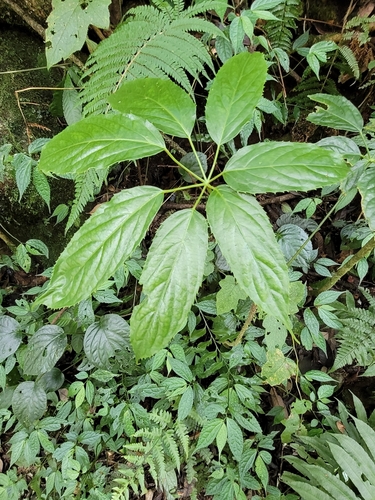
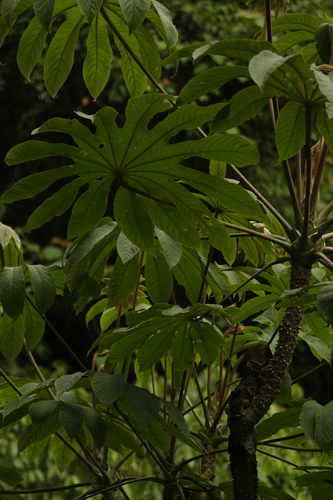
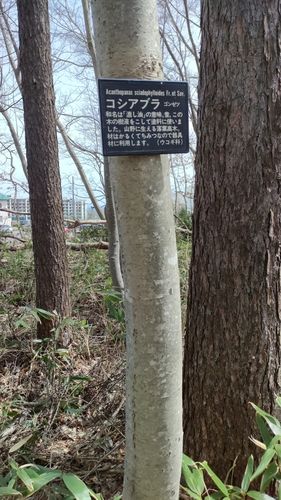
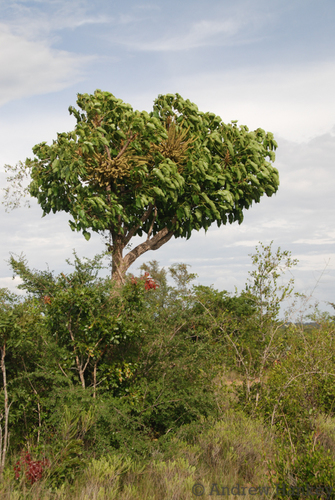
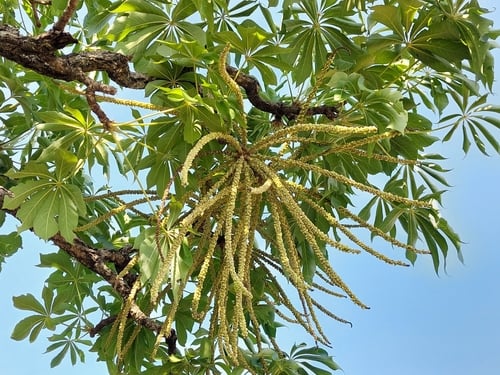
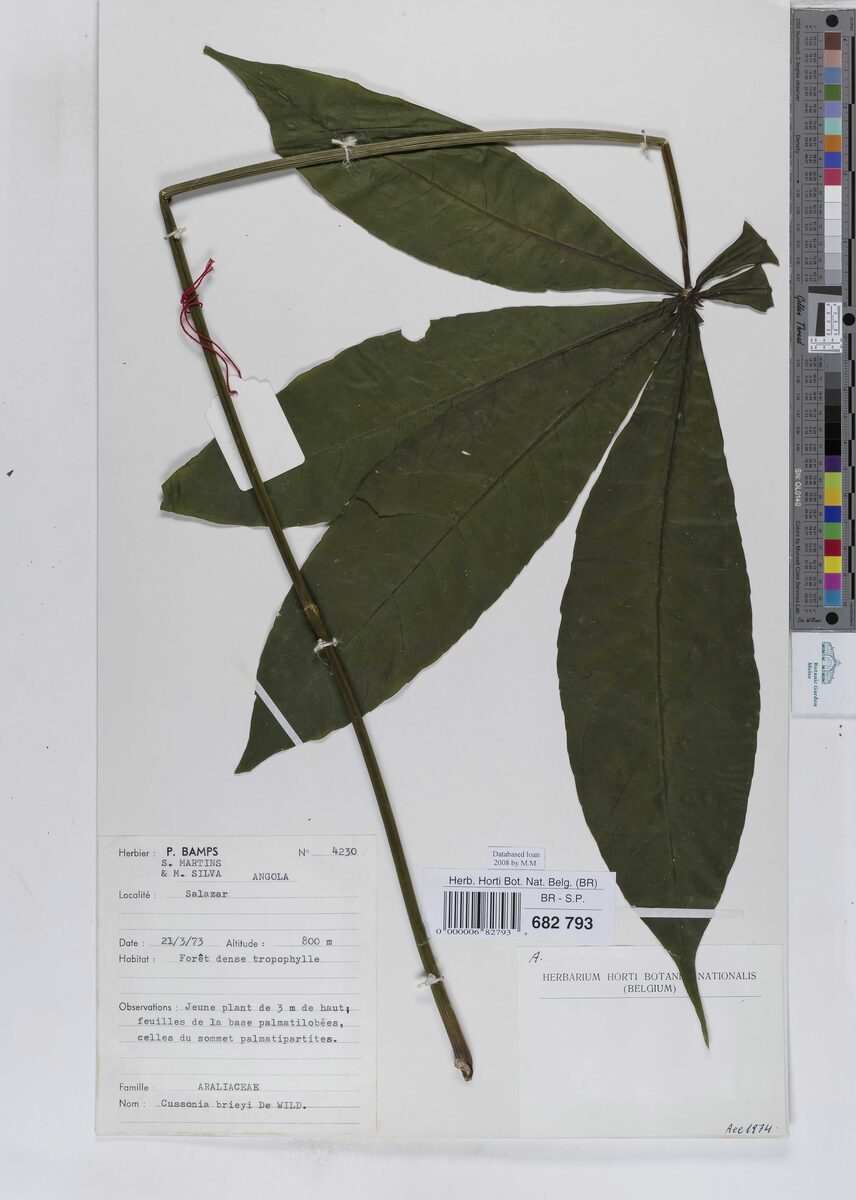
Kalopanax septemlobus - (Thunb. ex A.Murray.)Koidz.
(Thunb. ex A.Murray.)Koidz.
Tree Aralia, Castor aralia
Description
Kalopanax septemlobus is a deciduous Tree growing to 25 m (82ft 0in) at a slow rate. See above for USDA hardiness. It is hardy to UK zone 5. It is in flower from August to September. The species is hermaphrodite (has both male and female organs). Suitable for: light (sandy), medium (loamy) and heavy (clay) soils. Suitable pH: mildly acid, neutral and basic (mildly alkaline) soils. It can grow in semi-shade (light woodland) or no shade. It prefers moist soil.
Edible Uses
Young leaves and young shoots - cooked.
Medicinal Uses
Antifungal Expectorant Hepatic Skin Stomachic. The bark contains a range of bio-active constituents, including saponins, flavonoids and lignans. It has antifungal and liver protecting properties. It is used in Korea in the treatment of contusions, beri-beri, lumbago, neuralgia and pleurisy. An infusion of the leaves is used to make a stomachic tea. The root is expectorant. A decoction of the wood is used for skin diseases.
Distribution
E. Asia - China, Japan.
Where It Grows
TEMPERATE ASIA: Russian Federation (Kurile Islands, Primorye, Sakhalin), China (Anhui Sheng, Fujian Sheng, Guangdong Sheng, Guangxi Zhuangzu Zizhiqu, Guizhou Sheng, Hebei Sheng, Henan Sheng, Hubei Sheng, Hunan Sheng, Jiangsu Sheng, Jiangxi Sheng, Shaanxi Sheng, Shandong Sheng, Shanxi Sheng, Sichuan Sheng, Yunnan Sheng, Zhejiang Sheng), Korea, Japan (Hokkaidô, Honshu, Kyushu, Ryukyu Islands, Shikoku)
Cultivation
Requires a deep fertile moisture-retentive soil in sun or part shade. Young shoots, especially on young plants, can die back over winter if they are not fully ripened. Young plants are slow-growing. The tree is widely cultivated for timber in China. A polymorphic species.
Propagation
Seed - best sown as soon as it is ripe in the autumn in a cold frame. Stored seed probably requires a period of cold stratification and should be sown as soon as possible. When they are large enough to handle, prick the seedlings out into individual pots and grow them on in the greenhouse for at least their first winter. Plant them out into their permanent positions in late spring or early summer, after the last expected frosts. Cuttings of half-ripe wood, July/August in a frame. Root cuttings in late winter.
Other Uses
Insecticide. The bark and the leaves are used as an insecticide. Wood.