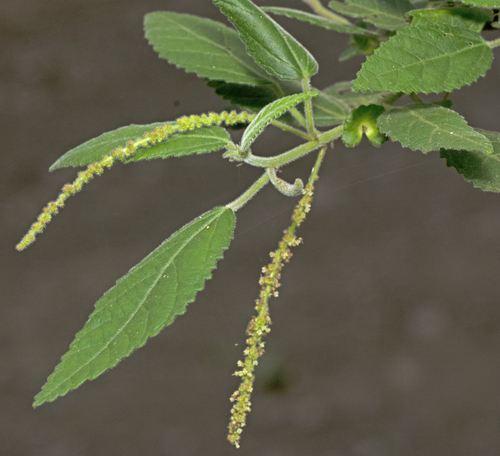
Jatropha curcas
L.
Physic Nut, Barbados Nut
iNaturalist· cc-by-nc
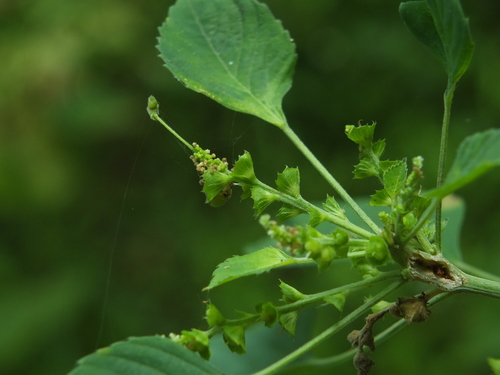
(c) Robert Archer, some rights reserved (CC BY-NC), uploaded by Robert Archer
iNaturalist· cc-by-nc-nd
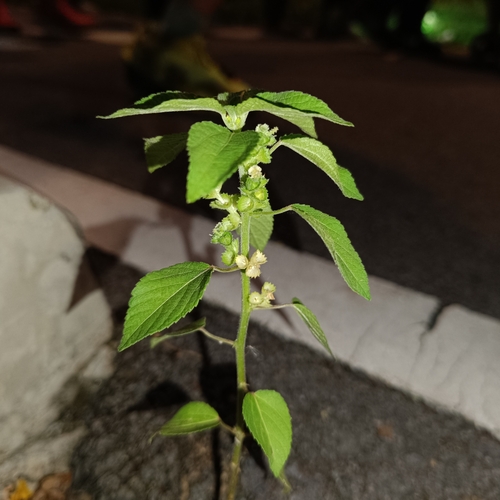
(c) Tabris Tabarsi, some rights reserved (CC BY-NC-ND), uploaded by Tabris Tabarsi
iNaturalist· cc-by-sa
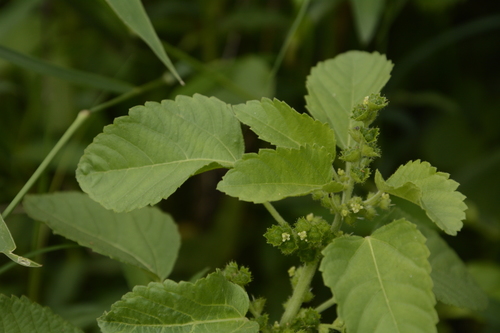
(c) Tony Rebelo, some rights reserved (CC BY-SA), uploaded by Tony Rebelo
Description
Jatropha curcas is a deciduous Tree growing to 6 m (19ft) by 8 m (26ft) at a fast rate. See above for USDA hardiness. It is hardy to UK zone 10 and is frost tender. The flowers are pollinated by Insects. The plant is self-fertile. Suitable for: light (sandy), medium (loamy) and heavy (clay) soils, prefers well-drained soil and can grow in nutritionally poor soil. Suitable pH: mildly acid, neutral and basic (mildly alkaline) soils and can grow in very acid and saline soils. It cannot grow in the shade. It prefers dry soil and can tolerate drought. The plant can tolerates strong winds but not maritime exposure.
Edible Uses
Salt. Tender young shoots - cooked and used as a vegetable. The young leaves may be safely eaten when steamed or stewed. Some caution is advised - see notes above on toxicity. Ashes from the roots and branches are used as cooking salt. Cooked nuts are eaten in certain regions of Mexico. The seeds, though agreeable to the taste, are purgative, and, if eaten in considerable quantities, poisonous. The taste is very much like that of beechnuts (Fagus spp.).
Medicinal Uses
Antibiotic Antihaemorrhoidal Antiinflammatory Antirheumatic Antitussive Appetizer Astringent Diuretic Dysentery Eczema Emetic Laxative Malaria Mouthwash Odontalgic Purgative Skin Styptic. Although widely used in traditional medicine, and to an extent in modern medicine, it should be noted that all parts of the plant are very poisonous and so extreme caution should be employed if utilising this plant for any internal use. Modern research has supported the traditional uses. For example, the latex has antibiotic properties against Candida albicans, Escherichia coli, Klebsiella pneumoniae, Staphylococcus aureus and Streptococcus pyogens. It also has coagulating effects on blood plasma. A methanol extract of the leaves afforded moderate protection for cultured human lymphoblastoid cells against the cytopathic effects of the human immunodeficiency virus. The juice of the bark is used in the treatment of malarial fevers, and is also useful in reducing swellings caused by inflammation. This juice is also applied externally to treat burns, scabies, eczema and ringworm. The fresh bark is cut into small pieces and chewed or kept in the mouth for 1 - 2 hours in order to treat pyorrhoea. A paste of the bark is applied to the gums to treat wounds and swellings of the gums. The thin twigs are popularly used in Nepal as toothbrushes to treat toothache. They are considered especially good for treating bleeding and swollen gums. A leaf infusion is used as a diuretic, for bathing, to treat coughs, and as an enema in treating convulsions and fits. The leaves are also used to treat jaundice, fevers, rheumatic pains, guinea worm sores and poor development of the foetus in pregnant women. In Ghana the ashes from the burnt leaves are applied by rectal injection for treating haemorrhoids. The juice of the leaves, or the latex, is applied directly to wounds and cuts as a styptic and astringent to clean teeth, gums, and to treat sores on the tongue and in the mouth. It is also considered useful for treating decayed teeth. The seeds resemble groundnuts in flavour, and 15 - 20 seeds will cause griping, purging and vomiting for 30 minutes. It is reported from Gabon that 1 - 2 roasted seeds are sufficient to act as a purgative; larger doses may be dangerous. The seeds have been substituted for castor oil and are sometimes called 'larger castor oil'. The seeds are also used in the treatment of syphilis. The oil from the seeds, known as 'curcas'’ is a powerful purgative and emetic. The oil is widely used for treating skin diseases such as herpes, itches, eczema and boils; and also to soothe pain such as that caused by rheumatism; it is an ingredient in the oily extract, known in Hausa as 'kufi', which is a rubefacient for rheumatism and for parasitic skin conditions. The oil is used to stimulate hair growth. It is used in the treatment of. It is warmed and used to dress burns. The cotyledons are used to treat constipation and as an appetizer. The root bark is used to relieve the spasms of infantile tetanus and is used for sores, dysentery and jaundice. The juice of the roots is applied to boils and pimples. The juice of the flowers has numerous medicinal qualities.
Known Hazards
All parts of the plant are extremely purgative and poisonous. The oil from the seed contains a toxin, curcasin. The albumen of the kernel is a poison, toxalbumen cursin, most abundant in the embryo. Another poison, a croton resin, occurs in the seeds and causes redness and pustular eruptions of the skin. The plant is listed as a fish poison. (All parts of plant are poisonous if ingested)
Distribution
Tropical S. America - probably Central America to Mexico.
Where It Grows
NORTHERN AMERICA: Mexico (Chiapas) SOUTHERN AMERICA: Belize, Costa Rica, Guatemala, Honduras, Nicaragua, El Salvador, Brazil, Bolivia, Peru, Argentina, Paraguay
Cultivation
It is very tolerant and thrives under a wide range of climatic and edaphic conditions. It is particularly hardy at medium elevations and in humid zones. It is not sensitive to day length. It succeeds in subtropical to tropical lowland areas, usually found at elevations below 500 metres, but some plants have been known to succeed at elevations up to 1,600 metres. The average annual precipitation of provenance collection sites is from 520 - 2,000mm, however the species survives well in semi-arid regions and has stood several years without rainfall in Cape Verde. Average temperatures of provenance collection sites range from 11 - 28°c. Plants can survive a short, slight frost. Prefers a position in full sun or light, part-day shade. Grows on well-drained soils with good aeration and is well adapted to marginal soils with low nutrient content. On heavy soils, root formation is reduced. Prefers a pH in the range 5.5 - 7.5, tolerating 5 - 8. Established plants are very drought tolerant. Cultivated for medicinal purposes for several hundred years, the plant was distributed all over the world long ago and is now naturalized throughout the tropics and subtropics. Shrubs begin to produce when only 4 - 5 months old, and reach full productivity at about 3 years. Under good rainfall conditions, nursery plants bear fruit after the first rainy season, while directly seeded plants bear for the first time after the 2nd rainy season. With vegetative propagation, the first seed yield is higher. At least 2 - 3 tonnes of seeds per hectare can be achieved in semi-arid areas. Most plants are monoecious but rarely, there are hermaphroditic flowers which can be self-pollinating. The female flowers are 4 - 5 times more numerous than the male ones. Fruit development needs 90 days from flowering until seeds mature. The tree has a productive life of 40 - 50 years without necessitating replanting or tending.
Propagation
Seed. Use of fresh seeds improves germination. Intervals of alternate pre-soaking and drying, or the partial removal of the testa, are more successful than pre-soaking alone. With good moisture conditions, germination takes 10 days. The seed shell splits, the radicle emerges and 4 small peripheral roots are formed. Soon after development of the first leaves, the cotyledons wither and fall off. Seeds are oily and do not store for long. Seeds older than 15 months show viability below 50%. High levels of viability and low levels of germination shortly after harvest indicate innate (primary) dormancy. Cuttings of half-ripe wood. Cuttings can be planted directly in situ, a practice often carried out when establishing a hedge.
Other Uses
Dye Fencing Fodder Fuel Green manure Hair Hedge Ink Latex Lighting Mulch Plant support Repellent Soap Soil conditioner Soil stabilization Tannin Teeth Varnish Wax. Small foliage tree. Living barrier. Reclaiming deserts. Binding sand dunes. Xerophytic. Agroforestry Uses: The plant is widely cultivated in the tropics as a living fence in fields and settlements. It is not browsed by cattle; it can grow without protection; roots quickly from fairly large stems placed direct into the ground; and can be used as a hedge to protect fields. The plant makes an excellent hedge. The plant is used as a support for vanilla and other climbing crops. It has been planted in arid areas for soil-erosion control. Other Uses Jatropha oil is an environmentally safe, cost-effective renewable source of non-conventional energy and a promising substitute for diesel, kerosene and other fuels. Physic nut oil was used in engines in Segou, Mali, during World War II. The oil burns without smoke and has been employed for street lighting near Rio de Janeiro. The seed contains 20 - 40% of a non-volatile oil. This can also be used for lighting, whilst the cotyledons (seeds?) are used as candles. The oil is also used for making candles, soap and as an illuminant. The oil is used to prepare varnish after calcination with iron oxides. Hardened physic nut oil could be a satisfactory substitute for tallow or hardened rice bran oil. In Europe it is used in wool spinning and textile manufacture. Along with burnt plantain ashes, oil is used in making hard homemade soap. Fruit hulls and seed shells can be used as a fuel. Dried seeds dipped into palm oil are used as torches, which will keep alight even in a strong wind. The wood was used as fuel, though of poor quality, in Cape Verde. The seed press cake cannot be used in animal feed because of its toxic properties, but it is valuable as organic manure due to a nitrogen content similar to that of seed cake from castor bean and chicken manure. The nitrogen content ranges from 3.2 to 3.8%, depending on the source. Tender branches and leaves are used as a green manure for coconut trees. All plant parts can be used as a green manure. Aqueous extracts of the leaves were effective in controlling Sclerotium spp., an Azolla fungal pathogen. The seed oil, extracts of the seeds, and phorbol esters from the oil have all been used to control various pests, often with successful results. In Gabon, the seeds, ground and mixed with palm oil, are used to kill rats. The oil has purgative properties, but seeds are poisonous; even the remains from pressed seeds can be fatal. Leaf juice stains red and marks linen an indelible black. The 37% tannin found in bark is said to yield a dark blue dye; latex also contains 10% tannin and can be used as marking ink. Ashes from the roots and branches are used in the dyeing industry, and pounded seeds in tanning in Ghana. The viscid juice of the plant, when beaten, foams like soapsuds. Children often blow bubbles of it with a joint of bamboo. The bark contains a wax composed of a mixture of ‘melissyl alcohol’ and its melissimic acid ester. The branches are used as a chewing stick for cleaning the teeth and strengthening the gums.
Synonyms
Also Known As
Physic Nut, Barbados Nut, Purging Nut, Jatropha, Adaluharalu, Adavia-midamu, Bagbherenda, Bagherenda, Barbados nut, Bettadaharalu, Bongalibhotora, Borbandong, Erandagachh, Jahazigaba, Jamalgota, Jangli-arandi, Jarak belanda, Jarak pagar, Jirak, Kadalamanakku, Kadalavanakka, Kananaeranda, Karnocchi, Kattamanakku, Kattavanakka, Ma feng shu, Maraharalu, Mogalierenda, Nepalamu, Pahadi arand, Parvata-randa, Peddandpalamu, Pinoncillo, Ranayerandi, Ratanjota, Saboo-dum, Safedarand, akakgachha, arari, aren, arif, arin, baghandi, barbadoes nut, barbados-nut, bi ni da zugu, botuje, bubblebush, chi ni da zugu, cha guó, dekiro, desya, dhuching, elu, eto-mkpa, eto-mkpo, fig nut, frailejón, fève d'enfer, galamaluco, gara, grand pignon d'inde, gros ricin, grão-de-maluco, gyagar desya, jatropha, jatropha curcas, kadam, kwolkwelaje, kwotewi, lapalapa, manduri-graça, mbono, mbubok, médicinier, médicinier barrière, médicinier béni, médicinier purgatif, nepalam seed, nimte, nirguri, oljejatrofa, olulu-idu, oru-ebo, owulu-idu, physic nut, physicnut, pigno, pignon d'inde, pinhão, piñon blanco, piñón, piñón blanco, piñón del diablo, polopolo, pourghère, purghère, purging nut, purging physic, rajani giri, ratan jot, ratyun, sajin, sajyon, satiman, seluju, termite plant, uru-ekpa, zeît.