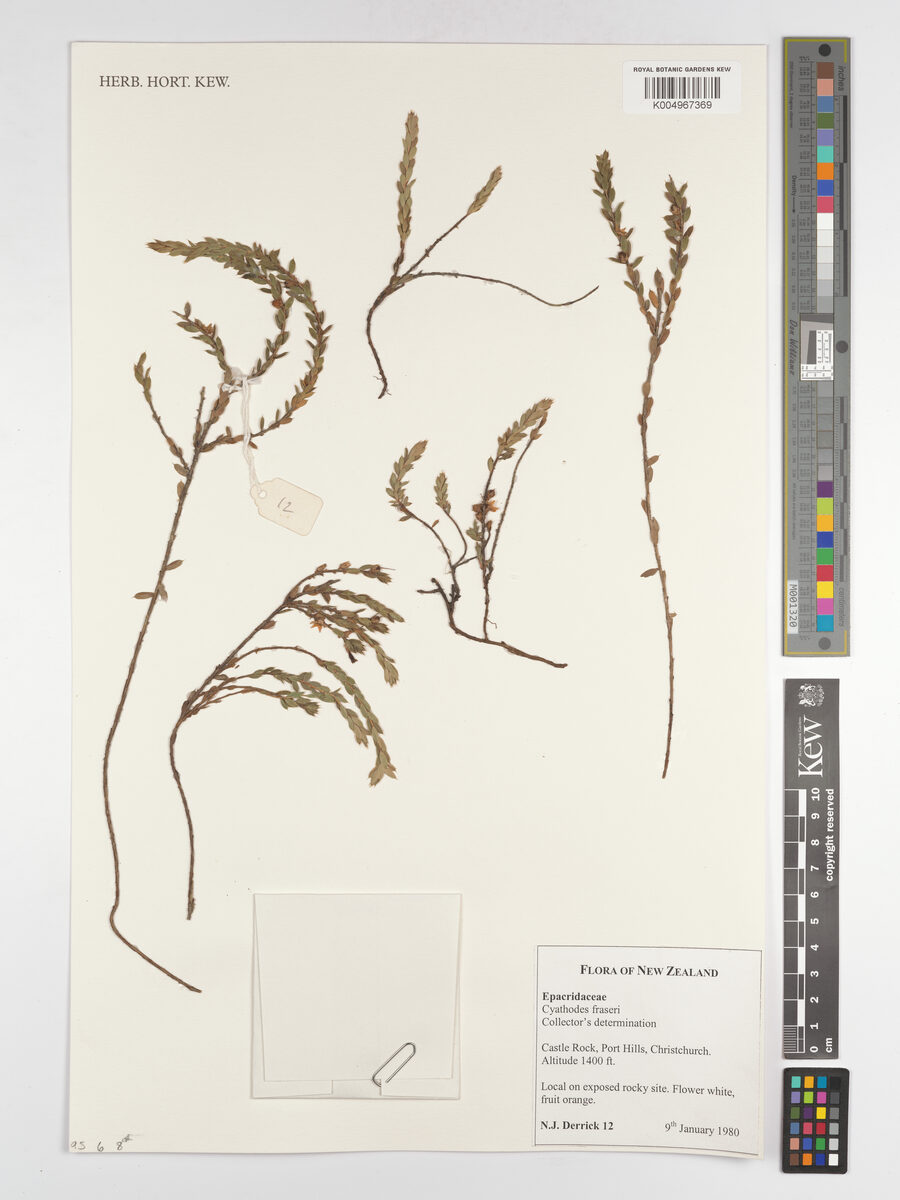
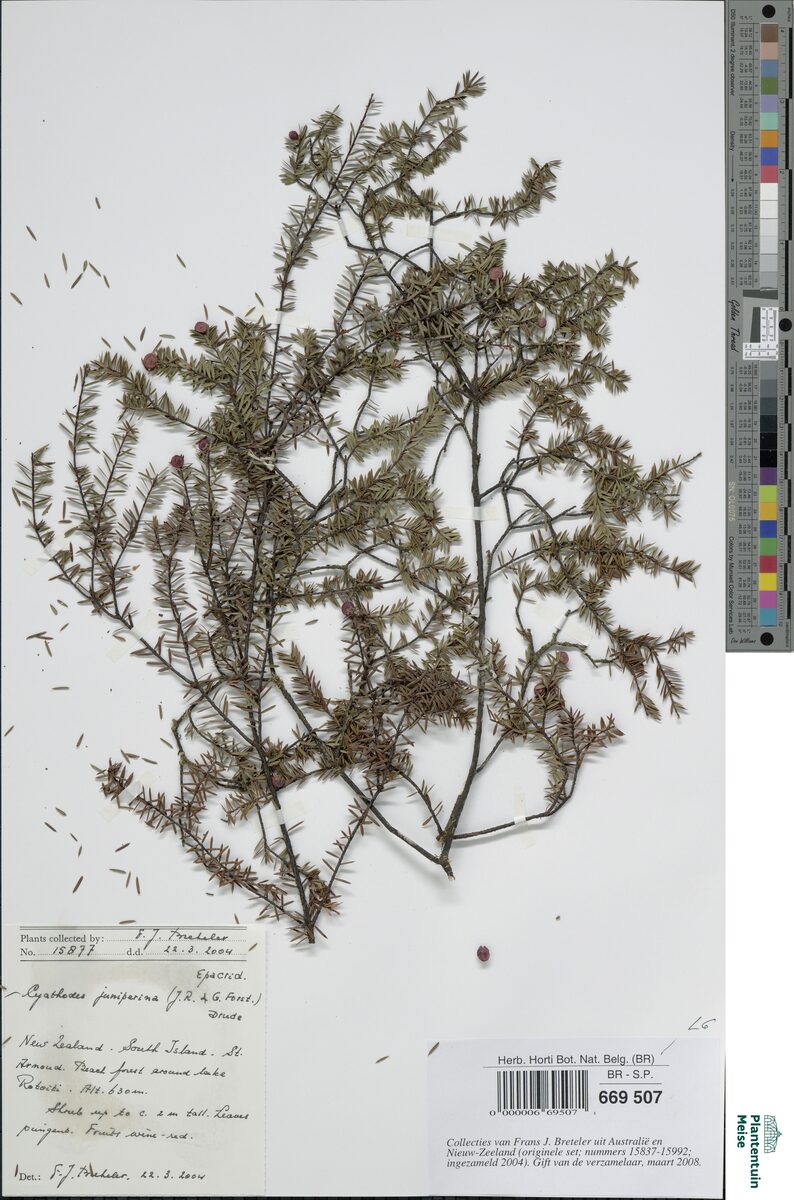
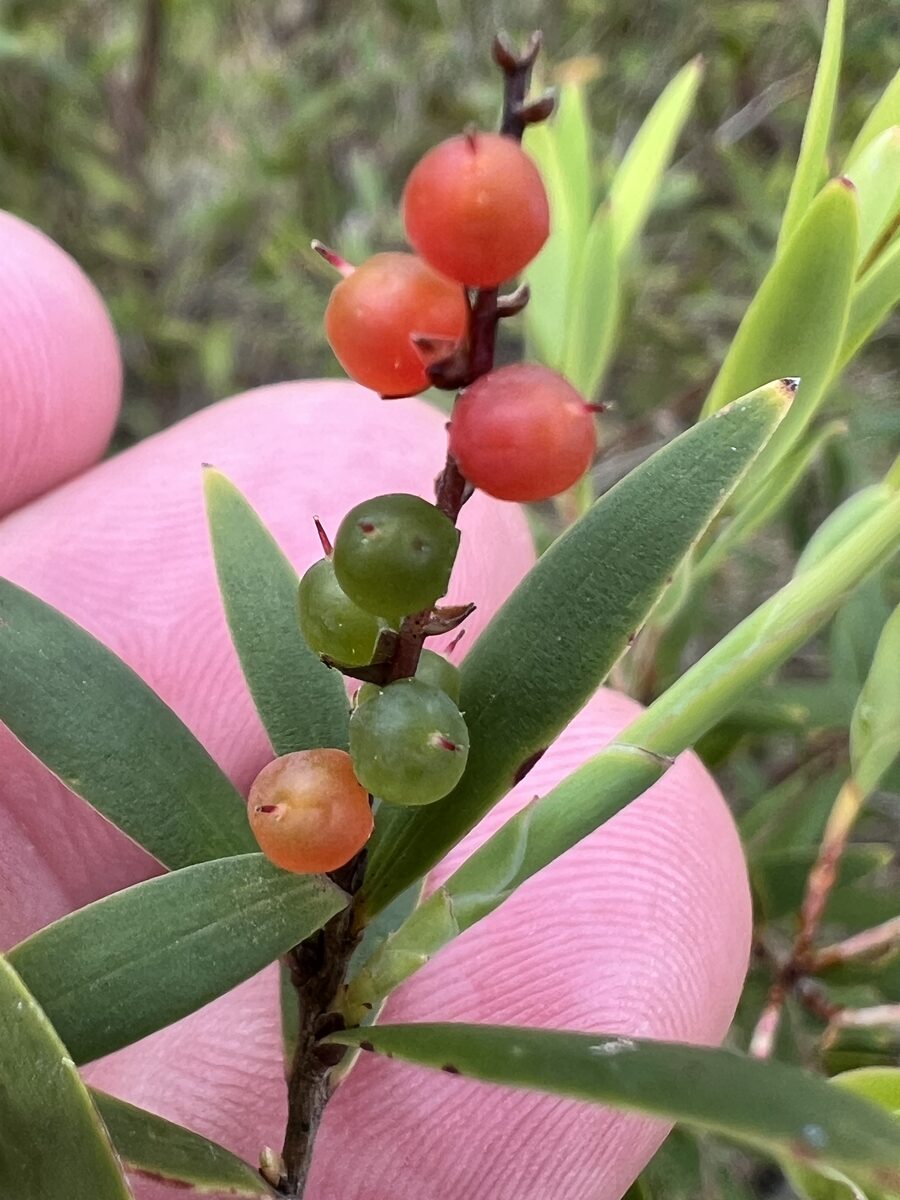
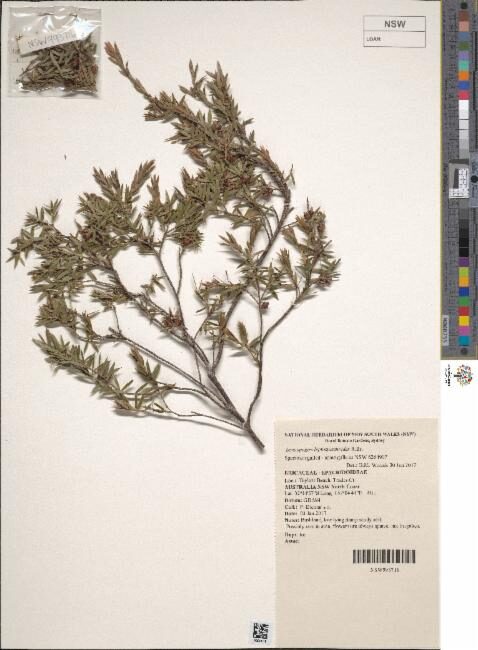
Cyathodes fasciculata - (G.Forst.)Allan.
(G.Forst.)Allan.
gbif· cc-by
Moscow State University (copyright is managed by Dr. Alexey P. Seregin)
gbif· cc-by
Meise Botanic Garden
gbif· cc-by
Moscow State University (copyright is managed by Dr. Alexey P. Seregin)
Description
Cyathodes fasciculata is an evergreen Shrub growing to 4 m (13ft 1in) at a slow rate.It is in leaf all year. The species is hermaphrodite (has both male and female organs). Suitable for: light (sandy), medium (loamy) and heavy (clay) soils and prefers well-drained soil. Suitable pH: mildly acid and neutral soils. It can grow in semi-shade (light woodland). It prefers moist soil.
Edible Uses
Fruit - a sweet mealy flesh. Sweet and juicy according to another report.
Distribution
New Zealand.
Where It Grows
Coming Soon
Cultivation
Requires a moist well-drained lime-free humus rich soil in a sheltered site in partial or dappled shade. Plants are very susceptible to drought. A good rock garden plant. Slow growing. This plant is not very hardy in Britain though it might succeed outdoors in the milder areas of the country. Plants grow best in areas with moderate winters and cool moist summers. Plants have very fine root systems and great care must be taken when transplanting them.
Propagation
Seed - surface sow in ericaceous soil, February/March in a cold frame. Do not exclude light. Germination can take place within 1 - 2 months at 18°c but often takes 3 - 5 years. Scarification will reduce the germination time and 2 or 3 periods of 4 - 6 weeks cold stratification alternated with 4 weeks warm stratification can also help. Perhaps sowing the seed as soon as it is ripe would also be beneficial.The seedlings can be very slow to form roots and need to be potted up with great care. Grow them on in a greenhouse for at least two years before planting them out in late spring or early summer. Cuttings of half-ripe wood, July/August in a frame. Neither easy nor reliable. Air layering.