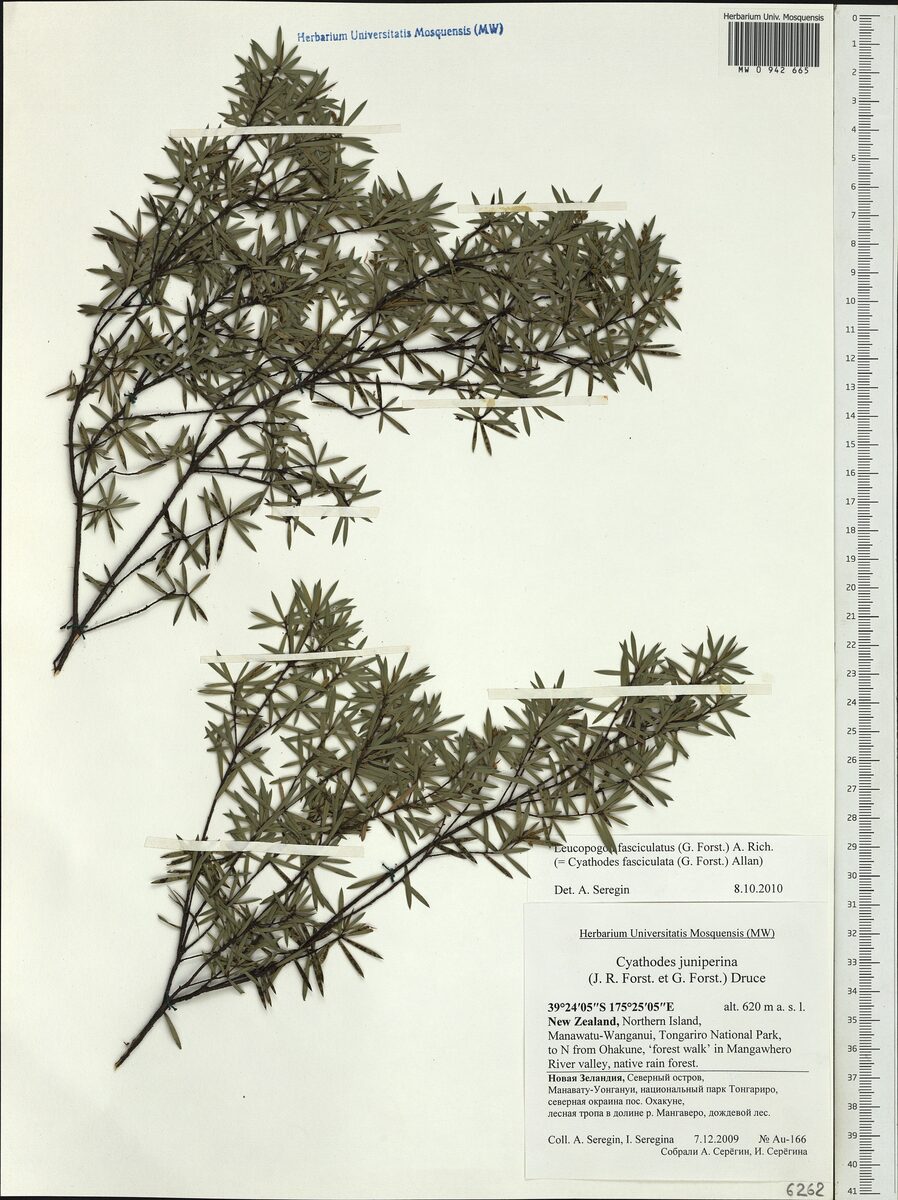
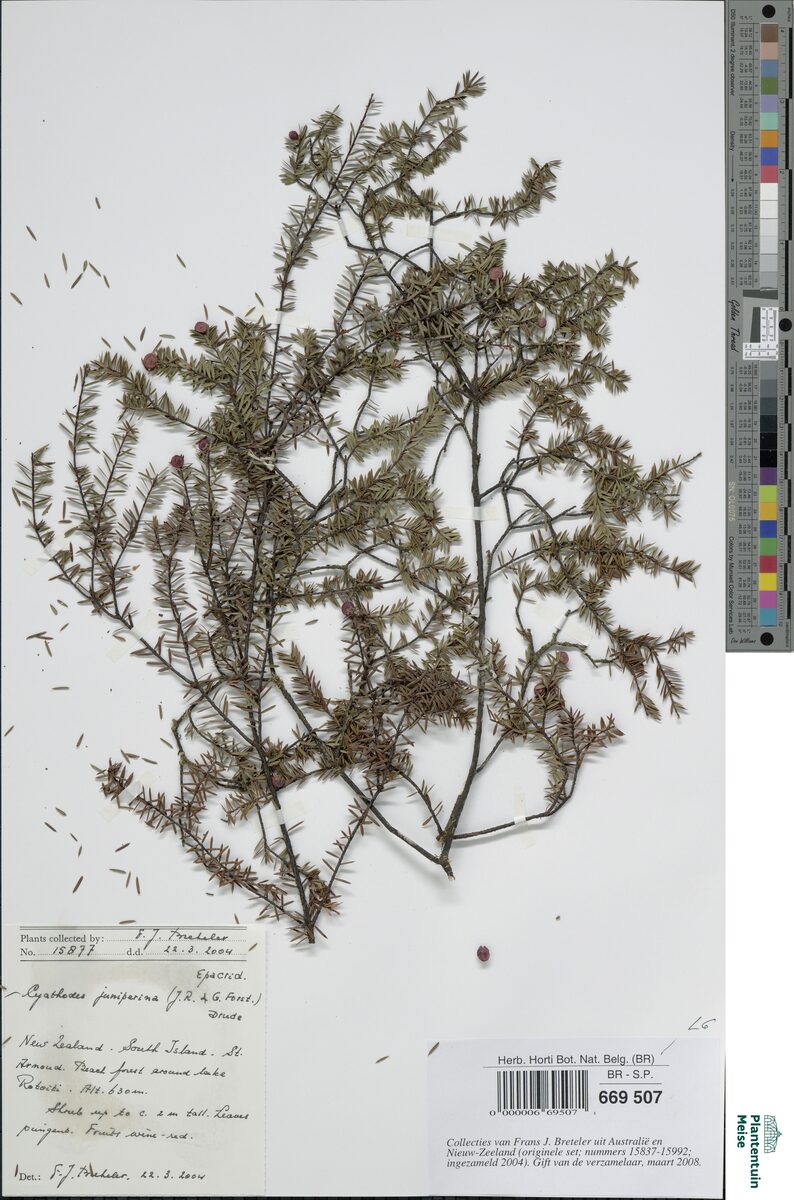
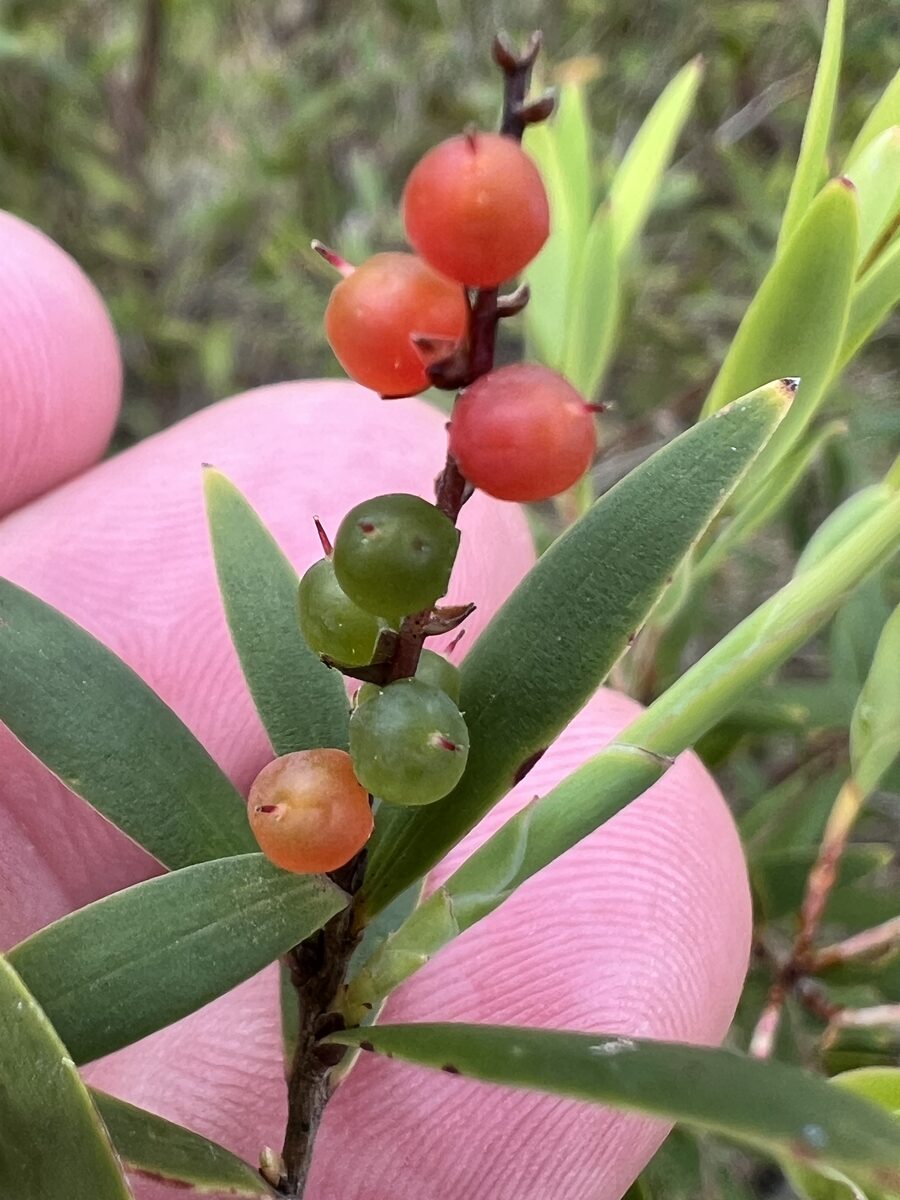
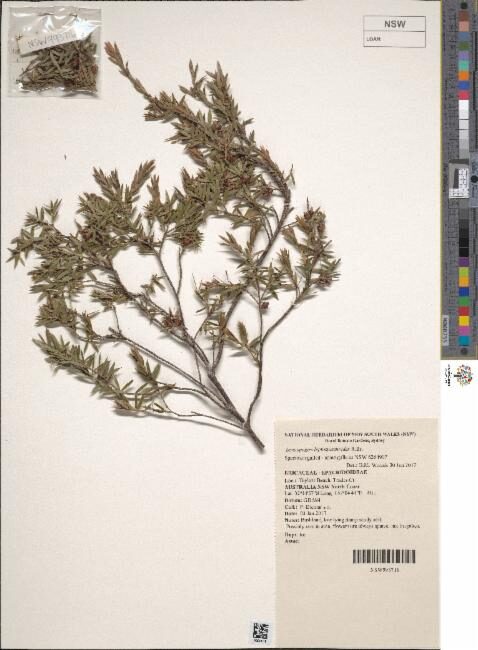
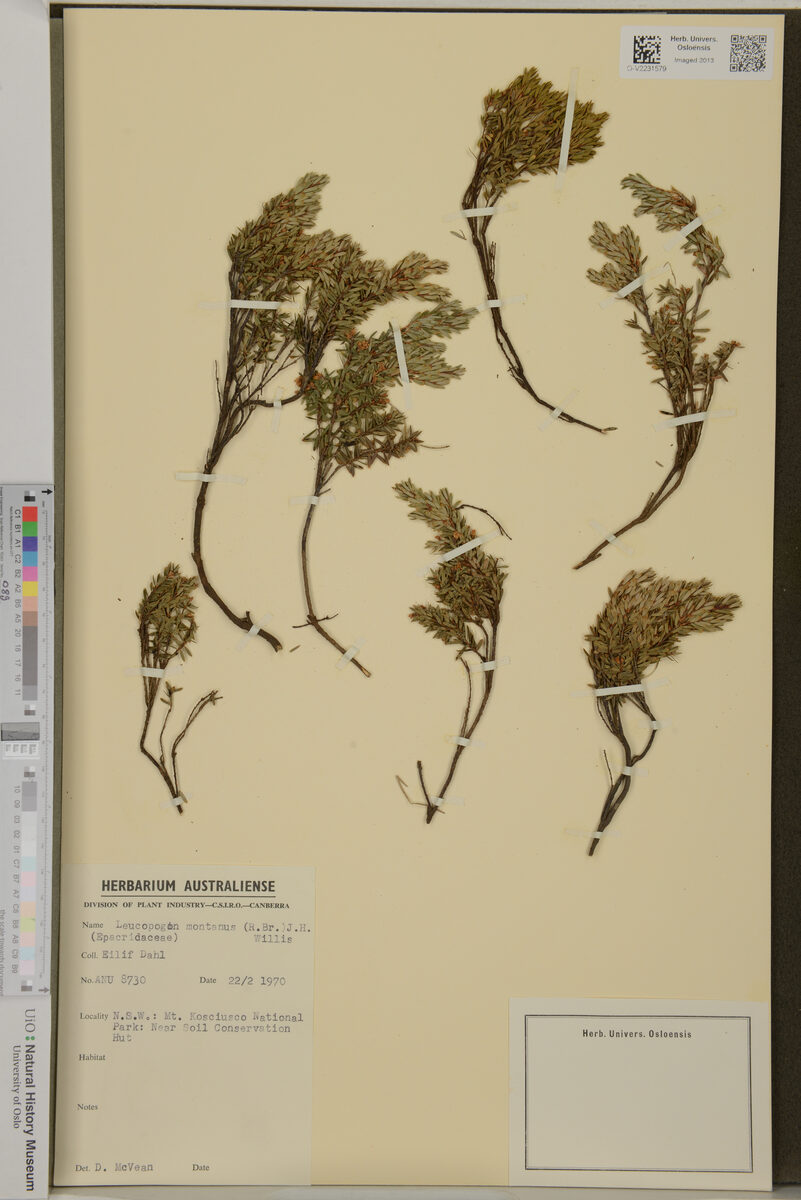
Cyathodes fraseri - (A.Cunn.)Allan.
(A.Cunn.)Allan.
gbif· cc-by
Royal Botanic Gardens, Kew
gbif· cc-by-nc
Louisiana State University, Shirley C. Tucker Herbarium (LSU-Vascular Plants)
gbif· cc-by
Royal Botanic Gardens, Kew
Description
Cyathodes fraseri is an evergreen Shrub growing to 0.2 m (0ft 8in) by 0.3 m (1ft) at a slow rate. See above for USDA hardiness. It is hardy to UK zone 8. It is in leaf all year, in flower from May to June. The species is hermaphrodite (has both male and female organs). Suitable for: light (sandy), medium (loamy) and heavy (clay) soils and prefers well-drained soil. Suitable pH: mildly acid and neutral soils and can grow in very acid soils. It can grow in full shade (deep woodland) or semi-shade (light woodland). It prefers moist soil.
Edible Uses
Fruit - raw or cooked. Sweet and juicy. Contains up to 24% dry weight of oil. (does this refer to the seed?).
Distribution
Australia and New Zealand.
Where It Grows
Coming Soon
Cultivation
Requires a moist well-drained lime-free humus rich soil in a sheltered site in partial or dappled shade. Plants are very susceptible to drought. A good rock garden plant. Slow growing. This plant is not very hardy in Britain though it succeeds outdoors in the milder areas of the country. Plants grow best in areas with moderate winters and cool moist summers. Plants have very fine root systems and great care must be taken when transplanting them.
Propagation
Seed - surface sow in an ericaceous soil mix, February/March in a cold frame. Do not exclude light. Germination can take place within 1 - 2 months at 18°c but often takes as long as 3 - 5 years. Scarification will reduce the germination time and 2 or 3 periods of 4 - 6 weeks cold stratification alternated with 4 weeks warm stratification can also help. Perhaps sowing the seed as soon as it is ripe would also be beneficial.The seedlings can be very slow to form roots and need to be potted up with great care. Grow them on in the greenhouse for at least their first 2 growing seasons and, when large enough, plant them out into their permanent positions in late spring or early summer. Cuttings of half-ripe wood, July/August in a frame. Neither easy nor reliable. Air layering. Division of the plants as they come into growth in the spring. We have found it best not to dig up the main clump, but to tease out small divisions from the sides of the plant. Make sure that these are well rooted and pot them up in light shade in a greenhouse. Grow them on for their first summer in the greenhouse and plant them out in late spring, after the last expected frosts.
Other Uses
A most attractive ground cover plant for the winter garden.