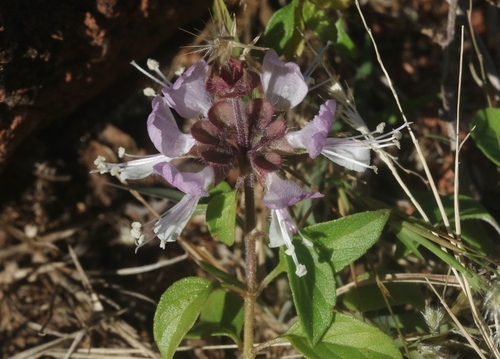
Cunila origanoides - (L.)Britton.
(L.)Britton.
Stone Mint, Common dittany
gbif· cc-by-nc
Matthew Hicks
gbif· cc-by-nc
Matthew Hicks
gbif· cc-by-nc
Matthew Hicks
Description
Cunila origanoides is a PERENNIAL growing to 0.3 m (1ft). See above for USDA hardiness. It is hardy to UK zone 6. It is in flower from July to August. The species is hermaphrodite (has both male and female organs). Suitable for: light (sandy) and medium (loamy) soils and prefers well-drained soil. Suitable pH: mildly acid, neutral and basic (mildly alkaline) soils. It cannot grow in the shade. It prefers dry or moist soil.
Edible Uses
Tea. The fresh or dried leaves can be used to make a tea. A pleasant mint-like flavour.
Medicinal Uses
Antiseptic Aromatic Diaphoretic Emmenagogue Febrifuge StimulantAn essential oil, known as cunila oil, obtained from the plant is antiseptic, aromatic and stimulant. A tea made from the leaves is used to treat headaches, colds and fevers. It is believed to induce menstruation and perspiration.
Distribution
Eastern N. America - New York to Florida, west to Texas and Illinois.
Where It Grows
NORTHERN AMERICA: United States, Indiana (south), New Jersey, New York (south), Ohio (south), Pennsylvania, West Virginia, Illinois (south), Kansas (Cherokee Co.), Missouri, Oklahoma (Ottawa Co.), Alabama, Arkansas, Georgia, Kentucky, Louisiana, Maryland, Mississippi, North Carolina, South Carolina, Tennessee, Virginia, Texas,
Cultivation
An easily grown plant, succeeding in a variety of soil types. It thrives in dry soils, preferably of a sandy well-drained nature, preferring a position in full sun. Plants are hardy to about -20°c. The plant has aromatic foliage and the flowers are a good source of nectar for bees.
Propagation
Seed - sow spring in a cold frame. When they are large enough to handle, prick the seedlings out into individual pots and grow them on in the greenhouse for at least their first winter. Plant them out into their permanent positions in late spring or early summer, after the last expected frosts. Division in spring. Basal cuttings in late spring or early summer. Harvest the shoots when they are about 10cm long with plenty of underground stem. Pot them up into individual pots and keep them in light shade in a cold frame or greenhouse until they are rooting well. Plant them out in the summer.
Other Uses
Essential RepellentAn essential oil, called 'Oil of Dittany' is extracted from this plant. It has medicinal properties and is valued as an antiseptic. A bunch of the plant can be used to repel insects, it is effective against horseflies.