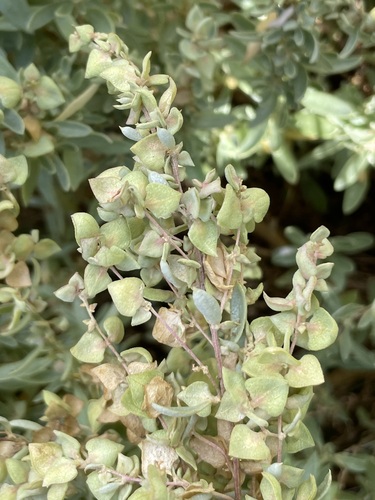
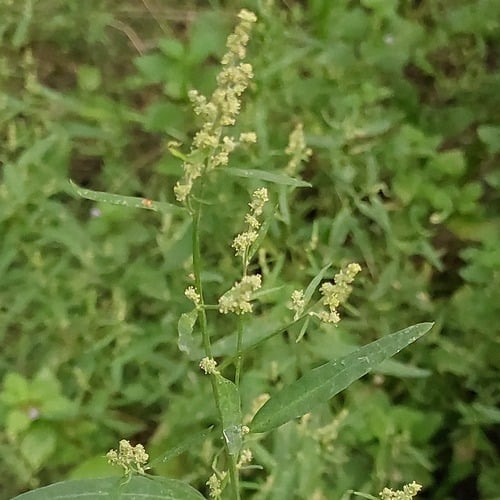
Triticum turgidum durum - (Desf.)Husn.
(Desf.)Husn.
Durum Wheat
gbif· cc-by-nc
A Rocha Portugal
gbif· cc-by-nc
A Rocha Portugal
gbif· cc-by-nc
A Rocha Portugal
Description
Triticum turgidum durum is a ANNUAL growing to 1 m (3ft 3in). It is not frost tender. It is in flower from June to July, and the seeds ripen from August to September. The species is hermaphrodite (has both male and female organs) and is pollinated by Wind. Suitable for: light (sandy), medium (loamy) and heavy (clay) soils and prefers well-drained soil. Suitable pH: mildly acid, neutral and basic (mildly alkaline) soils. It cannot grow in the shade. It prefers moist soil and can tolerate drought.
Edible Uses
Seed - cooked. It is usually ground into a flour and used as a cereal. The grain is hard, translucent and especially rich in gluten, it is widely used for making pasta, spaghetti, noodles etc.
Distribution
Original habitat is obscure.
Where It Grows
Egypt
Cultivation
An easily grown plant, it succeeds in most well-drained soils in a sunny position. Established plants are drought resistant. A fairly ancient wheat, it probably arose over 8,000 years ago as a result of cultivation. It is still sometimes cultivated for its edible seed, especially in the Mediterranean region, there are some named varieties. It is also occasionally cultivated in Britain. A tetraploid species.
Propagation
Seed - sow early spring or autumn in situ and only just cover the seed. Germination should take place within a few days.
Other Uses
Biomass Mulch Paper Starch Thatching. The straw has many uses, as a biomass for fuel etc, for thatching, as a mulch in the garden etc. A fibre obtained from the stems is used for making paper. The stems are harvested in late summer after the seed has been harvested, they are cut into usable pieces and soaked in clear water for 24 hours. They are then cooked for 2 hours in lye or soda ash and then beaten in a ball mill for 1½ hours in a ball mill. The fibres make a green-tan paper. The starch from the seed is used for laundering, sizing textiles etc. It can also be converted to alcohol for use as a fuel.
Also Known As
Ble dur, Grano duro, Trio duro, durum wheat, macaroni wheat, wheat bran.