Eriosema psoraleoides
(Lam.) G. Don.
Shrubby yellow eriosema, Canary pea
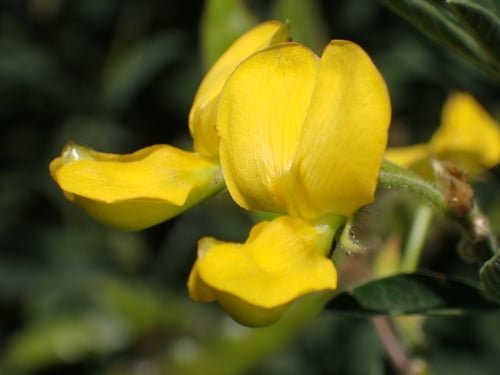
iNaturalist· cc-by-nc
(c) maddyo, some rights reserved (CC BY-NC)
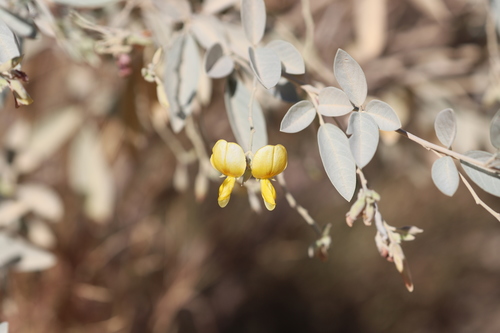
iNaturalist· cc-by-nc
(c) Kate Braun, some rights reserved (CC BY-NC), uploaded by Kate Braun
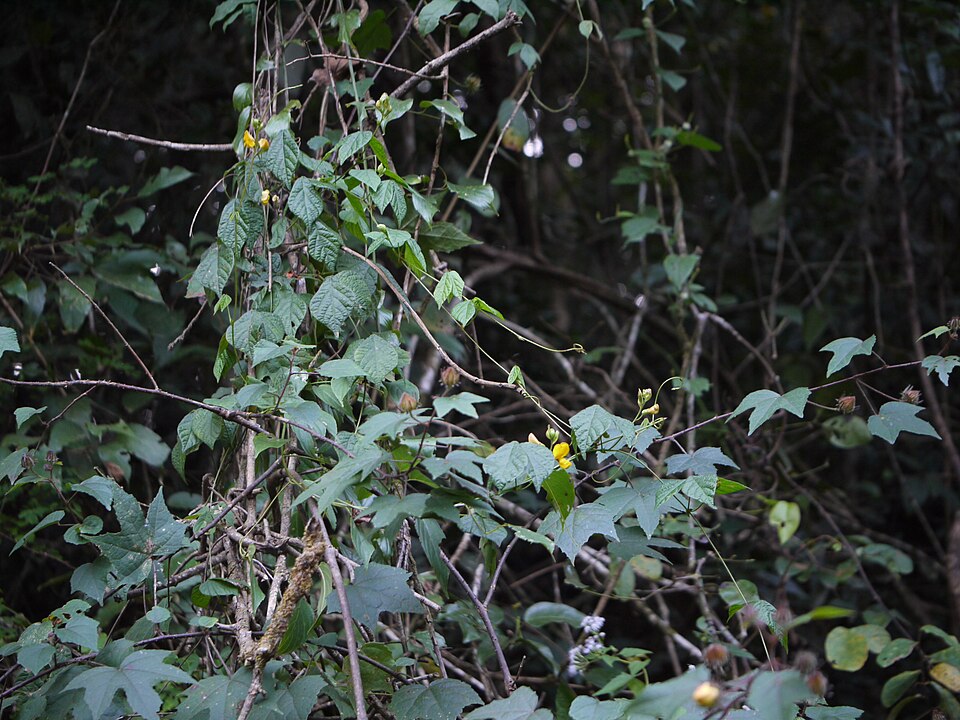
iNaturalist· cc-by-nc
(c) Mark Hyde, Bart Wursten and Petra Ballings, some rights reserved (CC BY-NC)
Description
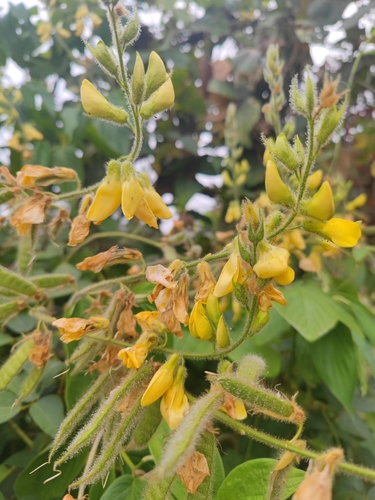
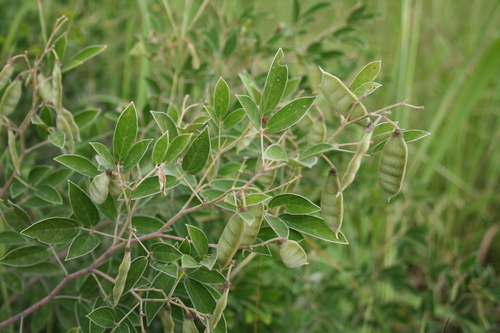
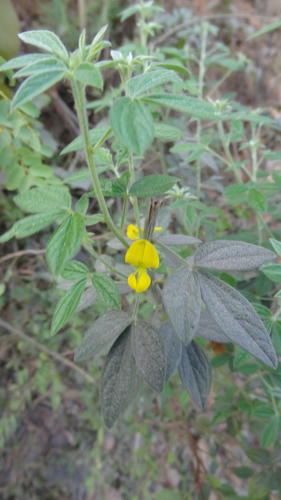
A herb or shrub. It is tall and erect. It can be 2 m tall. There are dense grey hairs on the stems and under the leaves. The leaves have 3 leaflets. These are sword shaped and 6 cm long by 1.2 cm wide. They have a small tip. There are many flowers. These are close together on short flower shoots. They are yellow. The fruit are rough pods. They are 1.5 cm long by 8 mm wide.
Edible Uses
The mature pods are picked after starting to shrivel, and the seeds are lightly boiled before eating. The seeds are also cooked with maize meal.
Traditional Uses
The pods are picked when they are mature and have started to shrivel then the seeds are lightly boiled before eating. The seeds are cooked with maize meal.
Distribution
A tropical plant. It grows below 1,950 m above sea level. It can grow in arid places.
Where It Grows
Africa, Angola, Benin, Botswana, Burkina Faso, Burundi, Cameroon, Central Africa, Chad, Congo DR, Côte d'Ivoire, East Africa, Equatorial-Guinea, Eswatini, Ethiopia, Gambia, Ghana, Guinea, Guinée, Guinea-Bissau, Ivory Coast, Kenya, Madagascar, Malawi, Mali, Mozambique, Nigeria, Rwanda, Senegal, Sierra Leone, South Africa, Southern Africa, Sudan, Swaziland, Tanzania, Togo, Uganda, West Africa, Zambia, Zimbabwe,
Synonyms
Also Known As
Gwandu ya nseke, Inhlaba, Inhlula, Kiwandu ki nseke, Madoda, Mutunga-knomo, Uhangwa, Umupfunyantpke, Wontobum, Yellow seed
References (12)
- CROSS-UPCOTT,
- Fowler, D. G., 2007, Zambian Plants: Their Vernacular Names and Uses. Kew. p 37
- Fox, F. W. & Young, M. E. N., 1982, Food from the Veld. Delta Books. p 210
- Gen. hist. 2:348. 1832
- Latham, P., 2004, Useful Plants of Bas-Congo province. Salvation Army & DFID p 124
Show all 12 references Hide references
- Long, C., 2005, Swaziland's Flora - siSwati names and Uses http://www.sntc.org.sz/flora/
- Royal Botanic Gardens, Kew (1999). Survey of Economic Plants for Arid and Semi-Arid Lands (SEPASAL) database. Published on the Internet; http://www.rbgkew.org.uk/ceb/sepasal/internet [Accessed 28th April 2011]
- Ruiters-Welcome, A. K., 2019, Food plants of southern Africa. Ph.D. thesis. Univ. of Johannesburg p 57
- Schmidt, E., Lotter, M., & McCleland, W., 2007, Trees and shrubs of Mpumalanga and Kruger National Park. Jacana Media p 204
- van Wyk, Ben-Erik, 2019, The diversity and multiple uses of southern African legumes. Australian Systematic Botany, 2019, 32, 519–546
- Welcome, A. K. & Van Wyk, B.-E., 2019, An inventory and analysis of the food plants of southern Africa. South African Journal of Botany 122 (2019) 136–179
- World Checklist of Useful Plant Species 2020. Royal Botanic Gardens, Kew