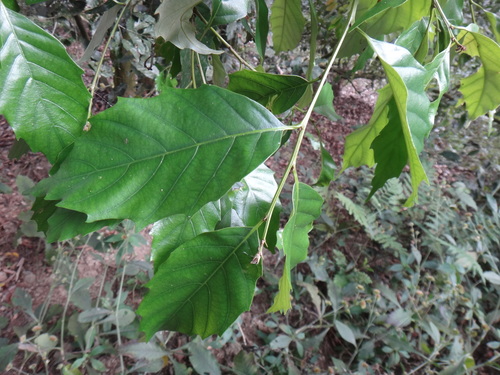
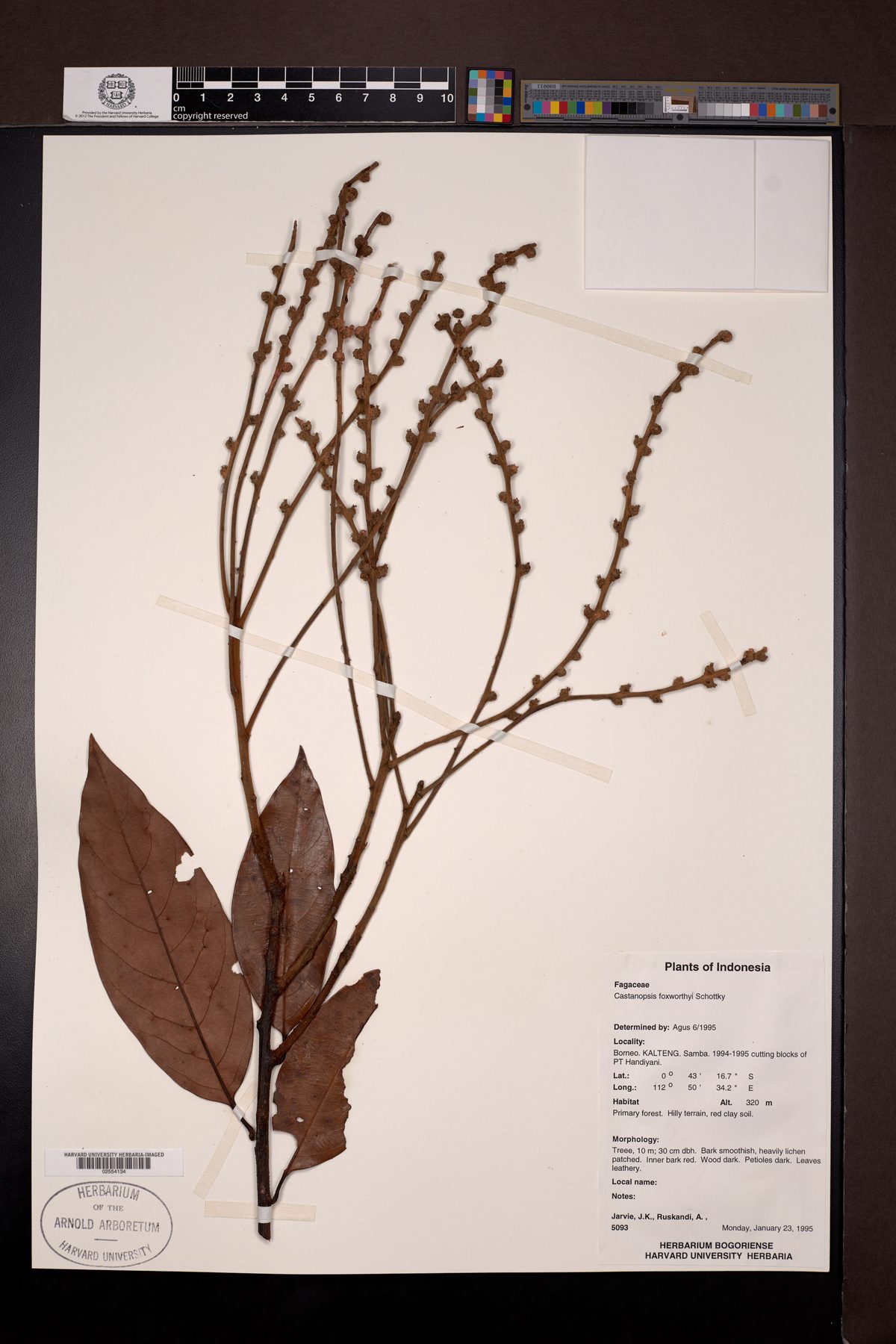
Quercus x hybrid
Hybrid Oak
Burgambel oak
gbif· cc-by
GBIF
gbif· cc-by
GBIF
gbif· cc-by
GBIF
Description
Quercus x hybrid is a deciduous Tree growing to 30 m (98ft) by 15 m (49ft) at a medium rate. See above for USDA hardiness. It is hardy to UK zone 3. The flowers are pollinated by Wind. It is noted for attracting wildlife. Suitable for: medium (loamy) and heavy (clay) soils and prefers well-drained soil. Suitable pH: mildly acid, neutral and basic (mildly alkaline) soils. It can grow in semi-shade (light woodland) or no shade. It prefers dry or moist soil and can tolerate drought. The plant can tolerates strong winds but not maritime exposure.
Edible Uses
Carbon Farming Solutions - Staple Crop: balanced carb (The term staple crop typically refers to a food that is eaten routinely and accounts for a dominant part of people's diets in a particular region of the world).
Medicinal Uses
Dysentery. None Report. As a cross between Quercus macrocarpa and Quercus gambelii we may expect some of the medicinal qualities to be present. Quercus macrocarpa has Antispasmodic; Astringent; and Tonic qualities. The bark is astringent and tonic. An infusion has been used in the treatment of diarrhoea. A decoction of the root or inner bark has been used in the treatment of cramps. Any galls produced on the tree are strongly astringent and can be used in the treatment of haemorrhages, chronic diarrhoea, dysentery etc. Quercus gambelii has Analgesic; Astringent; and Cathartic properties. Any galls produced on the tree are strongly astringent and can be used in the treatment of haemorrhages, chronic diarrhoea, dysentery etc. The acorns have been eaten to give greater sexual potency. The root bark is analgesic and cathartic. A decoction has been used to treat postpartum pain and facilitate delivery of the placenta.
Distribution
Origin: Natural hybrid in W. N. America.
Where It Grows
A naturally occurring cross between the bur oak, whose native range is in the eastern U.S., and the Gambel oak, whose native range is in the southwestern U.S. and Mexico.
Cultivation
Experimental Crop Fodder: Mast Industrial Crop: Tannin Management: Standard Staple Crop: Balanced carb. Climate: boreal to warm temperate. Humidity: semi-arid to humid. A naturally occurring cross between the bur oak, whose native range is in the eastern U.S., and the Gambel oak, whose native range is in the southwestern U.S. and Mexico. It is a member of the white oak group and produces abundant acorns annually. The mature size of the tree can vary from large tree (typical of bur oaks) to medium tree/large shrub (typical of Gambel oaks) depending on its environment. Both parents are known to be tough and drought-tolerant. Burgambel acorns are low in tannins and relatively quick to bear, between three and six years. The low tannins make them more palatable. Burgambel begins producing acorns at a young age when the trees are only 3-6 feet tall. The acorns ripen early in the season.Burgambel averages 1-2 ft. in height per year. Carbon Farming Solutions - Cultivation: experimental as food. Management: standard (Describes the non-destructive management systems that are used in cultivation).
Propagation
Seed - it quickly loses viability if it is allowed to dry out. It can be stored moist and cool overwinter but is best sown as soon as it is ripe in an outdoor seed bed, though it must be protected from mice, squirrels etc. Small quantities of seed can be sown in deep pots in a cold frame. Plants produce a deep taproot and need to be planted out into their permanent positions as soon as possible, in fact seed sown in situ will produce the best trees. Trees should not be left in a nursery bed for more than 2 growing seasons without being moved or they will transplant very badly.
Other Uses
Fodder Carbon Farming Solutions - Industrial Crop: tannin (Crops grown for non-food uses. Industrial crops provide resources in three main categories: materials, chemicals, and energy. Traditional materials include lumber and thatch, paper and cardboard, and textiles). Fodder: mast. Drought-tolerant; suitable for xeriscaping
Synonyms
Also Known As
Quercus macrocarpa x gambelii, Bur-Gambel Oak, Burgambel oak