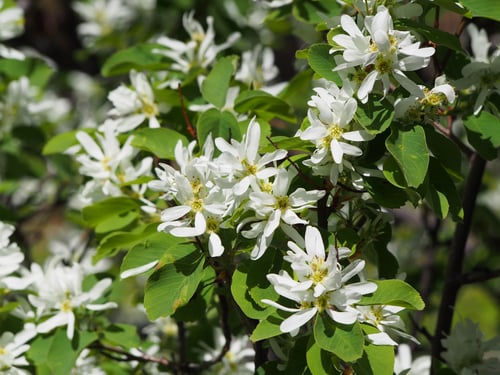
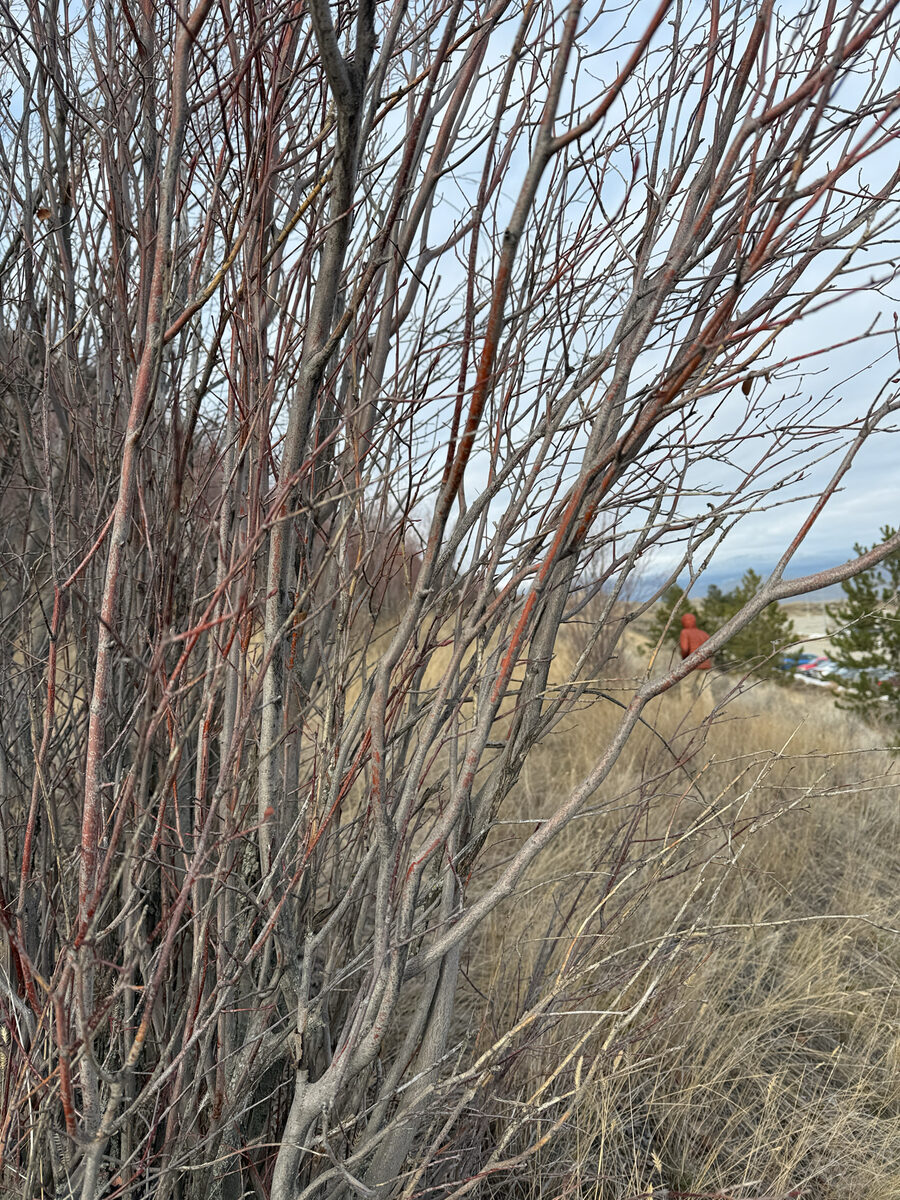
Prunus virginiana var. melanocarpa
(A. Nelson) Sarg.
Black western chokecherry
iNaturalist· cc-by-nc-nd
(c) Dan Mullen, some rights reserved (CC BY-NC-ND)
iNaturalist· cc-by-nc
(c) chelseymoto, some rights reserved (CC BY-NC)
Summary
Source: WikipediaPrunus virginiana, commonly called bitter-berry, chokecherry, Virginia bird cherry, and western chokecherry (also black chokecherry for P. virginiana var. demissa), is a species of bird cherry (Prunus subgenus Padus) native to North America.
Description
A temperate tree in the Rosaceae family with edible black fruit.
This description is brief — help expand it
Edible Uses
The fruit are eaten fresh or cooked.
Traditional Uses
The fruit are eaten fresh or cooked.
This uses section is brief — help expand it
Medicinal Uses
For many Indigenous tribes of the Northern Rockies, Northern Plains, and boreal forest region of Canada and the United States, chokecherries are the most important fruit in their traditional diets and are part of pemmican, a staple traditional food. The bark of chokecherry root is made into an asperous-textured concoction used to ward off or treat colds, fever and stomach maladies by Indigenous people. The inner bark of the chokecherry, as well as red osier dogwood, or alder, is also used by some tribes in ceremonial smoking mixtures, known as kinnikinnick. The chokecherry fruit can be eaten when fully ripe, but otherwise contains a toxin. The fruit can be used to make jam or syrup, but the bitter nature of the fruit requires sugar to sweeten the preserves. The Plains Indians pound up the whole fruits—including the pits—in a mortar, from which they made sun-baked cakes. Chokecherry is also used to make wine in the Western United States, mainly in the Dakotas and Utah, as well as in Manitoba, Canada.
Known Hazards
The stone of the fruit is poisonous. Chokecherry, including the foliage, is toxic to moose, cattle, goats, deer, and other animals with segmented stomachs (rumens), especially after the leaves have wilted (such as after a frost or after branches have been broken); wilting releases cyanide and makes the plant sweet. About 4.5–9 kilograms (10–20 pounds) of foliage can be fatal. In horses, symptoms include heavy breathing, agitation, and weakness.
Distribution
It is a temperate plant.
Where It Grows
North America, USA,
Synonyms
Also Known As
Rocky Mountai cherry
References (1)
- Kermath, B. M., et al, 2014, Food Plants in the Americas: A survey of the domesticated, cultivated and wild plants used for Human food in North, Central and South America and the Caribbean. On line draft. p 717