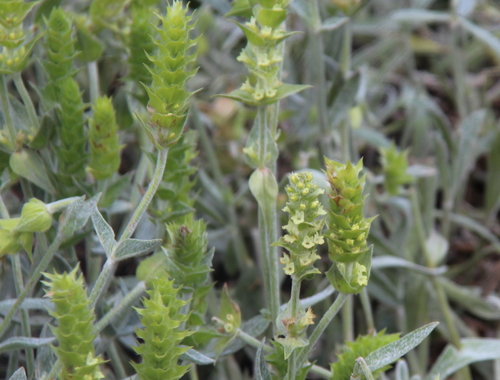
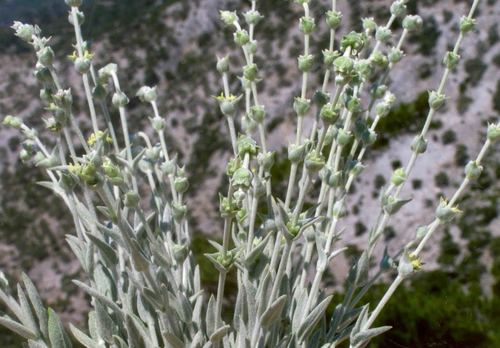
Origanum majorana
L.
Sweet Marjoram
iNaturalist· cc-by
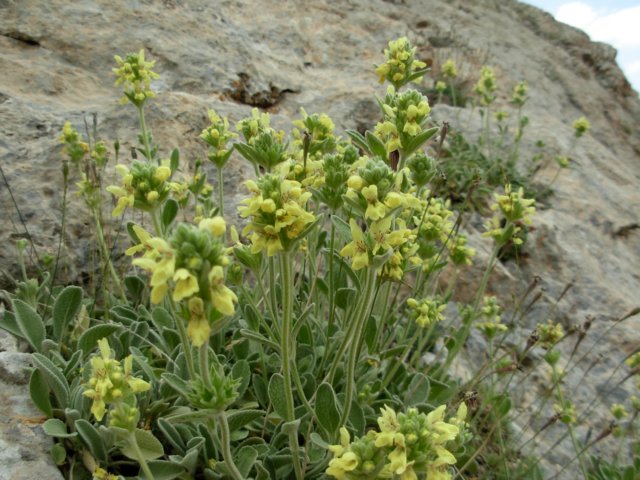
(c) Christoph Zurnieden, some rights reserved (CC BY)
iNaturalist· cc-by
(c) Forest and Kim Starr, some rights reserved (CC BY)
iNaturalist· cc-by-nc-nd
(c) manuel m. v., some rights reserved (CC BY-NC-ND)
Description
Origanum majorana is a PERENNIAL growing to 0.6 m (2ft) by 0.6 m (2ft in) at a fast rate. See above for USDA hardiness. It is hardy to UK zone 7. It is in flower from June to September, and the seeds ripen from August to September. The species is hermaphrodite (has both male and female organs) and is pollinated by Bees. The plant is self-fertile. It is noted for attracting wildlife. Suitable for: light (sandy), medium (loamy) and heavy (clay) soils and prefers well-drained soil. Suitable pH: mildly acid, neutral and basic (mildly alkaline) soils. It can grow in semi-shade (light woodland) or no shade. It prefers dry or moist soil.
Edible Uses
Tea. Leaves - raw or cooked. Sweet marjoram is widely used as a flavouring for salad dressings, vegetables, legumes and oils[7, 14, 27, 61, 171, 238]. It has a more delicate flavour than the closely related oregano (Origanum vulgare), and is best when used fresh and only added towards the end of cooking. The aromatic seeds are used as a flavouring in sweets, drinks etc. A herb tea is made from the fresh or dried leaves. The flavour resembles a blend of thyme, rosemary and sage.
Medicinal Uses
Antidepressant Antiseptic Antispasmodic Aromatherapy Carminative Cholagogue Diaphoretic Disinfectant Emmenagogue Expectorant Stimulant Stomachic Tonic. Sweet marjoram is mainly used as a culinary herb, but is also medicinally valuable due to its stimulant and antispasmodic properties. It is a good general tonic, treating various disorders of the digestive and respiratory systems. It has a stronger affect on the nervous system than the related oregano (O. vulgare) and is also thought to lower the sex drive. Because it can promote menstruation, it should not be used medicinally by pregnant women though small quantities used for culinary purposes are safe. The herb is antiseptic, antispasmodic, carminative, cholagogue, diaphoretic, diuretic, emmenagogue, expectorant, stimulant, stomachic and mildly tonic. It is taken internally in the treatment of bronchial complaints, tension headaches, insomnia, anxiety, minor digestive upsets and painful menstruation. It should not be prescribed for pregnant women. Externally, it is used to treat muscular pain, bronchial complaints, arthritis, sprains and stiff joints. The plant is harvested as flowering begins and can be used fresh or dried. Marjoram is often used medicinally in the form of the essential oil, about 400 grams being obtained from 70 kilos of the fresh herb. The oil is used as an external application for sprains, bruises etc. The essential oil is used in aromatherapy. Its keyword is 'Muscle relaxant'.
Distribution
N. Africa to Turkey.
Where It Grows
TEMPERATE ASIA: Turkey (south),Cyprus.
Cultivation
Requires a rather dry, warm, well-drained soil, but is not fussy as to soil type, thriving on chalk. Prefers slightly alkaline conditions. Sweet marjoram is often cultivated as a culinary herb, there are some named varieties. Plants do not normally survive the winter outdoors in Britain so they are usually grown as an annual. Another report says that it is possible to overwinter plants in areas with cold winters so long as you apply a thick mulch to the roots. Container growing is preferred in areas with cold, wet winters or humid, wet summers. Plants do not often set seed in Britain. A good companion plant, improving the flavour of nearby plants. The flowers are very attractive to bees. The bruised leaves emit a fragrance somewhat resembling thyme, but somewhat sweeter with balsamic undertones. This is a sacred plant in India. Members of this genus are rarely if ever troubled by browsing deer. In garden design, as well as the above-ground architecture of a plant, root structure considerations help in choosing plants that work together for their optimal soil requirements including nutrients and water. Oregano is self-fertile. Oregano is typically harvested in late spring to summer, just before the plant begins to flower. Oregano generally flowers from mid-summer to early autumn. Oregano grows relatively quickly, reaching maturity in about 2-3 months under optimal conditions.
Propagation
Seed - sow early spring at 10 - 13°c and only just cover the seed. Germination usually takes place within 2 - 4 weeks. Prick out the seedlings into individual pots when they are large enough to handle and plant them out into their permanent positions in early summer. The seed can also be sown in situ in April or early May and, although it can be slow to germinate, usually does well. Division in March or October. Very easy, larger divisions can be planted out direct into their permanent positions. We have found that it is better to pot up the smaller divisions and grow them on in light shade in a cold frame until they are well established before planting them out in late spring or early summer. Basal cuttings of young barren shoots in June. Very easy. Harvest the shoots with plenty of underground stem when they are about 8 - 10cm above the ground. Pot them up into individual pots and keep them in light shade in a cold frame or greenhouse until they are rooting well. Plant them out in the summer.
Other Uses
Disinfectant Dye Essential Agroforestry uses: Oregano can be used as a companion plant, helping to attract beneficial insects and improving the overall health of surrounding plants. It may also help deter certain pests. The leaves and flowers yield 0.3 - 0.4% essential oil by steam distillation. Called 'Oil of Sweet Marjoram', it is used as a food flavouring and in perfumery, soaps, hair products etc. The plant is often used to disinfect bee hives.