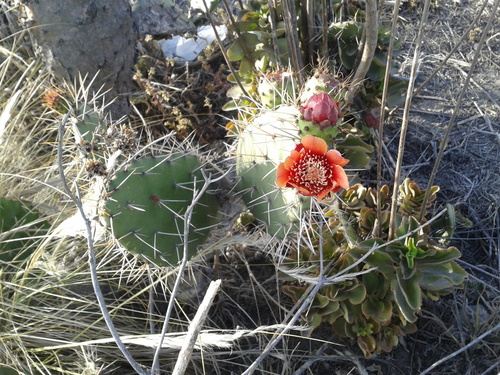
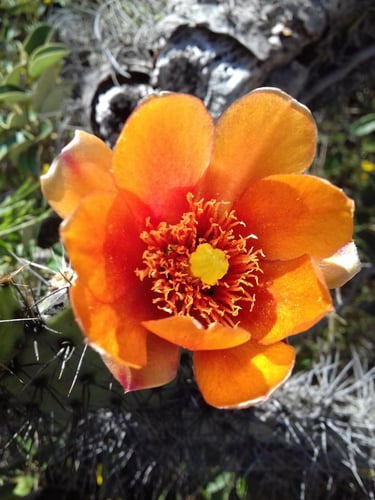
Opuntia tomentosa
Salm-Dyck
Velvet prickly pear, Woollyjoint Pricklypear
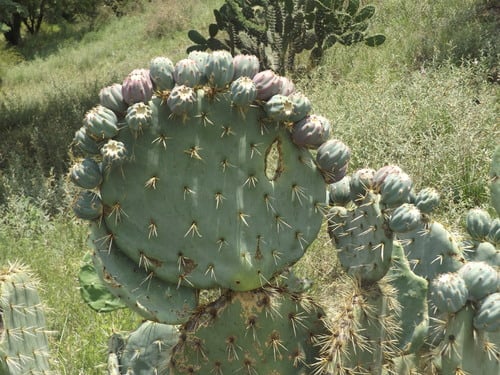
iNaturalist· cc-by-nc
(c) Ad Konings, some rights reserved (CC BY-NC), uploaded by Ad Konings
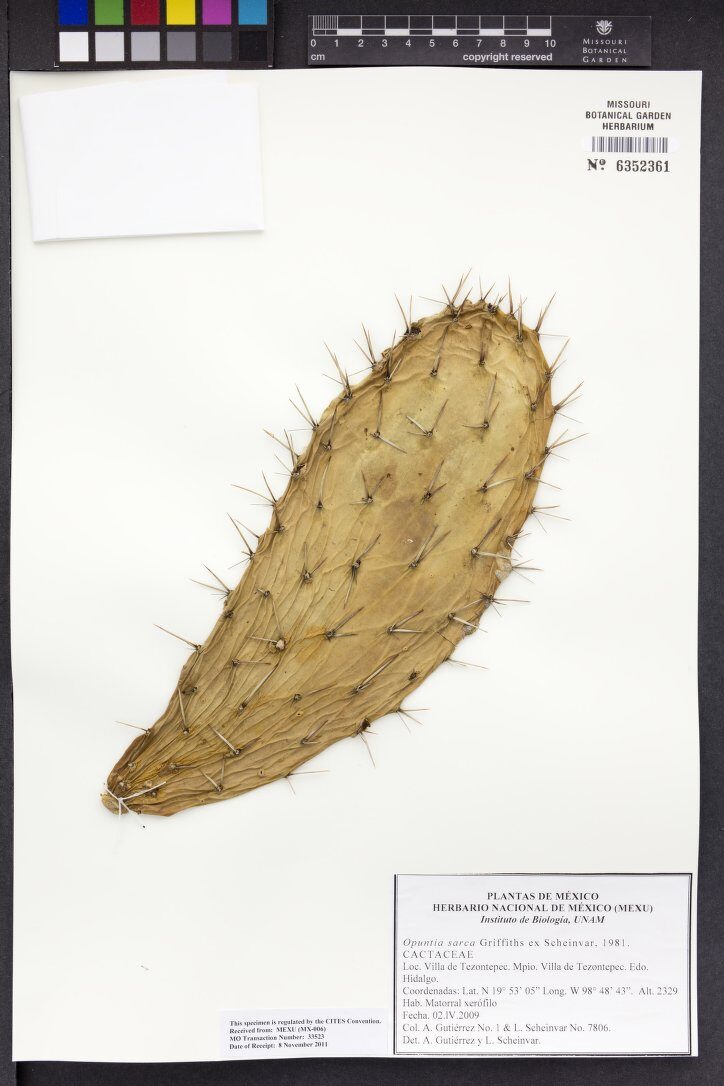
iNaturalist· cc-by-nc
(c) Arturo Torres Vázquez, some rights reserved (CC BY-NC), uploaded by Arturo Torres Vázquez
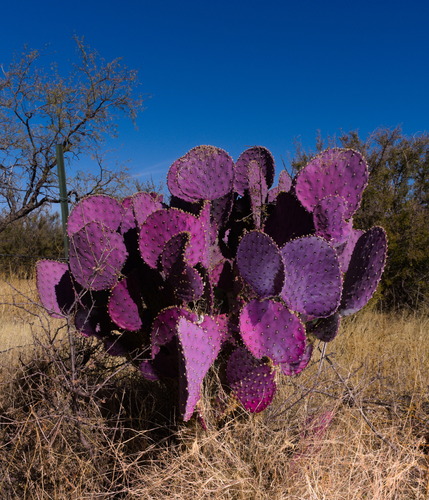
iNaturalist· cc-by-nc
(c) Martin Bennett, some rights reserved (CC BY-NC), uploaded by Martin Bennett
Description
Opuntia tomentosa is an evergreen Perennial growing to 4.5 m (14ft) by 4.5 m (14ft) at a medium rate. See above for USDA hardiness. It is hardy to UK zone 10. The plant is self-fertile. It is noted for attracting wildlife. Suitable for: light (sandy) and medium (loamy) soils, prefers well-drained soil and can grow in nutritionally poor soil. Suitable pH: mildly acid, neutral and basic (mildly alkaline) soils. It cannot grow in the shade. It prefers dry or moist soil and can tolerate drought.
Edible Uses
Edible Portion: Fruit. Fruits are eaten raw or made into jellies and jams that have a flavour like guava jelly. A succulent cactus chutney is made by mixing the fruit with raisins, apples, onions, lemon peel, dates, suger, vinegar, and spices. larger fruit measure about two inches long or a little more. They are juicy and fairly sweet, though less tasty than some other kinds of prickly pears.
Medicinal Uses
We have no specific information on medicinal uses for this species, but the following notes are likely to apply universally to Opuntia species and other related genera. The flesh of tender young stem segments can be applied as a poultice to reduce inflammation. The mucilage and soluble fibre found in the flowers and stem segments have been shown to help control blood-sugar levels associated with adult-onset diabetes. There is clinical evidence that the soluble fibre in the stem segments helps reduce blood cholesterol levels.
Known Hazards
Species in this genus generally have numerous minutely barbed glochids (hairs) that are easily dislodged when the plant is touched and they then become stuck to the skin where they are difficult to see and remove. They can cause considerable discomfort. This species is unique in having pads covered with tiny hairs, so that they feel like velvet.
Distribution
Origin: Mesoamerica. Native to Mexico and Guatemala.
Where It Grows
NORTHERN AMERICA: Mexico, San Luis Potosí, Hidalgo, México, SOUTHERN AMERICA: Guatemala,
Cultivation
It grows in deep soils where water is available. A succulent shrub, growing under desert and dry conditions. It grows in sandy, waste places. Pads are covered with tiny hairs, so that they feel like velvet or woolly. Carbon Farming Solutions - Cultivation: regional crop (Describes the non-destructive management systems that are used in cultivation). Many Opuntia species are self-fertile, though cross-pollination can improve fruit set and quality. The fruits (tunas) are typically harvested in late summer to autumn, around late summer to early fall, depending on the species and climate. Opuntia species usually flower in late spring to early summer. They generally grow moderately fast, and many species can produce new pads and fruit within the first year of planting, especially in favorable conditions.
Propagation
Seed - sow early spring in a very well-drained compost in a greenhouse. When they are large enough to handle, prick the seedlings out into individual pots and grow them on in the greenhouse for at least their first two winters. Plant them out into their permanent positions in late spring or early summer, after the last expected frosts. Give the plants some protection from winter wet. Make sure you have some reserve plants in case those outdoors do not overwinter. Cuttings of leaf pads at any time in the growing season. Remove a pad from the plant and then leave it in a dry sunny place for a couple of days to ensure that the base is thoroughly dry and has begun to callous. Pot up into a sandy compost. Very easy, rooting quickly.
Other Uses
Fencing Fodder Agroforestry uses: Prickly pear can be used as a natural fence or barrier, provides habitat for wildlife, and its pads can be used as forage for livestock. Carbon Farming Solutions - Agroforestry Services: living fence (Agroforestry is a land use management system in which trees or shrubs are grown around or among crops or pastureland). Intercropped with other forage species like Mesquite (Prosopis SPP). Fodder: bank, insect.
Synonyms
Also Known As
Velvet Tree Pear, Velvet opuntia, Nopal de san gabriel, Tree pear