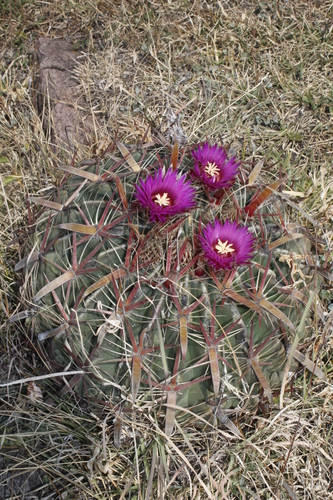
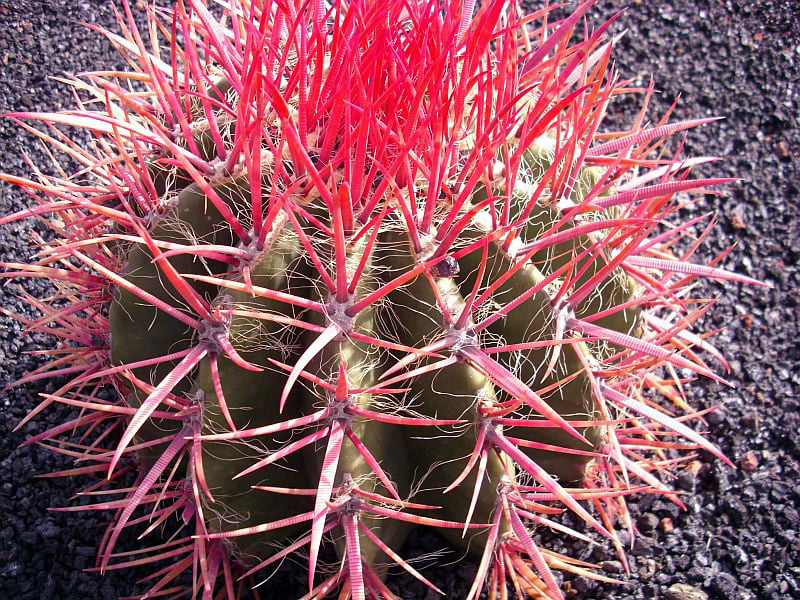
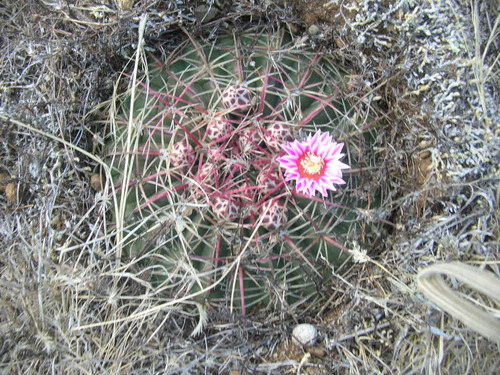
Opuntia humifusa - (Raf.) Raf.
(Raf.) Raf.
Eastern Prickly Pear
gbif· cc-by-nc
Eaton Ekarintaragun
gbif· cc-by-nc
Robert Ferraro
gbif· cc-by-nc
Robert Ferraro
Description
Opuntia humifusa is an evergreen Shrub growing to 0.2 m (0ft 8in) by 1 m (3ft 3in) at a medium rate. See above for USDA hardiness. It is hardy to UK zone 5 and is not frost tender. The flowers are pollinated by Insects. The plant is self-fertile. It is noted for attracting wildlife. Suitable for: light (sandy) and medium (loamy) soils, prefers well-drained soil and can grow in nutritionally poor soil. Suitable pH: mildly acid, neutral and basic (mildly alkaline) soils and can grow in saline soils. It cannot grow in the shade. It prefers dry or moist soil and can tolerate drought.
Edible Uses
Fruit - raw, cooked or dried for later use. Sweet and gelatinous. Lean and insipid. The unripe fruits can be added to soups, etc, imparting an okra-like mucilaginous quality. The fruit can hang on the plant all year round. The purplish or reddish, fleshy fruit is around 15 - 40mm long and 20 - 30mm in diameter. Be careful of the plants irritant hairs, see the notes above on toxicity. Stem segments - cooked or raw. Watery and very mucilaginous. Various species' tender young stem segments are often cooked as vegetables. Known as ‘nopals’ in Mexico, where they are a common ingredient in numerous dishes, they can be eaten raw or cooked and used in marmalades, soups, stews and salads. The most commonly used species are Opuntia ficus-indica or Opuntia hyptiacantha (syn Opuntia matudae), although the stems of almost all Opuntia species are edible. Seed - briefly roasted and then ground into a powder. It is also used as a thickener.
Medicinal Uses
A poultice of the peeled stem segments is applied to wounds, sores, warts, snakebites, etc. The juice of the fruits is used as a treatment for warts. A tea made from the pads treats lung ailments. We have no specific information on medicinal uses for this species, but the following notes will likely apply universally to Opuntia species and other related genera. The flesh of tender young stem segments can be applied as a poultice to reduce inflammation. The mucilage and soluble fibre found in the flowers and stem segments have been shown to help control blood sugar levels associated with adult-onset diabetes. Clinical evidence shows that the soluble fibre in the stem segments helps reduce blood cholesterol levels.
Known Hazards
The plant has numerous minutely barbed glochids - barbed spines that are usually small to minute and very sharp and brittle. The glochids are very easily dislodged when the plant is touched and can penetrate the skin where, because of their barbs, they become stuck and are very difficult to see and remove. They can cause considerable irritation and discomfort. Opuntia species can contain quite high levels of oxalic acid, especially in older parts of the plant. Perfectly alright in small quantities, foods containing oxalic acid should not be eaten in large amounts since it can lock up other nutrients in the food, especially calcium, thus causing mineral deficiencies. The oxalic acid content will be reduced if the plant is cooked. People with a tendency to rheumatism, arthritis, gout, kidney stones or hyperacidity should take special caution if including this plant in their diet since it can aggravate their condition.
Distribution
Southern and eastern N. America - South Dakota to New York and Massachusetts south to eastern Texas, Louisiana and Florida.
Where It Grows
Native to: Alabama, Connecticut, Delaware, District of Columbia, Kentucky, Maryland, Massachusetts, Mexico Northeast, Mississippi, New Hampshire, New Jersey, New York, Pennsylvania, Virginia, West Virginia.
Cultivation
Soil Texture: Prefers light (sandy) or gravelly soils but can tolerate medium soils. It thrives in nutrient-poor, rocky, or well-drained soils. Soil Moisture: Prefers dry to moderately moist soils. It is drought-tolerant but does not thrive in wet or waterlogged conditions. Drainage: Requires well-drained soil to prevent root rot, particularly in humid climates.Soil pH: Tolerates a wide range of pH levels, from slightly acidic to alkaline soils. Saline Tolerance: Moderately tolerant of saline conditions, making it suitable for coastal areas and sandy soils with some salinity. Tolerance of Poor Soil: It thrives in poor, nutrient-deficient soils, particularly in sandy or rocky environments. Light Requirements: Requires full sun for optimal growth and flowering. Shade reduces vigour and flowering. Height: Typically grows to about 10–30 cm (4–12 inches) in height but can spread widely (up to 60–90 cm or more in width) as a low-growing, spreading cactus. Pollination: Bees, particularly native bees, are attracted to its large yellow flowers. Temperature: Hardy in USDA zones 4–10, making it one of the most cold-hardy cacti. It can survive freezing temperatures and snowy conditions. Drought Tolerance: Highly drought-tolerant, suitable for xeriscaping and arid regions. Flowering: Produces large, bright yellow flowers with reddish centres in late spring to early summer, followed by edible red fruits (tunas). Pests and Diseases: Generally pest-resistant but may be affected by cochineal scale (appearing as white, cottony spots) or rot in poorly drained soils. Pruning: Minimal pruning is needed to remove damaged or rotting pads. Opuntia humifusa is very cold-hardy, tolerating temperatures to about -30°c. It is tolerant of various conditions, thriving in areas with heavy rainfall for part of the year and then hot and dry for other parts of the year. It can also tolerate considerable cold and winter snow if the soil is free-draining. Occurs in sandy soil and rock outcrops (ranging from granitic to sandstone or limestone) of hills, valleys, and shores. In times of drought or cold, the plant shrivels considerably, sometimes collapsing completely until clement conditions return. Requires a sandy or very well-drained soil. Prefers a pH in the range of 6 to 7.5. It must be kept fairly dry in winter but like a reasonable water supply in the growing season. A position at the base of a south-facing wall or somewhere protected from winter rain is best for this plant. Requires warmth and plenty of sun in the growing season. Plants tolerate considerable neglect. There is significant confusion over the correct name for this species. Several synonyms listed above also apply to other species in this genus. The native range of this species is E. U.S.A., Mexico (Tamaulipas, San Luis Potosí). It is a succulent subshrub and grows primarily in the temperate biome. It has been introduced into Austria, Bulgaria, Central European Russia, China North-Central, East Himalaya, France, Free State, Germany, Great Britain, Greece, Italy, Korea, Kriti, Lebanon-Syria, Lesotho, Netherlands, New South Wales, North Caucasus, Queensland, South Australia, Spain, Switzerland, Transcaucasus, Victoria, Western Australia, and Yugoslavia. Opuntia species generally grow moderately fast, with many species capable of producing new pads and fruit within the first year of planting, especially in favourable conditions. The fruits (tunas) are typically harvested in late summer to autumn, around late summer to early fall, depending on the species and climate.
Propagation
Seed—sow early spring in a greenhouse in a very well-drained compost. When they are large enough to handle, prick the seedlings out into individual pots and grow them in the greenhouse for at least their first two winters. After the last expected frosts, plant them out into their permanent positions in late spring or early summer. Give the plants some protection from winter wetness. Ensure you have some reserve plants in case those outdoors do not overwinter. Cuttings of leaf pads can be taken at any time in the growing season. Remove a pad from the plant and leave it in a dry, sunny place for a couple of days to ensure that the base is thoroughly dry and has begun to callous. Pot it up into a sandy compost. It is very easy and roots quickly.
Other Uses
The species is utilized as an ornamental, especially in the northern extent of its range. The plant (part not specified) is used as a mordant to fix dyes. The following notes are for Opuntia ficus indica. They almost certainly also apply to this species. A gum is obtained from the stem. It is used as a masticatory or can be mixed with oil to make candles. The juice of the boiled stem segments is very sticky. It is added to plaster, whitewash, etc, to make it adhere better to walls. Nectary - Flowers rich in nectar and pollen: Prickly pear flowers are known for being rich in nectar and attract various pollinators, including bees and butterflies. Wildlife - Food (Fruit, Seeds, Leaf litter, Shelter, Nesting, Roosting): The fruit (tunas) and pads (nopales) of prickly pear are edible and provide food for various wildlife, including birds and mammals. The pads can also offer some shelter for small animals. Invertebrate Shelter (Overwintering sites, Leaf litter, Groundcover): The pads and spines can provide shelter for invertebrates, and the leaf litter around the base can serve as a habitat for beneficial insects. Pest Confuser (Smell): While prickly pears may have some aromatic qualities, they are not specifically recognized for confusing or deterring pests.
Synonyms
Also Known As
Devil's tongue, Eastern prickly pear, Indian fig, Low Prickly Pear, Smooth Prickly Pear.