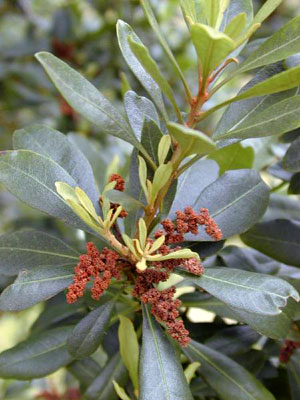
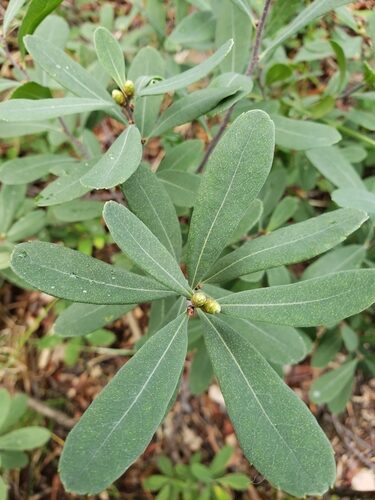
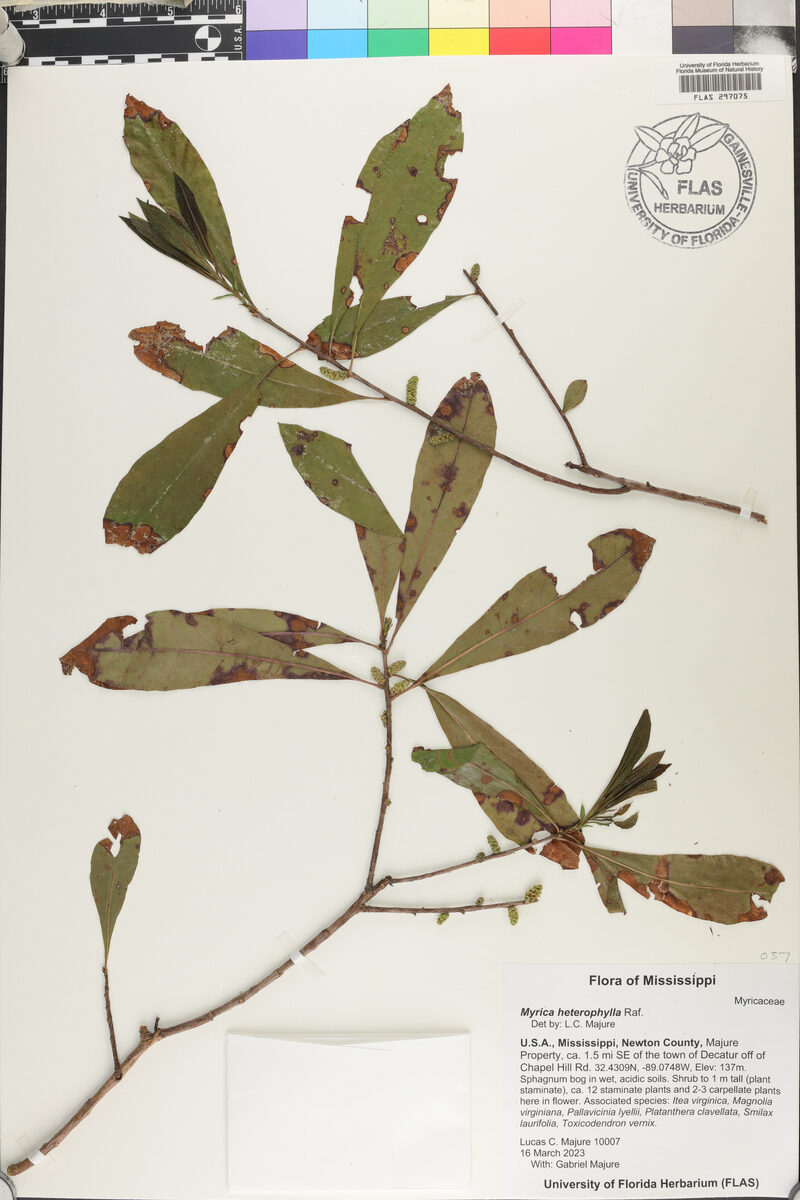
Myrica pensylvanica
Mirb
Northern Bayberry
wikimedia· cc-by-sa
Famartin (via Wikimedia Commons)
wikimedia· cc-by-sa
Photo by Derek Ramsey (Ram-Man) (via Wikimedia Commons)
Description
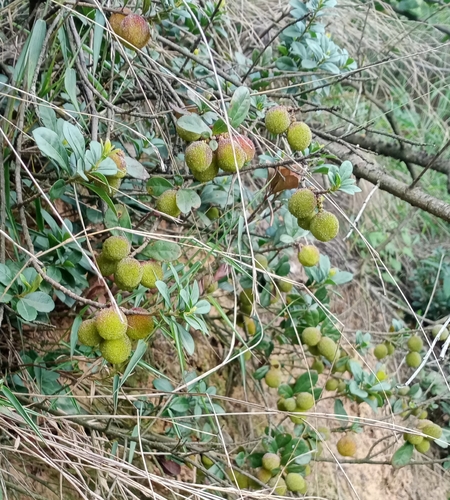
Myrica pensylvanica is a deciduous Shrub growing to 3 m (9ft) by 3 m (9ft). See above for USDA hardiness. It is hardy to UK zone 2. It is in flower from April to May, and the seeds ripen in October. The species is monoecious (individual flowers are either male or female, but both sexes can be found on the same plant) and is pollinated by Wind. It can fix Nitrogen. Suitable for: light (sandy), medium (loamy) and heavy (clay) soils and prefers well-drained soil. Suitable pH: mildly acid and neutral soils and can grow in very acid and saline soils. It can grow in semi-shade (light woodland) or no shade. It prefers dry or moist soil.
Edible Uses
Condiment. Fruit - raw or cooked. The fruit is about 4mm in diameter and contains a single large seed. There is very little edible flesh and this is of poor quality. The leaves and fruit are used as a food flavouring in soups etc. A bay leaf substitute, imparting a delicate aroma and subtle flavour. The herb is removed before the food is served.
Medicinal Uses
The root bark is astringent and emetic in large doses. A tea made from the leaves is used in the treatment of fevers and externally as a wash for itchy skin.
Known Hazards
There is a report that some of the constituents of the wax might be carcinogenic.
Distribution
Eastern N. America. Possibly naturalized in Britain in the New Forest.
Where It Grows
NORTHERN AMERICA: Canada, Québec (east), Nova Scotia, Ontario (Norfolk Co.), Prince Edward Island, New Brunswick, Newfoundland and Labrador (south), St. Pierre and Miquelon, United States, Connecticut, Maine (south), Massachusetts (east), New Hampshire (southeast), New Jersey, New York (southeast), Ohio (northeast), Pennsylvania, Rhode Island, Delaware, Maryland, North Carolina (northeast),
Cultivation
It is a temperate plant. Prefers a moist soil. Grows well in an open position in a well-drained soil in sun or light shade. Thrives in any ordinary garden soil. Prefers a lime-free loamy or peaty soil. Does well in dry maritime sites. Hardy to about -40°c. Closely related to M. cerifera and perhaps no more than a hardier northern form of it, it has larger fruits than M. cerifera. Where their ranges overlap, Myrica pensylvanica hybridizes quite readily with both M . cerifera and M . Heterophylla. Tolerant of salt spread on roads. Plants in this genus are notably resistant to honey fungus. Many species in this genus have a symbiotic relationship with certain soil micro-organisms, these form nodules on the roots of the plants and fix atmospheric nitrogen. Some of this nitrogen is utilized by the growing plant but some can also be used by other plants growing nearby. Carbon Farming - Climate: cold to warm temperate. Humidity: humid. Cultivation: regional crop. Management: standard. A clumping plant, forming a colony from shoots away from the crown but with a limited spread.
Propagation
Seed - best sown as soon as it is ripe in the autumn in a cold frame. Barely cover the seed and keep it moist. Stored seed germinates more freely if given a 3 month cold stratification and then sown in a cold frame. Germination is usually good. Prick out the seedlings into individual pots when they are large enough to handle and grow on in the cold frame for the first winter. Plant out in late spring or early summer. Cuttings of half-ripe wood, 5 - 8cm with a heel, July/August in a frame. Pot up and overwinter in a cold frame. Fair to good percentage. Cuttings of mature wood in November/December in a frame. Layering in spring. Division of suckers in the dormant season. Plant them out direct into their permanent positions.
Other Uses
Dye Hedge Hedge WaxA wax covering on the fruit is extracted by scalding the fruit with boiling water and immersing them for a few minutes, the wax floats to the surface and is then skimmed off. The fruit is then boiled in water to extract the wax from the pulp and once more the wax is skimmed off. It is then strained through a muslin cloth and can be used to make aromatic candles. Candles made from this wax are quite brittle but are less greasy in warm weather. They are slightly aromatic, with a pleasant balsamic odour, and do not smoke when put out, making them much more pleasant to use that wax or tallow candles. The wax is also used in making soaps. A green dye is obtained from the leaves. The plant is very wind hardy and can be grown as an informal hedge. Carbon farming - Industrial Crop: wax. Agroforestry Services: nitrogen.
Synonyms
Also Known As
Bayberry. Northern bayberry, Candleberry