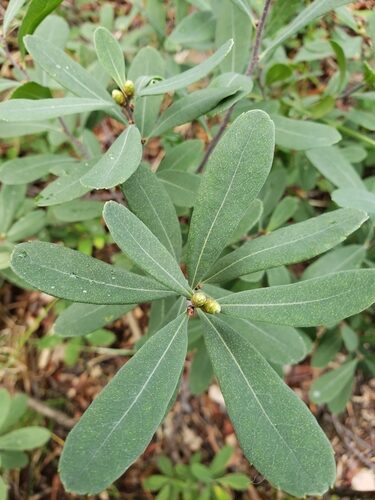
Myrica faya
Aiton
Fire tree, Candleberry Myrtle
Wikipedia· cc-by-sa
Wikimedia Commons - Myrica_faya.jpg
iNaturalist· cc-by-nc
(c) Isa, some rights reserved (CC BY-NC)
iNaturalist· cc-by
(c) zebedeugalinha, some rights reserved (CC BY)
Summary
Source: WikipediaMyrica faya (firetree, faya or haya; syn. Morella faya (Ait.) Wilbur) is a species of Myrica, native to Macaronesia (the Azores, Madeira, and the Canary Islands), and possibly also western coastal mainland Portugal.
Description
An evergreen shrub reaching 10 m tall and wide, growing at fast rate, hardy to UK zone 10 and frost tender. Flowers pollinated by wind and bees; not self-fertile. Fixes atmospheric nitrogen. Attracts wildlife. Tolerates light sandy, medium loamy, and heavy clay soils preferring good drainage, grows in nutritionally poor soil. Adapts to mildly acidic and neutral soils, even very acidic. Requires full sun, tolerates both dry and moist conditions with drought tolerance.
Edible Uses
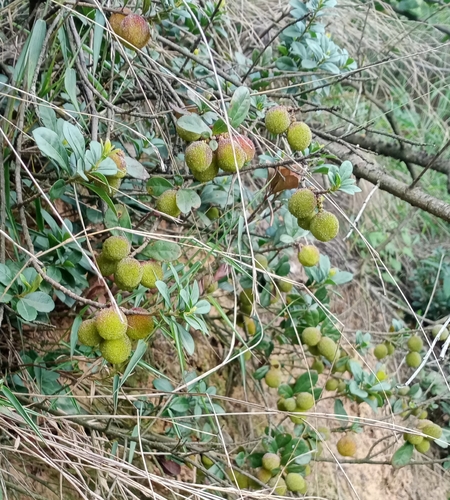
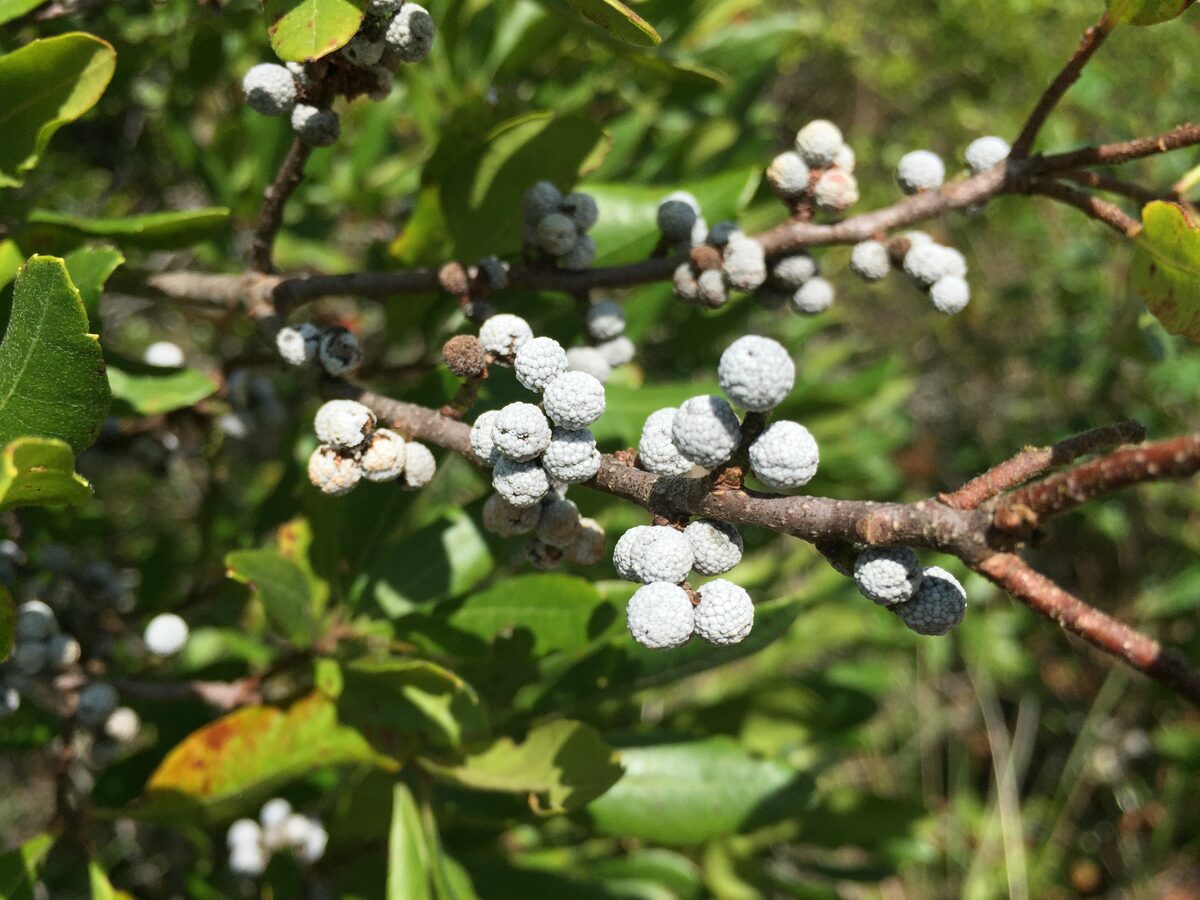
The dark red to blackish fruit, a slightly fleshy drupe around 6mm in diameter containing 1–5 seeds, can be eaten raw or cooked, though it is not highly appreciated fresh and is mainly used to make jam, wine, and similar preparations. The seeds can be ground into a flour.
Traditional Uses
The berries are eaten. They are also used for preserves. They are also used to make wine.
This uses section is brief — help expand it
Medicinal Uses
None known.
Distribution
It is a Mediterranean climate plant.
Where It Grows
Azores, Canary Islands, Europe, Hawaii, Mediterranean, Portugal, Spain, USA,
Cultivation
Morella faya is a shrub or tree that grows mainly in warm temperate and subtropical climates. It is adapted to xeric conditions and exhibits attributes such as a relatively low transpiration rate. Soil Texture: It thrives in light (sandy), medium, and heavy (clay) soils. It is well-suited for volcanic soils and can grow in nutrient-poor or rocky substrates. Soil Moisture: It prefers moist soils but can tolerate dry conditions once established. It is adaptable to a range of soil moisture levels. Drainage: It requires well-drained soil, though it can tolerate periods of poor drainage in its native habitats. Soil pH: Prefers acidic to neutral soils. It does not thrive in highly alkaline conditions. Saline Tolerance: Not particularly tolerant of saline soils or coastal conditions. Tolerance of Poor Soil: It thrives in poor, nutrient-deficient soils, forming symbiotic relationships with nitrogen-fixing actinomycetes, enriching the soil. Light Requirements: Prefers full sun but can tolerate partial shade. Shadier conditions may result in slower growth. Height: Typically grows to about 3–10 meters (10–33 feet) tall, forming a small tree or large shrub. Pollination: Pollinated by wind. Its flowers are small and inconspicuous. Temperature: Hardy in USDA zones 9–11. It is frost-sensitive but tolerates mild cold. Native to subtropical and warm-temperate regions. Invasiveness: In some areas, such as Hawaii, it is considered invasive, where it outcompetes native vegetation due to its adaptability and nitrogen-fixing abilities. Wildlife: Provides food for birds and other wildlife through its small, dark berries. Pests and Diseases: Generally pest-free and disease-resistant, though invasive populations can be challenging to control. Pruning: Pruning can help maintain size and shape, especially in ornamental uses. Caution: In areas like Hawaii, it is a problematic invasive species, and planting it is discouraged. Ensure it is suitable for your region before cultivation. The mean annual rainfall range is 1,270 - 2,540mm, though it can tolerate as little as 500mm in cloud forests. The mean annual temperature may be as high as 22°c, and plants are not very cold-tolerant, being damaged by all but the lightest frosts. It Requires a sunny position, especially when young. Plants thrive on soils with a pH between 5 and 6. Plants have a good degree of wind tolerance. A dioecious species. Generally, male and female forms need to be grown if fruit and seed are required; however, male plants often produce some fruits and female individuals may bear a few male inflorescences.. This species has a symbiotic relationship with certain soil micro-organisms; these form nodules on the roots of the plants and fix atmospheric nitrogen. The growing plant utilises some of this nitrogen, but some can also be used by other plants growing nearby. The native range of this species is Macaronesia, S. Portugal. It is a shrub or tree and grows primarily in the subtropical biome. it has been introduced into Hawaii. M. faya is an evergreen tree growing up to 12 m tall in its native range but is usually much smaller where introduced, e.g. no more than 8 m tall in Hawaii, and windy and exposed sites, it may only reach a height of 2-3 m. In its native range, M. faya is a frequent component of forest canopies and is co-dominant in many stands, whereas it is generally absent from the shrub layer. M. faya is a pioneer species on old lava flows in open areas, spreading readily into pasture lands. It is also found on sea cliffs, rocky hillsides, and along roadsides. This tree is adapted to xeric conditions and exhibits attributes such as a relatively low transpiration rate. Rainfall preference: Winter. Soil Tolerances: acid. Infertile. Soil drainage: free. Soil Types: acid soils, grassland soils, mountain soils, sandy soils, volcanic soils. The fruit is usually harvested in late summer to early autumn, depending on the species and local climate. Bayberry typically flowers in spring with the timing varying slightly by species and climate. Bayberry is a moderately fast-growing plant, often establishing itself quickly and reaching maturity within 3 to 5 years. Bayberry plants are typically dioecious, meaning that they have separate male and female plants. Therefore, they are not self-fertile and require both male and female plants for fruit production.
Propagation
Propagated easily from seed, which is dispersed by birds. Seeds may benefit from stratification or soaking to improve germination rates.
Other Uses
Bayberry is a fast-growing plant that spreads readily into open areas and works well as a windbreak or hedge. Its dense foliage shelters wildlife and its extensive root system aids soil stabilization. It fixes atmospheric nitrogen through a symbiotic relationship with certain soil micro-organisms, allowing it to thrive on very poor soils such as former lava flows. It has been widely used in land reclamation in its native range, particularly Madeira. When introduced to Hawaii for the same purpose, however, it escaped cultivation and became an invasive weed, so it cannot be recommended as a pioneer species outside its native range. The wood is a valuable fuel and produces excellent-quality charcoal. The plant is also used for reforestation and erosion control and is valued as an ornamental evergreen. Flowers are rich in nectar and pollen and attract bees. The berries are an important food source for birds, especially in winter, and the dense shrubs provide shelter and cover for birds and other wildlife. The thick growth and leaf litter also create overwintering sites for invertebrates and habitat for ground-dwelling organisms. The aromatic leaves may have mild pest-repellent properties.
Notes
An unresolved name in The Plant List. Myrica faya Dryand is possibly a separate species.
Synonyms
Also Known As
Firetree, Faya or Haya. Faya Tree, Fire Tree, Firebush. Spanish: Faya. French: Gale faya. Portuguese: Faia, Faia das ilhas, Samouco. Germany: Feuerbaum. USA/Hawaii: Candleberry myrtle.
References (2)
- Barwick, M., 2004, Tropical and Subtropical Trees. A Worldwide Encyclopedic Guide. Thames and Hudson p 290
- Hedrick, U.P., 1919, (Ed.), Sturtevant's edible plants of the world. p 430