Muscari comosum - (L.)Mill.
(L.)Mill.
Tassel Hyacinth, Tassel grape hyacinth
gbif· cc-by-nc
Sonja Deneve
gbif· cc-by-nc
Sonja Deneve
gbif· cc-by
Paolo Zucca
Description
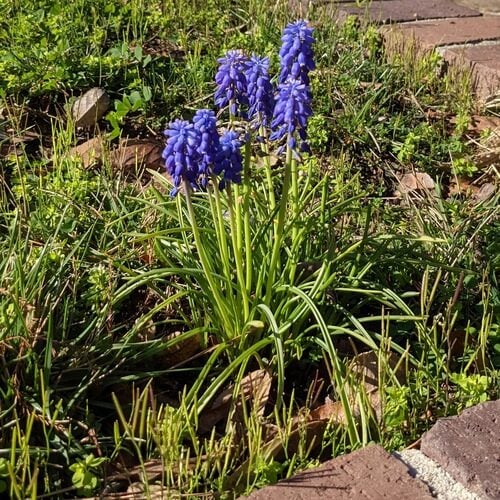
Muscari comosum is a BULB growing to 0.5 m (1ft 8in) by 0.1 m (0ft 4in). See above for USDA hardiness. It is hardy to UK zone 4 and is not frost tender. It is in flower from May to July, and the seeds ripen in August. The species is hermaphrodite (has both male and female organs) and is pollinated by Insects. The plant is self-fertile. Suitable for: light (sandy), medium (loamy) and heavy (clay) soils and prefers well-drained soil. Suitable pH: mildly acid, neutral and basic (mildly alkaline) soils. It can grow in semi-shade (light woodland) or no shade. It prefers dry or moist soil.
Edible Uses
Bulb - cooked. It is about 35mm in diameter. A slightly bitter taste that is appreciated by certain ethnic groups, especially Greeks and Italians. Used in spring. The cooked bulbs, preserved in oil, are used as a relish.
Medicinal Uses
Appetizer Diuretic Poultice. The bulb is appetizer and diuretic. The bulb is rich in mucilage and can be crushed then applied as a poultice to reddened skin.
Distribution
Europe. A frequent casual, rarely naturalized in Britain.
Where It Grows
TEMPERATE ASIA: Cyprus, Iran, Iraq, Israel, Jordan, Lebanon, Syria, Turkey EUROPE: Czechoslovakia, Austria, Switzerland, Germany, Hungary, Poland, Ukraine (incl. Krym), Former Yugoslavia, Albania, Bulgaria, Greece (incl. Crete), Italy (incl. Sardinia, Sicily), Romania, Spain (incl. Baleares), France (incl. Corsica), Portugal AFRICA: Algeria, Egypt, Libya, Morocco, Tunisia
Cultivation
Prefers a rich open well-drained soil. Succeeds in any soil and situation. Does very well in short grass, increasing freely and it can become invasive. The flowers have a pleasing perfume. There is at least one named form, selected for its ornamental value.
Propagation
Seed - best sown as soon as ripe in a greenhouse. The seed can also be sown in early spring in a greenhouse. A good proportion of the seed usually germinates within 2 - 3 months. Sow the seed thinly so that the seedlings can be left undisturbed in the pot for their first year of growth. Give them an occasional liquid feed in the growing season to ensure they do not become nutrient deficient. When the plants become dormant in late summer, pot up the small bulbs placing 2 - 3 bulbs in each pot. Grow them on for another one or two years in the greenhouse before planting them out when they are dormant in late summer. If you have sufficient seed then it is worthwhile trying sowing it in situ outdoors in early spring. This is rather a hit and miss method, but a lot less work than indoor sowing. Division of offsets in July/August after the leaves die down. It can be done every other year if a quick increase is required. Larger bulbs can be replanted direct into their permanent positions, but it is best to pot up the smaller bulbs and grow them on in a cold frame for a year before planting them out when they are dormant in late summer.