Mondia whitei - (Hook.f.) Skeels
(Hook.f.) Skeels
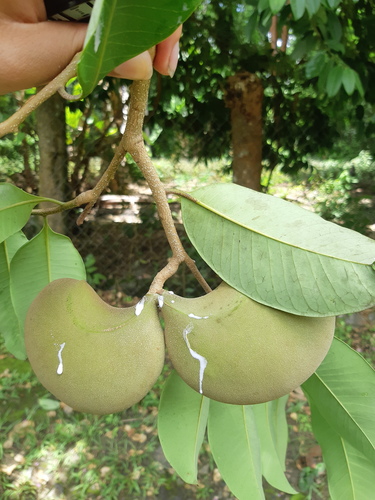
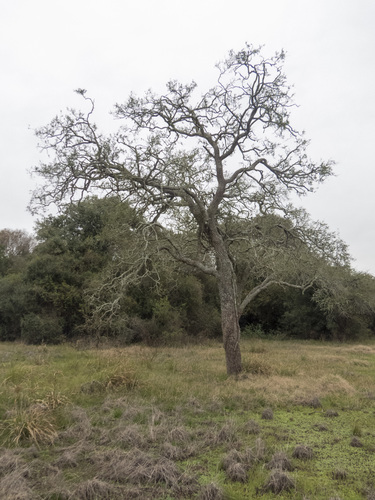
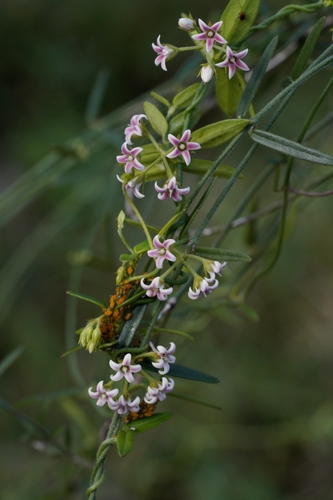
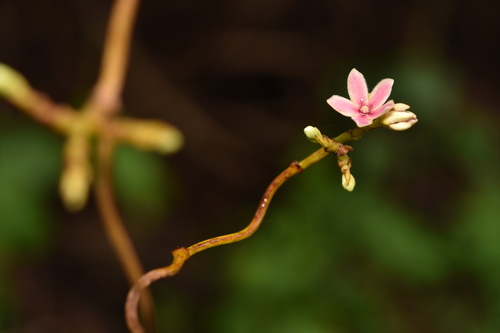
Mondia, White's Ginger
gbif· cc-by-nc
Bart Wursten
gbif· cc-by-nc
Sharon Louw
gbif· cc-by-nc
Sharon Louw
Description
Mondia whitei is an evergreen Climber growing to 8 m (26ft) by 2 m (6ft) at a fast rate. See above for USDA hardiness. It is hardy to UK zone 10. The flowers are pollinated by Flies. Suitable for: light (sandy), medium (loamy) and heavy (clay) soils and prefers well-drained soil. Suitable pH: mildly acid, neutral and basic (mildly alkaline) soils. It can grow in semi-shade (light woodland) or no shade. It prefers moist soil.
Edible Uses
Tea. The fresh or dried leaves are cooked, sometimes with peanut butter, and eaten as a vegetable. The dried powdered leaves are added to food as a condiment. The vanilla-like odour may have potential as a novel African fragrance or spice. The fruits are considered edible in some parts of Africa, although in southern Africa the seeds are used as an arrow poison. The roots are used to flavour food and tea. They are also used to make an energizing drink for wedding parties and a ginger-like beer.
Medicinal Uses
Antidepressant Antiemetic Antiinflammatory Antitussive Aphrodisiac Appetizer Carminative Digestive Diuretic Expectorant Laxative Malaria Parasiticide Purgative Restorative Stomachic Tonic Urinary. The plant is widely used medicinally throughout its range, the root especially being valued. Relatively little research on the active compounds in the plant has been effected. The roots contain 1 - 1.2% of an essential oil, 2.8% of a fixed oil, 20% glucose, 0.7% resin and 0.045% of a glycoside. The essential oil causes inflammation and reddening of the skin, irritation of the mucous membranes and relaxes mammalian intestinal smooth muscles. Hexane, methanol and water extracts of the leaves and roots did not show any antibacterial activity against a range of human pathogens. The hexane and methanol extracts showed significant anti-inflammatory activity. An aqueous root extract showed moderate activity against Schistosoma haematobium. An aqueous root bark extract at 400 mg/kg/day given orally during 8 days increased testosterone production and fertility of male rats An aqueous root extract administered to human spermatozoa in vitro was found to enhance total motility as well as progressive motility in a time-dependent manner. Both the roots and the root bark have a pronounced vanilla-like odour and taste like a mixture of liquorice and ginger.They are anodyne, aphrodisiac, appetizer, carminative, diuretic, expectorant, purgative, restorative, stomachic, tonic and uterine stimulant. The root is especially highly valued throughout Africa as an aphrodisiac - the fresh or dried roots are chewed to treat sexual weakness, prevent premature ejaculation and to increase sperm production. A decoction or infusion is widely taken to treat digestive troubles including gastro-intestinal problems, stomach-ache, indigestion, constipation, anorexia, and as a restorative and appetite stimulant. The decoction is also used to treat a wide range of other conditions, including urinary infections, gonorrhoea, jaundice, coughs, bronchitis, chest complaints, headache, paralysis and epileptic attacks, depression, to relieve body pains and to treat fits in children. The root is pulverized and added to porridge in order to treat schistosomiasis. A plant extract is taken to treat malaria. The leaves are squeezed in water and the filtrate is drunk to stop heavy post partum bleeding.T A leaf decoction is drunk to stop vomiting.
Known Hazards
The seeds are used as a substitute for Strophanthus seeds in the preparation of arrow poison. The latex is also added to Strophanthus arrow poison.
Distribution
Tropical Africa - Senegal to Sudan and Kenya, south to Namibia, Zambia, Zimbabwe and Mozambique.
Where It Grows
AFRICA: Sudan (south), Kenya, Tanzania, Uganda, Burundi, Central African Republic, Cameroon, Democratic Republic of the Congo, Gabon, Côte D‘Ivoire, Ghana, Guinea, Guinea-Bissau, Liberia, Nigeria, Senegal, Sierra Leone, Angola, Mozambique, Malawi, Zambia, Zimbabwe, Namibia (northeast), Eswatini, South Africa (Kwa. Zulu-Natal, Limpopo)
Cultivation
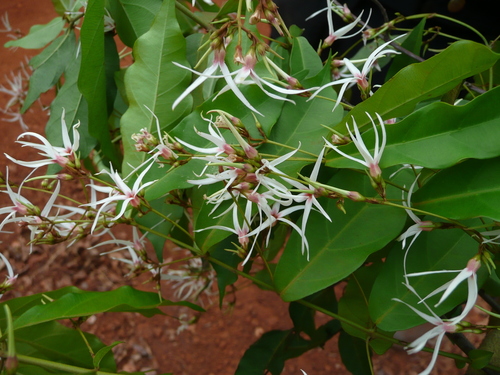
The flowers have a slightly fruity, unpleasant odour, which becomes stronger in the afternoons. They remain open for between 3 and 4 days and are probably pollinated by flies. Bloom Color: Red Cream/Tan. Spacing: 24-36 in. (60-90 cm).
Propagation
Seed - Stem cuttings. Root cuttings.
Other Uses
Essential Fencing Fibre Parasiticide String Teeth. Agroforestry Uses: The plant is grown to reinforce enclosures. Other Uses A fibre obtained from the stem yields a strong rope and a fine thread. The woody parts of the root are used as chewing sticks.
Also Known As
Mondia, White's Ginger, Lacadje, Muombo, Nhavoma, Ogombo, Omurondwa, Pados, assase hwam, la racine, lufute lwa matwi, mbombongazi, tonicroot, umondi, white's ginger, white's-ginger, white’s ginger..