Imperata cylindrica - (L.)Raeusch.
(L.)Raeusch.
Cogongrass, Japanese Blood Grass
gbif· cc-by-nc
Adam Arendell
gbif· cc-by-nc
Adam Arendell
gbif· cc-by-nc
Josh Teyler
Description
Imperata cylindrica is a PERENNIAL growing to 1.2 m (4ft) by 0.6 m (2ft in) at a slow rate. See above for USDA hardiness. It is hardy to UK zone 8 and is frost tender. It is in flower from August to September, and the seeds ripen from September to October. The species is hermaphrodite (has both male and female organs) and is pollinated by Wind. Suitable for: light (sandy), medium (loamy) and heavy (clay) soils, prefers well-drained soil and can grow in nutritionally poor soil. Suitable pH: mildly acid, neutral and basic (mildly alkaline) soils. It cannot grow in the shade. It prefers dry or moist soil and can tolerate drought. The plant can tolerate maritime exposure.
Edible Uses
Salt. Young inflorescence and young shoots - cooked. Root - fibrous but pleasant to chew, containing starch and sugar. Fairly sweet, the taste is sweetest in the wet season in Australia and worst from plants growing in sand. The ash of the plant is used as a salt substitute.
Medicinal Uses
Anthelmintic Antibacterial Antivinous Astringent Cancer Diuretic Dysentery Emollient Febrifuge Restorative Sialagogue Styptic Tonic Urinary. The flowers and the roots are antibacterial, diuretic, febrifuge, sialagogue, styptic and tonic. The flowers are used in the treatment of haemorrhages, wounds etc. They are decocted and used to treat urinary tract infections, fevers, thirst etc. The root is astringent, antifebrile, antivinous, diuretic, emollient, haemostatic, restorative and tonic. It is used in the treatment of nose bleeds, haematuria, haematemesis, oedema and jaundice. The root has antibacterial action against Staphylococcus aureus, Bacillus dysenteriae etc. A decoction of the root is used as an anthelmintic and also to treat digestive disorders such as indigestion, diarrhoea and dysentery. The root bark is febrifuge, restorative and tonic. Extracts of the plant have shown viricidal and anticancer activity.
Distribution
E. Asia - China, Japan, Korea.
Where It Grows
TEMPERATE ASIA: Oman, Saudi Arabia, Yemen, Afghanistan, Cyprus, Egypt (Sinai), Iran, Iraq, Israel, Jordan, Lebanon, Syria, Turkey, Armenia, Azerbaijan, Georgia, Russian Federation (Dagestan), Kazakhstan, Kyrgyzstan, Turkmenistan, Uzbekistan, China, Korea, Japan (Hokkaidô, Honshu, Kyushu, Ryukyu Islands, Shikoku) TROPICAL ASIA: Bhutan, India, Sri Lanka, Nepal, Pakistan, Papua New Guinea, Cambodia, Laos, Myanmar, Thailand, Vietnam, Indonesia, Malaysia, Philippines AUSTRALASIA: Australia (Tasmania, New South Wales, Queensland, South Australia, Victoria, Western Australia (northeast), Northern Territory) EUROPE: Albania, Bulgaria, Greece (incl. Crete), Croatia, Italy (incl. Sardinia, Sicily), Slovenia, Spain (incl. Baleares), France (s. & Corsica), Portugal AFRICA: Spain (Canarias), Portugal (Madeira Islands), Algeria, Egypt, Libya, Morocco, Tunisia, Eritrea, Ethiopia, Sudan, Chad, Kenya, Tanzania, Uganda, Burundi, Central African Republic, Cameroon, Democratic Republic of the Congo, Congo, Gabon, Rwanda, Benin, Burkina Faso, Côte D‘Ivoire, Ghana, Guinea, Gambia, Guinea-Bissau, Liberia, Mali, Niger, Nigeria, Senegal, Sierra Leone, Togo, Angola, Mozambique, Malawi, Zambia, Zimbabwe, Botswana, Lesotho, Namibia, Eswatini, South Africa (Cape Province, Free State, Kwa. Zulu-Natal, Transvaal)
Cultivation
Succeeds in ordinary garden soil in sun or partial shade. This species is only hardy in the southern part of Britain, tolerating temperatures down to about -15°c when dormant, though the young growth in spring can be damaged by late frosts. The var. I. cylindrica major. (Nees.)C.E.Hubb. is used medicinally in China and as a wild food in Australia. This species is quite closely related to sugar cane, it has been interbred experimentally with that species in India. Plants grow away vigorously after a fire, often spreading freely to infest the burnt areas.
Propagation
Seed - surface sow in spring in a greenhouse. The seed germinates quickly, prick out the seedlings into individual pots when they are large enough to handle and plant them out in the summer. Division in spring as the plant comes into growth. Division is very easy and can be carried out at almost any time in the year, though winter divisions are best potted up in the greenhouse and planted out in late spring.
Other Uses
Paper Soil stabilization Stuffing Thatching Weaving. The leaves are woven to make mats, bags and raincoats. The inflorescences are valued for stuffing pillows and cushions. The stems are used in thatching roofs. A fibre obtained from the leaves is used in making paper. Can be planted on sandy soils to prevent erosion. The plants form impenetrably dense clumps and when planted close together in drifts make an excellent ground cover.
Synonyms
More from Amaranthaceae
Lolium perenne
Perennial Ryegrass, Italian ryegrass, Darnel, Lyme Grass, Terrell Grass, English Ryegrass, Strand Wh
Lolium temulentum
Darnel
Maireana cheelii
Chariot wheels
Maireana pyramidata
Black bluebush, Shrubby bluebush
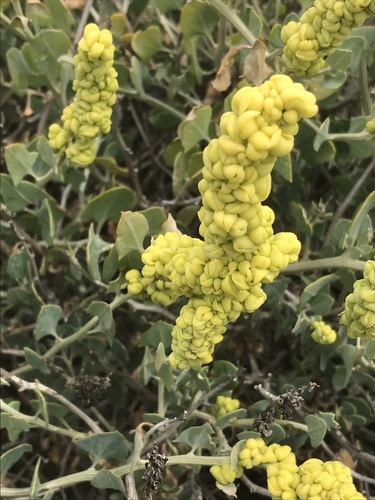
Manochlamys albicans
Spanspek soap bush, Spekbos
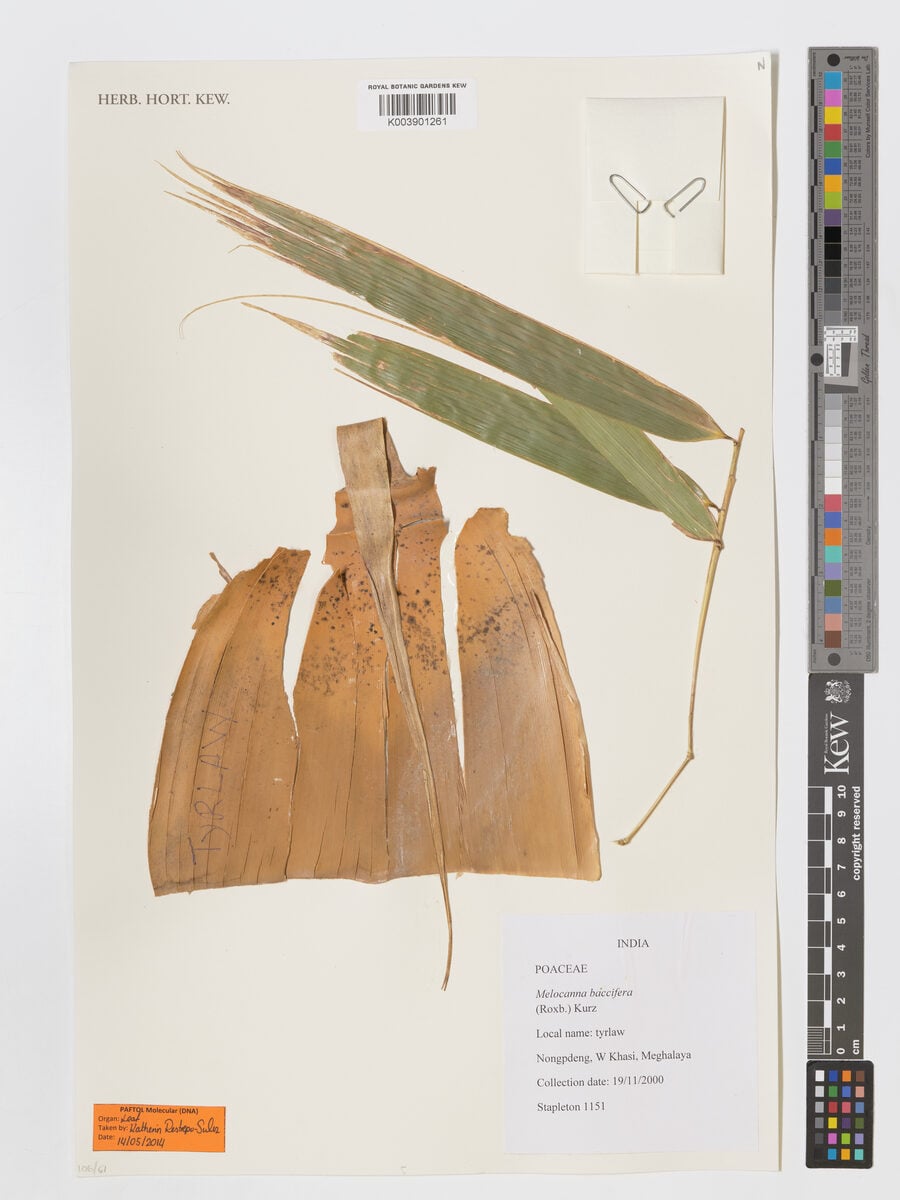
Melocanna baccifera - (Roxb.) Kurz
Berry Bamboo. Mali bamboo