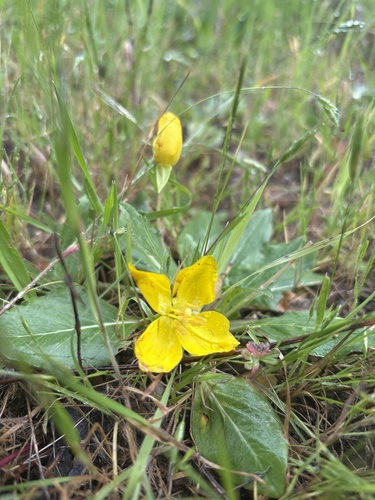
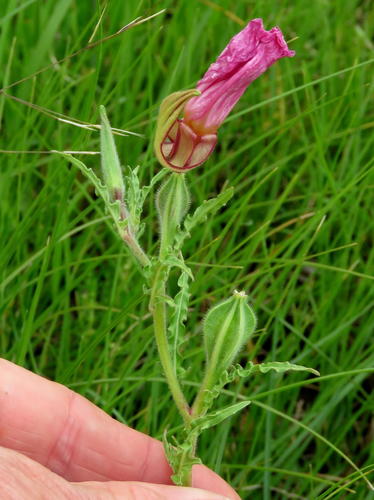
Fuchsia hemsleyana
Woodson.&Siebert.
gbif· cc-by-nc
LA - University of California, Los Angeles Herbarium (LA-)
gbif· cc0
Utah State University
gbif· cc0
Genevieve Stegner-Freitag
Description
Fuchsia hemsleyana is a deciduous Shrub growing to 2 m (6ft 7in) at a medium rate. See above for USDA hardiness. It is hardy to UK zone 9 and is frost tender. It is in leaf from May to November, in flower from July to October, and the seeds ripen from August to October. The species is hermaphrodite (has both male and female organs) and is pollinated by Insects. It is noted for attracting wildlife. Suitable for: light (sandy), medium (loamy) and heavy (clay) soils and prefers well-drained soil. Suitable pH: mildly acid, neutral and basic (mildly alkaline) soils. It can grow in semi-shade (light woodland) or no shade. It prefers moist soil.
Edible Uses
Fruit - raw or cooked. A small round berry about 5mm in diameter, it is juicy with a reasonable flavour but rather a fiddle to pick.
Distribution
Central America - Costa Rica and Panama.
Where It Grows
Coming Soon
Cultivation
Succeeds in any fertile well-drained circum-neutral soil. Succeeds in a good loam if sand and leafmold are added. Prefers a cool but light position. This species is not very cold-hardy, tolerating temperatures down to about -3°c. It could possibly be grown outdoors in the milder areas of the country, especially if given the protection of a woodland or a wall. Plants seem to be immune to the predations of rabbits. A good bee plant. A polymorphic species, a number of sub-species are recognised.
Propagation
Seed - best sown as soon as it is ripe though it can also be sown in the spring. Surface sow the seed in pots in a warm greenhouse and do not allow the compost to dry out. Germination should take place in less than 6 weeks. Prick out the seedlings into individual pots when they are large enough to handle, and grow them on in the greenhouse for at least their first winter. Plant out in late spring or early summer, after the last expected frosts. Inter-nodal cuttings of greenwood, 5 - 8cm long, May/June in a frame. Quick and easy, a high percentage take. Overwinter in the greenhouse for the first year and plant out after the last expected frosts. Inter-nodal cuttings of half-ripe wood, July/August in a frame. Very quick and easy, treat as greenwood cuttings above. Cuttings usually succeed at any time during the growing season. Division of tubers in the spring. Dig up the plant as it comes into active growth and pot up the tubers with their growing stems. Grow them on in the greenhouse until established and plant them out in early summer.