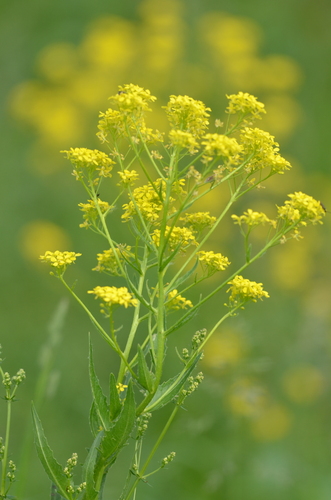
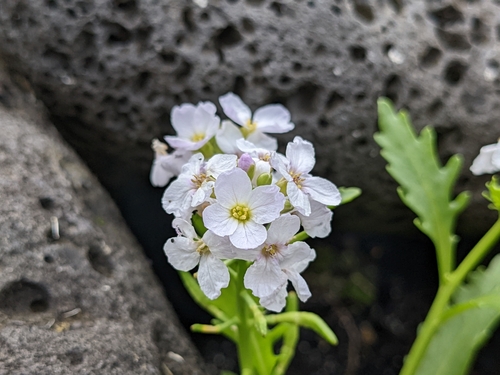
Brassica oleracea palmifolia
DC.
Jersey Kale
iNaturalist· cc-by-nc-nd
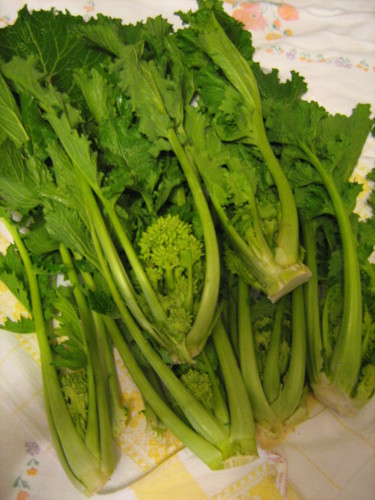
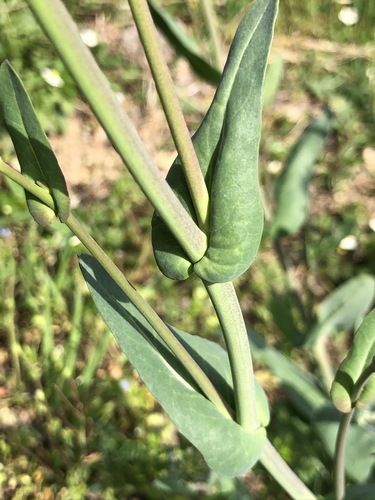
(c) Sunnetchan, some rights reserved (CC BY-NC-ND), uploaded by Sunnetchan
iNaturalist· cc-by-nc-nd
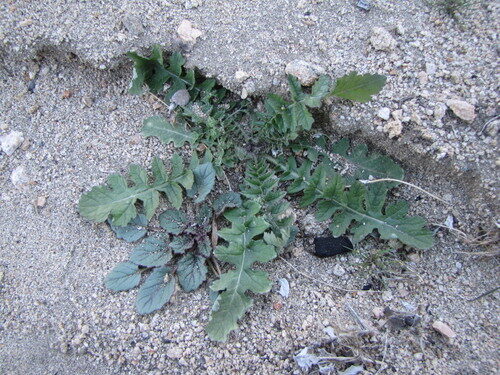
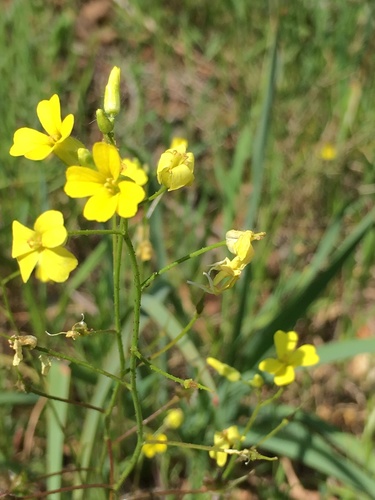
(c) Sunnetchan, some rights reserved (CC BY-NC-ND), uploaded by Sunnetchan
Description
Brassica oleracea palmifolia is a BIENNIAL growing to 3 m (9ft 10in). It is not frost tender. It is in flower from May to August, and the seeds ripen from July to September. The species is hermaphrodite (has both male and female organs) and is pollinated by Bees. The plant is self-fertile. Suitable for: light (sandy), medium (loamy) and heavy (clay) soils, prefers well-drained soil and can grow in heavy clay soil. Suitable pH: mildly acid, neutral and basic (mildly alkaline) soils and can grow in very acid and very alkaline soils. It can grow in semi-shade (light woodland) or no shade. It prefers moist soil. The plant can tolerate maritime exposure.
Edible Uses
Leaves - cooked. A strong cabbage flavour.
Distribution
A cultivated form of B. oleracea.
Where It Grows
(Brassica oleracea) EUROPE: United Kingdom (U.K.) (coasts), Germany, Schleswig-Holstein, Spain (n. coast), France (w. & n. coasts).
Cultivation
Succeeds in full sun in a well-drained fertile preferably alkaline soil. Prefers a heavy soil. Succeeds in any reasonable soil. Succeeds in maritime gardens. Tolerates a pH in the range 4.3 to 8.3. Jersey kale is a very tall-growing plant, usually reaching about 1.5 metres tall though it has been seen more than 5 metres tall. The large leaves can be cooked as greens whilst the straight slender stems can be dried and used as walking sticks. A good companion for celery and other aromatic plants since these seem to reduce insect predations. Grows badly with potatoes, beet and onions. Grows well with potatoes, beet and onions according to another report.
Propagation
Seed - sow in a seedbed outdoors in April. Plant out in summer as space allows. Do not let the seedlings get overcrowded or they will soon become leggy and will not make such good plants. If your seedlings do get leggy, it is possible to plant them rather deeper into the soil - the buried stems will soon form roots and the plant will be better supported.
Other Uses
Wood. The long slender stems have been dried and used as walking sticks.