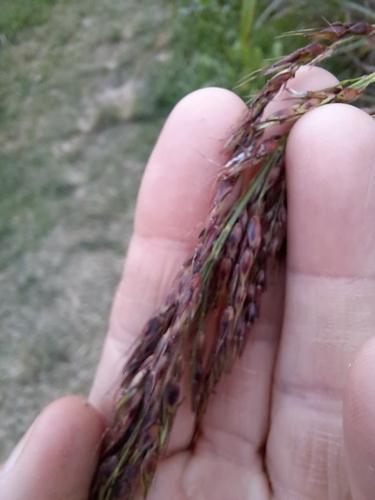
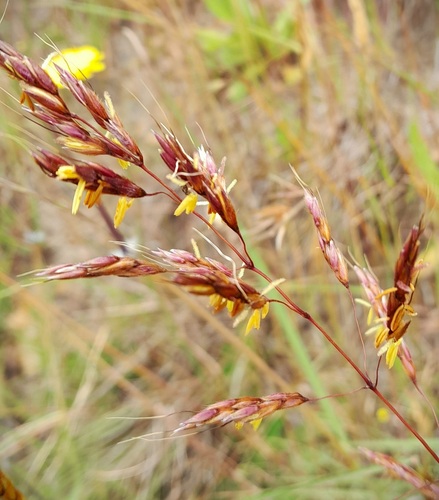
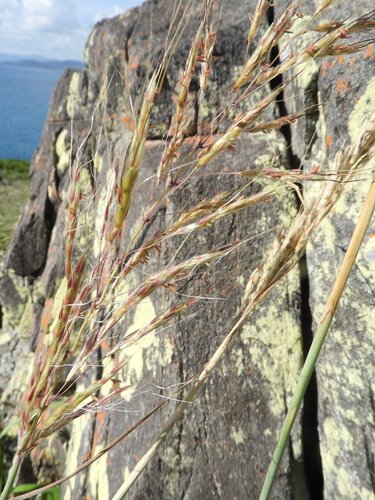
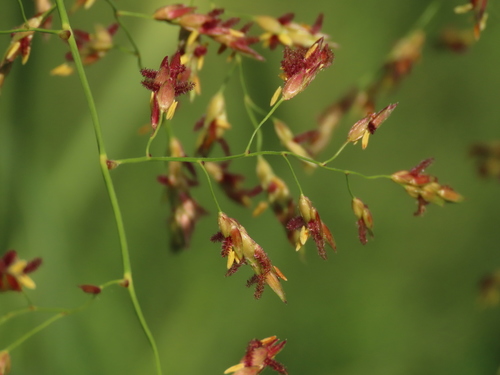
Eragrostis caroliniana
(Spreng.)Scribn.
gbif· cc0
Public Domain
gbif· cc0
Public Domain
gbif· cc-by-nc
FSC - Fresno State Herbarium (FSC-)
Summary
Annual grass reaching 0.5 m tall with hermaphroditic flowers pollinated by wind. Grows in light sandy, medium loamy, and heavy clay soils preferring well-drained conditions across mildly acid to mildly alkaline pH. Requires full sun and tolerates dry or moist soil.
Description
Annual grass reaching 0.5 m tall with hermaphroditic flowers pollinated by wind. Grows in light sandy, medium loamy, and heavy clay soils preferring well-drained conditions across mildly acid to mildly alkaline pH. Requires full sun and tolerates dry or moist soil.
Edible Uses
The seed is ground into flour and used as a cereal.
Medicinal Uses
None known
Distribution
It is a temperate plant.
Where It Grows
Europe, North America, USA,
Propagation
Sow seed in early spring in a greenhouse, barely covering it. Germination typically occurs within 2 weeks. Once seedlings are large enough to handle, prick them out into individual pots and plant outside after the last expected frost. Seed can also be sown in situ in mid to late spring, though in a cool summer it may not ripen many seeds.
Other Uses
None known
Notes
There are about 300 Eragrostis species.
References (2)
- Beckstrom-Sternberg, Stephen M., and James A. Duke. "The Foodplant Database." http://probe.nalusda.gov:8300/cgi-bin/browse/foodplantdb.(ACEDB version 4.0 - data version July 1994)
- Plants for a Future database, The Field, Penpol, Lostwithiel, Cornwall, PL22 0NG, UK. http://www.scs.leeds.ac.uk/pfaf/