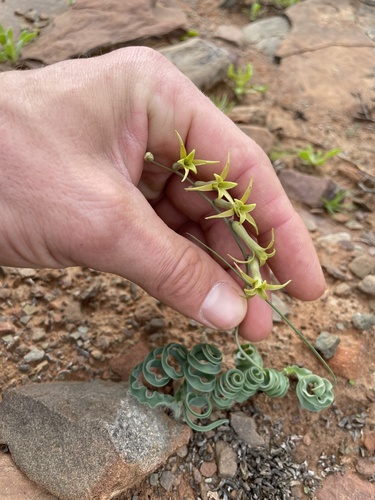
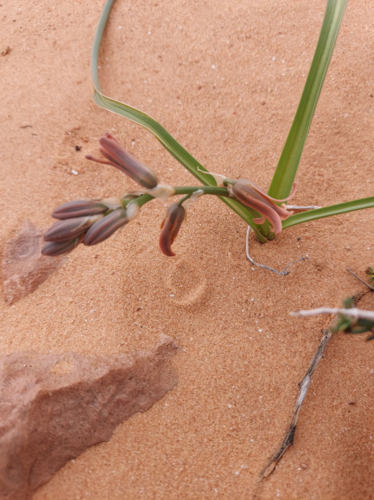
Agave salmiana
Otto ex Salm-Dyck
Pulque agave
iNaturalist· cc-by-nc-sa
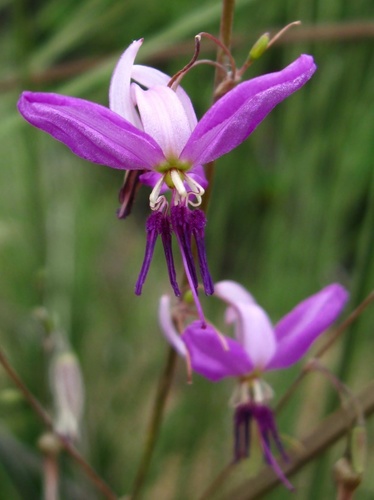
(c) N.R. Jenzen-Jones, some rights reserved (CC BY-NC-SA), uploaded by N.R. Jenzen-Jones
iNaturalist· cc-by-nc
(c) Alejandra, some rights reserved (CC BY-NC), uploaded by Alejandra
iNaturalist· cc-by-nc
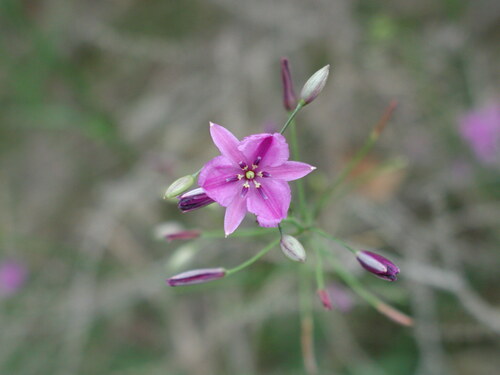
(c) 2012 Zoya Akulova, some rights reserved (CC BY-NC)
Summary
Source: WikipediaAgave salmiana (also known as maguey pulquero and green maguey) is a species of the family Asparagaceae, native to central and southern Mexico. It is also reportedly naturalized in South Africa, Italy, Spain, especially in the Canary Islands, and southern Portugal. This species, also called agave of Salm or Salm-Dick, is dedicated to the German prince and botanist Joseph zu Salm-Reifferscheidt-Dyck (1773-1861).
Description
A large succulent plant. It produces setts at the side. The leaves are strong and grey-green. They curve upwards. They can be 0.9-2 m long. There are teeth along the edge. They have a strong keel at the ends.
Edible Uses
The sap is fermented to produce the alcoholic drink 'pulque'. As soon as the inflorescence bud appears — typically at around 7 years of age — it is excised, and the sweet juice that exudes over the following 3–4 months is collected and fermented. A brandy can also be produced by distilling pulque, which itself contains 4–8% ethanol. The sugar-containing juice can alternatively be used to produce sugar or vinegar. Flowering stems are cut into sections and chewed like sugar cane. The cuticle of the young leaves of the central spike is used as a translucent wrapping for the Mexican festive dish 'mixiote'.
Traditional Uses
Heart or centre used for fermented drinks and fresh drinks. The sap is eaten. The young flower stalks are chewed.
This uses section is brief — help expand it
Medicinal Uses
None known
Known Hazards
Many Agave species have strong, sharp spines on the leaves and leaf tips. In theory at least, the flowers, nectar, immature flowering stem and the centre of the rosette of all Agave species is edible and, with proper preparation, can provide a sweet, tasty foodstuff. Some species, however, contain relatively high levels of saponins (which makes them taste bitter) and some other compounds which can cause bellyache, and so these would only be eaten in times of desperation. In addition, many people may find these foods to be strongly laxative the first few times they eat them.
Distribution
It is a tropical plant. It grows in desert areas. It can grow in arid places. It grows in open areas on sand or clay soils up to 1,800 m above sea level. It suits hardiness zones 9-11.
Where It Grows
Asia, Australia, Central America, Indonesia, Mexico*, North America, SE Asia,
Cultivation
Requires a sunny position. Requires a well-drained soil. Succeeds in poor soils. Established plants are very drought resistant. A monocarpic species - the plant lives for a number of years without flowering but dies once it does flower. However, it normally produces plenty of suckers during its life and these continue growing, taking about 10 - 15 years in a warm climate, considerably longer in colder ones, before flowering. Cultivation is easy in a well-drained sandy soil with sunny exposure. For a pot culture, it requires a container of very large size to remain in an harmonious appearance. It can be used to fix a slope. The main harvest of the agave hearts (piñas) occurs after about 7 to 10 years, typically in late winter to early spring, depending on the climate and growing conditions. Agave usually flowers once it reaches maturity, which can be after 7 to 10 years, and the flowering period generally occurs in late spring to summer.
Propagation
Surface sow seed in a container in a light position. Germination usually occurs within 1–3 months at 20°C. Prick out seedlings into individual pots of well-drained soil once large enough to handle, and grow on in a sunny position until at least 20cm tall. The plant is more easily multiplied by planting shoots than by raising seedlings.
Other Uses
The leaves, especially the youngest, provide fibres suitable for producing laces, fine clothing, and footwear. The roots contain saponins and can be used as a soap substitute. The flowers are rich in nectar and pollen, attracting pollinators including bees and butterflies.
Other Information
It is a cultivated food plant.
Notes
There are about 250 Agave species. The Agavaceae are mostly in the tropics and subtropics.
Nutrition
| Part | Moisture | kJ | kcal | Protein | Vit A | Vit C | Iron | Zinc |
|---|---|---|---|---|---|---|---|---|
| Heart of plant | — | — | — | — | — | — | — | — |
| Sap | — | — | — | — | — | — | — | — |
| Flowers | 8.9 | — | — | 19.57 | — | — | — | — |
Synonyms
Also Known As
Agave raksasa, Pulqueagave, Maguey de pulque, Maguey manso, Maguey ceniso, Tame maguey
References (19)
- Bircher, A. G. & Bircher, W. H., 2000, Encyclopedia of Fruit Trees and Edible Flowering Plants in Egypt and the Subtropics. AUC Press. p 13
- Bonplandia 7:88. 1859
- Casas, A., et al, 2016, Evolutionary Ethnobotanical Studies of Incipient Domestication of Plants in Mesoamerica. In Lira, R., et al, (eds.) Ethnobotany of Mexico, Ethnobiology. Springer p 266
- Cundall, P., (ed.), 2004, Gardening Australia: flora: the gardener's bible. ABC Books. p 115
- Delgado-Lemus, A., et al, 2014, Vulnerability and risk management of Agave species in the Tehuacan Valley, Mexico. Journal of Ethnobiology and Ethnomedicine 10:53
Show all 19 references Hide references
- Facciola, S., 1998, Cornucopia 2: a Source Book of Edible Plants. Kampong Publications. p 3
- Farfan B., et al, 2007, Mazahua Ethnobotany and Subsistence in the Monarch Butterfly Biosphere Reserve, Mexico. Economic Botany 61(2) pp 173-191
- Kermath, B. M., et al, 2014, Food Plants in the Americas: A survey of the domesticated, cultivated and wild plants used for Human food in North, Central and South America and the Caribbean. On line draft. p 32
- Lulekal, E., et al, 2011, Wild edible plants in Ethiopia: a review on their potential to combat food insecurity. afrika focus — Volume 24, Nr. 2, 2011 — pp. 71-121
- Mapes, C. & Basurto, F., 2016, Biodiversity and Edible Plants of Mexico. Chapter 5 in R. Lira, et al. (eds.), Ethnobotany of Mexico, Ethnobiology, Springer. p 116
- Nugent, J., 1999, Agaves and cacti., Permaculture plants. Sustainable Agriculture Research Institute. PO Box 10, Nanup, WA, 6275
- Marinelli, J. (Ed), 2004, Plant. DK. p 330
- Piedra-Malagón, E. M. et al, 2022, Edible native plants of the Gulf of Mexico Province. Biodiversity Data Journal 10: e80565 p 12
- Rangel-Landa, S., et al, 2017, Sociocultural and ecological factors influencing management of edible and non-edible plants: the case of Ixcatlan, Mexico. Journal of Ethnobiology and Ethnomedicine. 13:59 (As Agave salmiana subsp. tehuacanensis)
- Small, E., 2009, Top 100 Food Plants. National Research Council of Canada. p 526
- Sotelo, A., et al, 2007, Content of Nutrient and Antinutrient in Edible Flowers of Wild Plants in Mexico. Plant Foods for Human Nutrition 62: 133-138
- Sukarya, D. G., (Ed.) 2013, 3,500 Plant Species of the Botanic Gardens of Indonesia. LIPI p 999
- Wiersema, J. H. & Leon, B., 2013, World Economic Plants. A Standard Reference CRC Press. 2nd Ed. p 25
- World Checklist of Useful Plant Species 2020. Royal Botanic Gardens, Kew