Sauvagesia erecta
Linn.
Yerba de St. Martin
iNaturalist· cc-by-nc-nd
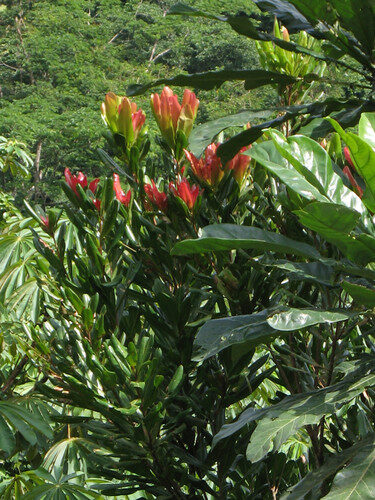
(c) verneau, some rights reserved (CC BY-NC-ND), uploaded by verneau
iNaturalist· cc-by
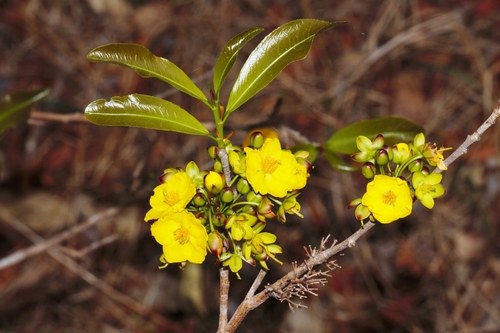
(c) Annika Lindqvist, some rights reserved (CC BY), uploaded by Annika Lindqvist
iNaturalist· cc-by-nc
(c) Mark Leppin, some rights reserved (CC BY-NC), uploaded by Mark Leppin
Description
A low growing herb. It grows 60 cm high. The stems are slender and wiry. The leaves are 1-3 cm long by about 0.8 cm wide and taper to the base. The flowers are usually single and in the axil of leaves. The flower petals are pink or white. The fruit is a capsule. It is 5 mm long. The seeds are 0.5 mm long.
Edible Uses
The leaves are used as a spinach and added to soups. Both leaves and shoots are edible.
Traditional Uses
The leaves are used as a spinach. They are used in soups.
This uses section is brief — help expand it
Medicinal Uses
The plant is used in traditional medicine.
Distribution
A tropical plant. It grows in wetter parts of tropical Africa. It grows in damp grasslands, marshes and ditches. It is along ponds and the edges of rivers. It can grow in seasonally flooded land. It grows from sea level to 1,200 m altitude. In Argentina it grows from sea level to 1,000 m above sea level.
Where It Grows
Africa, Angola, Argentina, Bahamas, Bolivia, Burkina Faso, Central Africa, Central African Republic, CAR, Central America*, Congo DR, Dominican Republic, East Africa, Gabon, Grenada, Guiana, Guianas, Guinea, Guinée, Guinea-Bissau, Guyana, Haiti, Lesser Antilles*, Madagascar, Mexico, Mozambique, Nigeria, North America, Paraguay, Peru, Puerto Rico, Senegal, Sierra Leone, South Africa, Southern Africa, South America*, Sudan, Suriname, Tanzania, Venezuela, West Africa, West Indies*, Zambia,
Cultivation
The plant has become a pantropical weed.
Notes
There are 35 Sauvagesia species in tropical America. It is used in medicine.
Synonyms
Also Known As
Adima, Nkaka kizionzi, Yaoba
References (8)
- Exell, A.W. et al, (Ed), 1963, Flora Zambesiaca Vol 2 Part 1 Crown Agents, London. p 260
- Flora Zambesiaca. http://apps.kew.org/efloras
- Hedrick, U.P., 1919, (Ed.), Sturtevant's edible plants of the world. p 596
- Heywood, V.H., Brummitt, R.K., Culham, A., and Seberg, O. 2007, Flowering Plant Families of the World. Royal Botanical Gardens, Kew. p 232
- Jardin, C., 1970, List of Foods Used In Africa, FAO Nutrition Information Document Series No 2.p 99
Show all 8 references Hide references
- Latham, P & Mbuta, A., 2017, Useful Plants of Central Province, Democratic Republic of Congo. Volume 2. Salvation Army p 152
- Martin, F.W. & Ruberte, R.M., 1979, Edible Leaves of the Tropics. Antillian College Press, Mayaguez, Puerto Rico. p 208
- Plants of Haiti Smithsonian Institute http://botany.si.edu/antilles/West Indies