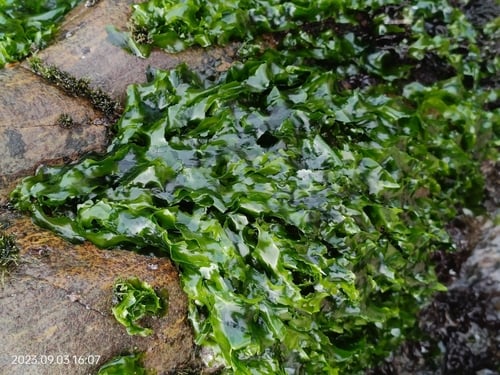
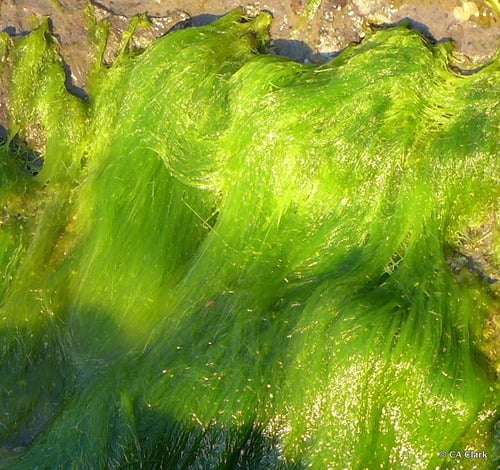
Enteromorpha prolifera
(Mull.) J. Ag.
Green algae
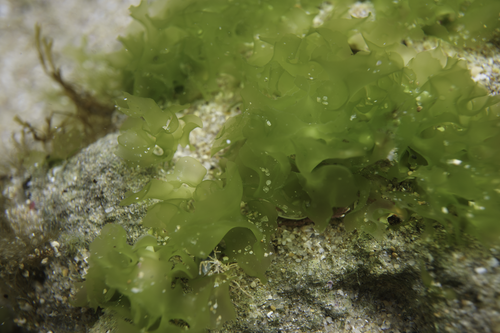
iNaturalist· cc-by-nc
(c) aakritiv, some rights reserved (CC BY-NC)
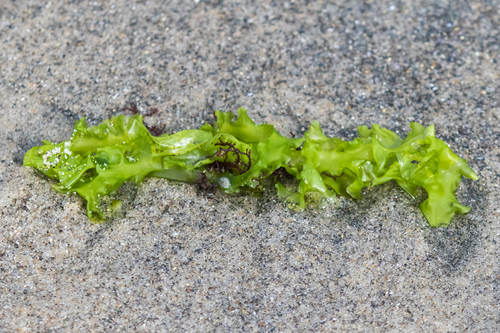
iNaturalist· cc-by-nc
(c) aakritiv, some rights reserved (CC BY-NC)
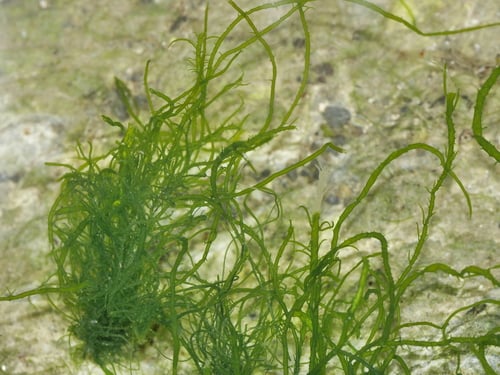
iNaturalist· cc-by-nc
(c) Оlga Сhernyagina, some rights reserved (CC BY-NC)
Description
A fine, dark green seaweed in the Ulvaceae family found in tropical regions, growing in tufts on rocks in fine sand. It is cultivated.
This description is brief — help expand it
Edible Uses
The finely branched fronds are eaten, dressed with salt and allowed to stand until slightly fermented, or eaten in stews or with fish. The dried powder is sprinkled over foods as a seasoning.
Traditional Uses
The finely branched fronds are eaten. They can be dressed with salt and allowed to stand until slightly fermented. It is eaten in stews or with fish. The dried powder is sprinkled over foods as a seasoning.
Known Hazards
Overgrowing algae bloom at the surface of seawater is an environmental hazard to the coastal underwater biome. Surface algae overextension can block the entry of sunlight below the infected water region, creating a much shallower aphotic zone. The disappearance of sunlight can be fatal for the plants and organisms living below the surface that require sunlight. Phytoplankton photosynthesis will be heavily reduced due to the lack of sunlight which is caused by the overgrowing algae blockade. Insufficient primary production in an ocean biome is devastating for maintaining the local food web. Additionally, algal respiration is increased for such algal explosion in biomass. The lack of oxygen in the local water area is harmful for all living organisms. The algae washed ashore is also an environmental hazard during degradation by releasing noxious smell into the air. Accumulation of overgrown algae like U. polifera is not only harmful for the environment but also local underwater biome and tourism value.
Distribution
A tropical plant. It grows in tufts on rocks in fine sand.
Where It Grows
Asia, China, Hawaii, Indonesia, Japan, Korea, Malaysia, Pacific, Philippines, SE Asia, USA,
Other Information
It is cultivated.
Also Known As
Limu 'ele'ele, Suji-ao-nori
References (7)
- Facciola, S., 1998, Cornucopia 2: a Source Book of Edible Plants. Kampong Publications, p 261
- http://www.hawaii.edu/reefalgae/publications/ediblelimu/
- http://www.seavegetables.com
- Kiple, K.F. & Ornelas, K.C., (eds), 2000, The Cambridge World History of Food. CUP p 234
- Xia, B., and Abbott, I.A., 1987, Edible seaweeds of China and their place in the Chinese diet. Economic Botany 41:341-53
Show all 7 references Hide references
- Zaneveld, J.S., 1950, The economic marine algae of Malaysia and their applications. Proceedings of the Indo-Pacific Fisheries Council, 107-14
- Zemke-White, W. L. & Ohno, M., 1999, World seaweed utilisation: An end-of-century summary. Journal of Applied Phycology 11: 369-376