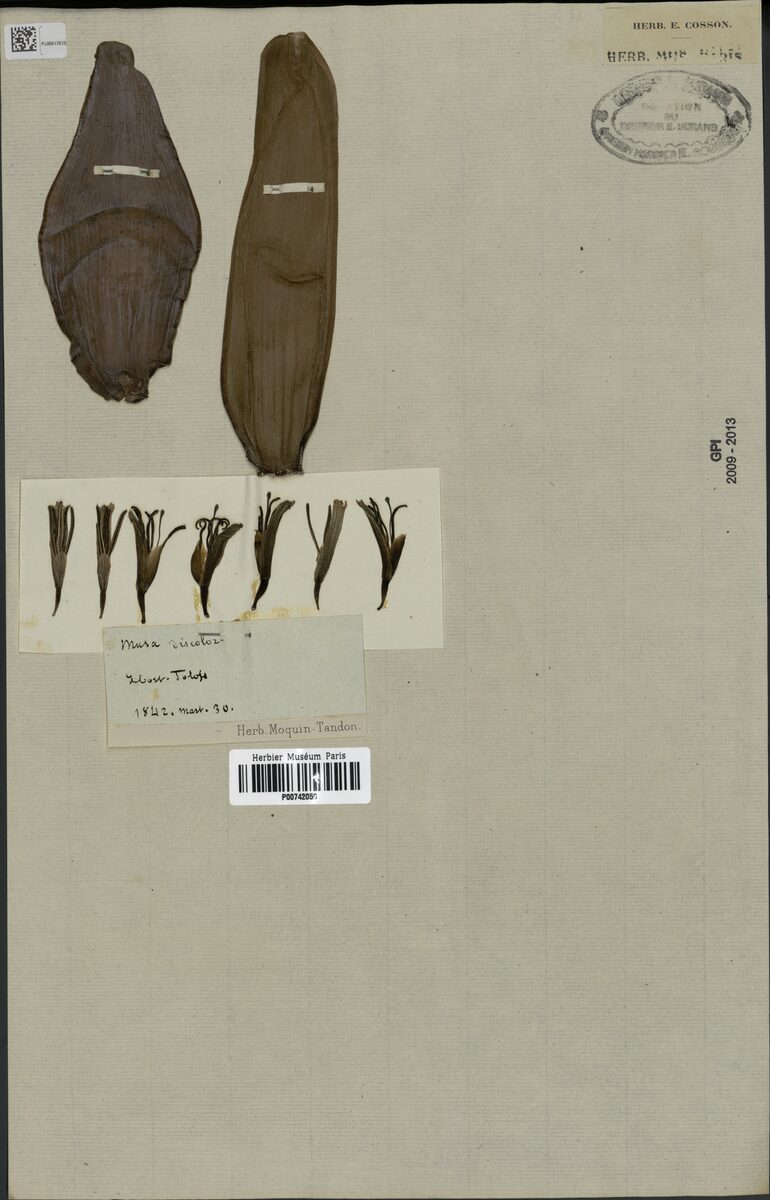
Ensete ventricosum
(Welw.) E.E.Cheesman
Ensete
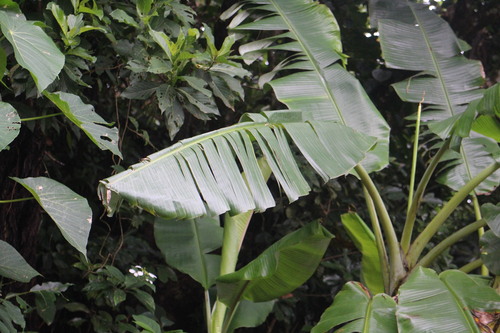
iNaturalist· cc-by-nc
(c) gnomicscience, some rights reserved (CC BY-NC)
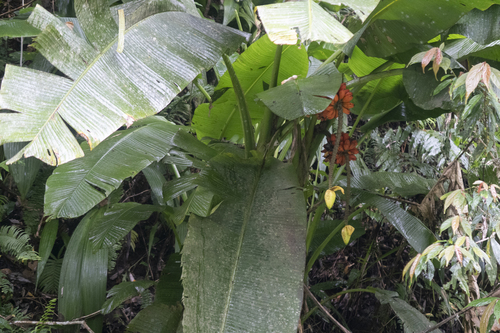
iNaturalist· cc-by-nc-sa
(c) Tony Rodd, some rights reserved (CC BY-NC-SA)
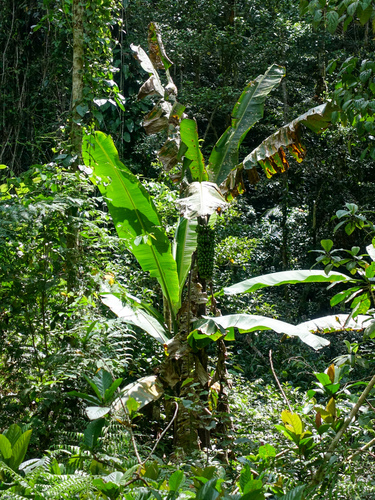
iNaturalist· cc-by-nc
(c) Ricardo Arredondo T., some rights reserved (CC BY-NC), uploaded by Ricardo Arredondo T.
Summary
Source: WikipediaEnsete ventricosum, commonly known as enset or ensete, Ethiopian banana, Abyssinian banana, pseudo-banana, false banana and wild banana, is a species of flowering plant in the banana family Musaceae. The only country where the domesticated form of the plant is cultivated is Ethiopia, where it provides the staple food for approximately 20 million people. The name Ensete ventricosum was first published in the Kew Bulletin 1947, p. 101. Its synonyms include Musa arnoldiana De Wild., Musa ventricosa Welw. and Musa ensete J. F. Gmelin. In its wild form, it is native to the eastern edge of the Great African Plateau, extending northwards from South Africa through Mozambique, Zimbabwe, Malawi, Kenya, Uganda and Tanzania to Ethiopia, and west to the Congo, being found in high-rainfall forests on mountains, and along forested ravines and streams.
Description
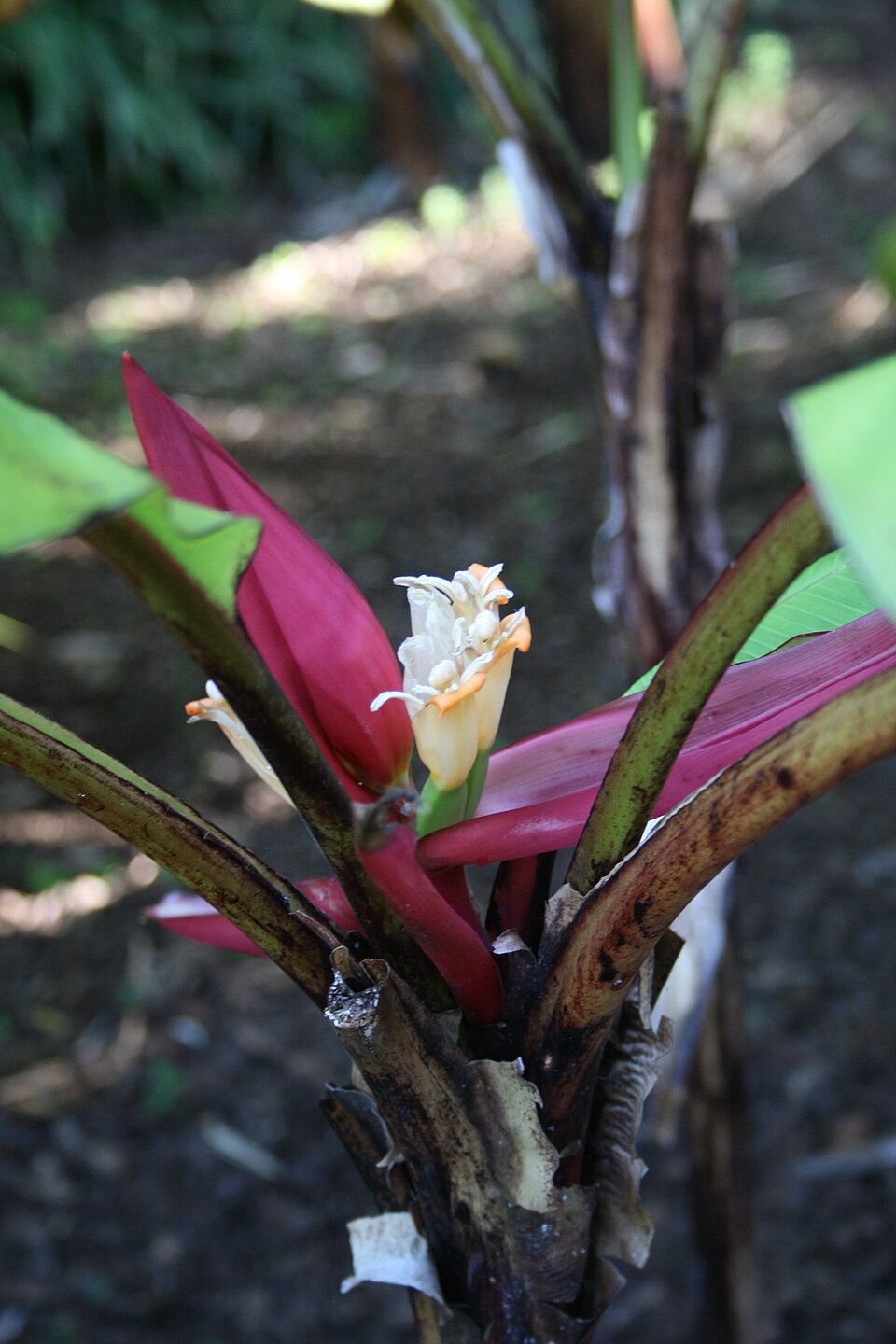
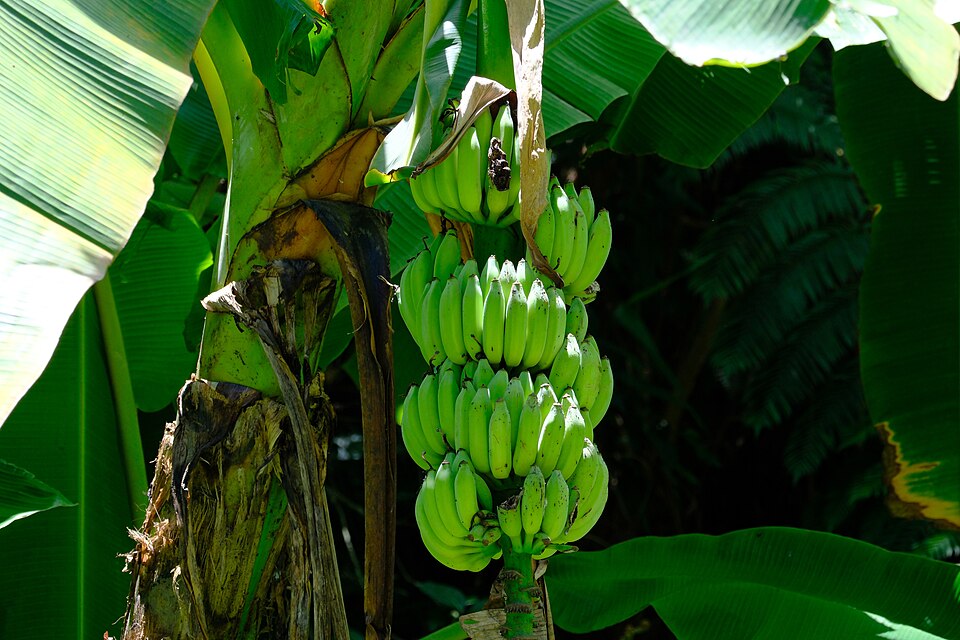
A banana like plant. It grows to 6-12 m high. The lower part of the leafy false stem is swollen. Many different varieties exist. The leaves are bright green with an obvious red midrib. The leaves can be 5 m long and 0.9 m wide. The flower is a very large hanging spike. It is 2-3 m long. The flowers are cream coloured. There is a single petal in a large red bract. The fruit resemble small bananas. They are 6-8 cm long and 3 cm thick. They have a yellow skin. The seeds are pea like and fill the fruit. The seeds are black and about 6 mm across. There are 50 cultivated types.
Edible Uses
The corms and leaf sheaths are chopped, grated, and fermented to produce a flour used in making kocho bread, either as 100% kocho flour or blended with other cereal flours; it is said to taste like good quality bread. The endosperm of the seed is also consumed as food. The base of the flower stalk is edible when cooked.
Traditional Uses
The fermented pulp (kocho) of the stem is eaten. It is used as a flour to make bread. The leaf bases and fresh corms are cut up and boiled as a vegetable. The milky white juice extract is allowed to ferment in pits lined with ensete leaves then cooked. The young flowers are eaten as a relish. The fruit are eaten only in times of food scarcity. It is the endosperm of the seeds that is eaten.
Medicinal Uses
None known.
Distribution
It grows in tropical Africa. It does best with a temperature of 18-28°C and a relative humidity of 60-80 %. In Ethiopia it grows between 1500 and 3000 m altitude but does best between 1700 and 2450 m altitude. In Malawi it is usually on the edges of forests or in sheltered gullies. It is damaged by frost or drought. It can grow in arid places. In the Cairns Botanical Gardens. It suits hardiness zones 10-12.
Where It Grows
Africa, Angola, Asia, Australia, Angola, Burundi, Cameroon, Central Africa, Central America, Congo, East Africa, Ethiopia, Guatemala, India, Indonesia, Kenya, Malawi, Mozambique, Myanmar, Pacific, Philippines, Rwanda, Sao Tome and Principe, SE Asia, South Africa, Southern Africa, Sudan, Tanzania, Uganda, West Africa, Zambia, Zimbabwe,
Cultivation
It can be grown by seed. It is normally grown by bud suckers or shoots. To get bud suckers a 4-6 year old plant is cut off at 20-30 cm height. The central bud (which would normally grow one shoot) is removed and the hole filled with soil. The corm is then replanted into a manured pit about 5 days later. After 4-8 weeks this produces 40-200 buds. These can be separated and grown in a nursery for one year before being transplanted into the field. These plants are normally then transplanted to wider spacing after 2 then 4 years. Plants reach harvest maturity in 6-7 years. Suckers can be used for transplanting and reach maturity in 2 years. The final spacing for bud suckers is 3 m x 1.5 m. Large amounts of organic manure are often applied. Plants are harvested before the onset of flowering.
Propagation
Sow the large seeds individually in pots in a heated greenhouse at any time of year, pre-soaking them for 24 hours in warm water beforehand. Germination should occur within 3 months. Grow plants on for at least a couple of winters under glass before attempting outdoor cultivation. Suckers can be divided in spring — remove as much of the sucker's root system as possible without excessively disturbing the main plant, then pot up and grow on in light shade in the greenhouse until established.
Other Uses
A fibre is obtained from the plant.
Production
An average family cultivates 200-400 plants per year and they eat about 10-20 plants per person per year. In Ethiopia using1600 plants per hectare at a spacing of 2.5 m gave about 5000 kg per hectare of refined product.
Other Information
In areas with an ensete staple between 0.5-0.7 kg of kocho are eaten per person per day. This provides about 860-1400 calories. It is a staple food for 10 million people.
Notes
There are 10 Ensete species.
Nutrition
| Part | Moisture | kJ | kcal | Protein | Vit A | Vit C | Iron | Zinc |
|---|---|---|---|---|---|---|---|---|
| Seed dry | 12.4 | 1472 | 352 | 13.3 | — | — | — | — |
| Pith | 56.3 | 715 | 171 | 1.2 | — | — | 5.3 | — |
Synonyms
Also Known As
Abyssinian banana, Bananeira selvagem, Chizuzu, Echecha, Enset, Hovha, Ihindu, Inset, Inteembeteembe, Kitembe, Koba, Latembe, Linyimbili, Magao, Mgomba pori, Mulolo, Olek, Ol-musalala, Sasuriet, Shwe-nget-pyaw, Tambwe, Warqee, Workem
References (54)
- Alemneh, D., 2020, Ethnobotany of wild edible plants in Yilmana Densa and Quarit Districts of West Gojjam Zone, Amhara Region, Ethiopia. Ethnobotany Research & Applications. 20:47
- Allen, D. J., 2007, Wildflowers and Common Trees of East Africa. Camerapix Publishers p 170
- Ambasta, S.P. (Ed.), 2000, The Useful Plants of India. CSIR India. p 196
- Asfaw, Z., Conservation and use of traditional vegetables in Ethiopia. FAO
- Bekele-Tesemma A., Birnie, A., & Tengnas, B., 1993, Useful Trees and Shrubs for Ethiopia. Regional Soil Conservation Unit. Technical Handbook No 5. p 210
Show all 54 references Hide references
- Berihun, T. & Molla, E., 2017, Study on the Diversity and Use of Wild Edible Plants in Bullen District Northwest Ethiopia. Hindawi Journal of Botany. Article ID 8383468
- Bodkin, F., 1991, Encyclopedia Botanica. Cornstalk publishing, p 381
- Brickell, C. (Ed.), 1999, The Royal Horticultural Society A-Z Encyclopedia of Garden Plants. Convent Garden Books. p 397
- Coronel, R.E., 1982, Fruit Collections in the Philippines. IBPGR Newsletter p 6
- Cundall, P., (ed.), 2004, Gardening Australia: flora: the gardener's bible. ABC Books. p 538
- Dharani, N., 2002, Field Guide to common Trees & Shrubs of East Africa. Struik. p 91
- Etherington, K., & Imwold, D., (Eds), 2001, Botanica's Trees & Shrubs. The illustrated A-Z of over 8500 trees and shrubs. Random House, Australia. p 279
- Facciola, S., 1998, Cornucopia 2: a Source Book of Edible Plants. Kampong Publications, p 156
- FAO, 1988, Traditional Food Plants, FAO Food and Nutrition Paper 42. FAO Rome p 269
- Fowler, D. G., 2007, Zambian Plants: Their Vernacular Names and Uses. Kew. p 86
- Fox, F. W. & Young, M. E. N., 1982, Food from the Veld. Delta Books. p 275
- Grubben, G. J. H. and Denton, O. A. (eds), 2004, Plant Resources of Tropical Africa 2. Vegetables. PROTA, Wageningen, Netherlands. p 561
- Hedrick, U.P., 1919, (Ed.), Sturtevant's edible plants of the world. p 424 (As Musa ensete)
- Heywood, V.H., Brummitt, R.K., Culham, A., and Seberg, O., 2007, Flowering Plant Families of the World. Royal Botanical Gardens, Kew. p 382
- Jardin, C., 1970, List of Foods Used In Africa, FAO Nutrition Information Document Series No 2.p 15, 42, 76
- Joffe, P., 2007, Creative Gardening with Indigenous Plants. A South African Guide. Briza. p 226
- Kew Bull. 2:101. 1948
- Kiple, K.F. & Ornelas, K.C., (eds), 2000, The Cambridge World History of Food. CUP p 1772 (As Musa ensete)
- Lim, T. K., 2015, Edible Medicinal and Non Medicinal Plants. Volume 9, Modified Stems, Roots, Bulbs. Springer p 41
- Lovett, J. C. et al, Field Guide to the Moist Forest Trees of Tanzania. p 182
- Magwede, K., van Wyk, B.-E., & van Wyk, A. E., 2019, An inventory of Vhavenḓa useful plants. South African Journal of Botany 122 (2019) 57–89
- Martin, F.W. & Ruberte, R.M., 1979, Edible Leaves of the Tropics. Antillian College Press, Mayaguez, Puerto Rico. p 206
- Mengistu, F. & Hager, H., 2008, Wild Edible Fruit Species Cultural Domain, Informant Species Competence and Preference in Three Districts of Amhara Region, Ethiopia. Ethnobotany Research & Applications 6:487-502
- Molla, A., Ethiopian Plant Names. http://www.ethiopic.com/aplants.htm (As Ensete edulis)
- Msola, D. K., 2007, The role of Wild Foods in Household Income and Food Security in Mufundi District, Tanzania. Morogoro, Tanzania. p 46
- Nzigidahera, B., 2006, Assessment of Socio-cultural, Economic Characteristics and Livelihood of Riparian Population of the Kibira National Park. (Rukoma-Mutana locality). UNDP p 30
- Okigbo, B.N., Vegetables in Tropical Africa, in Opena, R.T. & Kyomo, M.L., 1990, Vegetable Research and development in SADCC countries. Asian Vegetable Research and development Centre. Taiwan. p 44
- Olango, T. M., et al, 2014, Indigenous knowledge, use and on-farm management of enset (Ensete ventricosum (Welw.) Cheesman) diversity in Wolaita, Southern Ethiopia. Journal of Ethnobiology and Ethnomedicine, 10:41
- Oryema, C., et al, 2013, Edible wild fruit species of Gulu District, Uganda. International Journal of Biology and Biological Sciences Vol 2(4) pp 068-082
- Palgrave, K.C., 1996, Trees of Southern Africa. Struik Publishers. p 88
- Palmer, E and Pitman, N., 1972, Trees of Southern Africa. Vol. 1. A.A. Balkema, Cape Town p 403
- Peters, C. R., O'Brien, E. M., and Drummond, R.B., 1992, Edible Wild plants of Sub-saharan Africa. Kew. p 36
- Plants for a Future database, The Field, Penpol, Lostwithiel, Cornwall, PL22 0NG, UK. http://www.scs.leeds.ac.uk/pfaf/
- Plowes, N. J. & Taylor, F. W., 1997, The Processing of Indigenous Fruits and other Wildfoods of Southern Africa. in Smartt, L. & Haq. (Eds) Domestication, Production and Utilization of New Crops. ICUC p 190
- Purseglove, J. W., 1972, Tropical Crops. Monocotyledons. Longmans p 344
- Regassa, T., et al, 2014, Ethnobotany of Wild and Semi-Wild Edible Plants of Chelia District, West-Central Ethiopia. Science, Technology and Arts Research Journal. 3(4): 122-134
- Royal Botanic Gardens, Kew (1999). Survey of Economic Plants for Arid and Semi-Arid Lands (SEPASAL) database. Published on the Internet; http://www.rbgkew.org.uk/ceb/sepasal/internet [Accessed 4th May 2011]
- Ruiters-Welcome, A. K., 2019, Food plants of southern Africa. Ph.D. thesis. Univ. of Johannesburg p 80
- Smith, N., Mori, S.A., et al, 2004, Flowering Plants of the Neotropics. Princeton. p 463
- Tsegaye, A. & Westphal, E., 2002. Ensete ventricosum (Welw.) Cheesman. [Internet] Record from Protabase. Oyen, L.P.A. & Lemmens, R.H.M.J. (Editors). PROTA (Plant Resources of Tropical Africa), Wageningen, Netherlands. < http://database.prota.org/search.htm>. Accessed 16 October 2009.
- van Wyk, B, van Wyk, P, and van Wyk B., 2000, Photographic guide to Trees of Southern Africa. Briza. p 132
- van Wyk, B., 2005, Food Plants of the World. An illustrated guide. Timber press. p 188
- Vickery, M.L. and Vickery, B., 1979, Plant Products of Tropical Africa, Macmillan. p 36
- Welcome, A. K. & Van Wyk, B.-E., 2019, An inventory and analysis of the food plants of southern Africa. South African Journal of Botany 122 (2019) 136–179
- White, F., Dowsett-Lemaire, F. and Chapman, J. D., 2001, Evergreen Forest Flora of Malawi. Kew. p 103
- Wiersema, J. H. & Leon, B., 2013, World Economic Plants. A Standard Reference CRC Press. 2nd Ed. p 272
- Williamson, J., 2005, Useful Plants of Malawi. 3rd. Edition. Mdadzi Book Trust. p 108
- World Checklist of Useful Plant Species 2020. Royal Botanic Gardens, Kew
- www.zimbabweflora.co.zw 2011