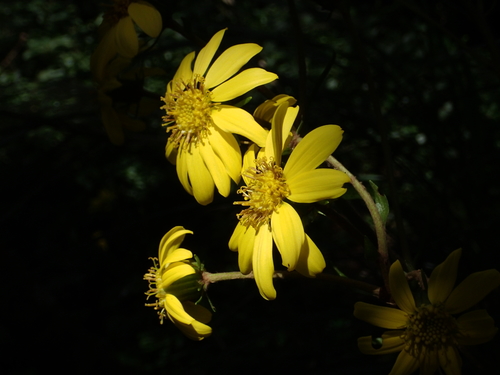
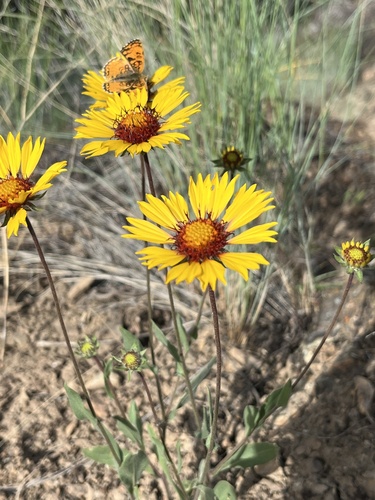
Encelia farinosa
A. Gray ex Torr.
Brittlebush
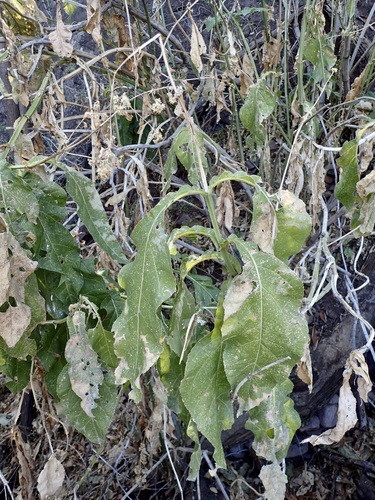
iNaturalist· cc-by-nc
(c) lonnyholmes, some rights reserved (CC BY-NC), uploaded by lonnyholmes
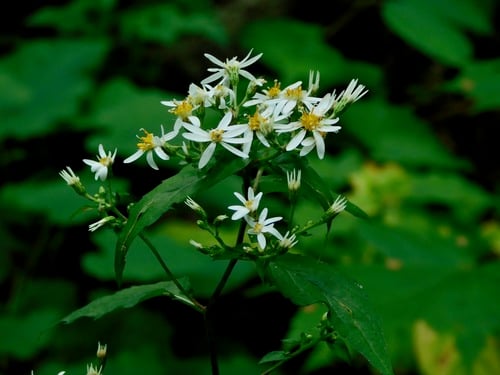
iNaturalist· cc-by-nc
(c) Fred Melgert / Carla Hoegen, some rights reserved (CC BY-NC), uploaded by Fred Melgert / Carla Hoegen
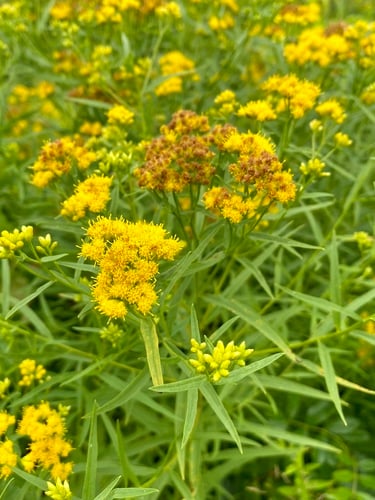
iNaturalist· cc-by-nc
(c) ericjorgensen, some rights reserved (CC BY-NC), uploaded by ericjorgensen
Summary
Source: WikipediaEncelia farinosa (commonly known as brittlebush, brittlebrush, or incienso), is a common desert shrub of the southwestern United States and northern Mexico. It has a variety of historical uses.
Description
A low shrub. It grows 90 cm high and spreads 90 cm wide. The leaves are silvery. The flowers are daisy like and orange-yellow. The centres are yellow or reddish-brown.
Edible Uses
An aromatic gum that exudes from the ends of mature stems is used for chewing.
Traditional Uses
The resin is used as chewing gum.
This uses section is brief — help expand it
Medicinal Uses
A decoction of the blossoms, leaves, and stems has been held in the mouth to relieve toothache. A poultice of the plant has been used to alleviate pain.
Distribution
It is a temperate plant. It grows in arid regions. It grows in full sun. It needs deep soil with good drainage. It suits hardiness zones 8-11.
Where It Grows
Australia, Central America, Chile, Hawaii, Mexico, North America, Pacific, Peru, South America, USA,
Cultivation
Requires a very warm sunny position in a deep very well-drained soil. Plants strongly resent wet conditions, especially in the winter. This species is not hardy in the colder areas of the country, it tolerates temperatures down to between -5 and -10°c. Another report says that the plants will tolerate temperatures down to -12°c if they are in quite dry conditions. The young growth in spring, even on mature plants, is frost-tender and so it is best to grow the plants in a position sheltered from the early morning sun. Plants have a taproot and resent root disturbance. They should be planted out into their permanent positions whilst still small, though they will then need protection from the cold for their first winter or so.
Propagation
Sow seed in spring in a greenhouse, barely covering it. Pot seedlings into individual pots as soon as large enough to handle, ensuring pots are deep enough for the taproot. Grow on under glass for at least the first winter and plant out in early summer. Cuttings can be taken in pure sand in a frame; the type of cutting is unspecified in available records.
Other Uses
A resin exuding from the ends of mature stems is used as a glue and as an incense in homes and churches. It has also been used to waterproof containers and, when melted, as a varnish. Resinous branches have been used to make quick-lighting fires.
Other Information
The gum is chewed especially by children.
Notes
There are 15 Encelia species.
Also Known As
Incienso
References (7)
- Beckstrom-Sternberg, Stephen M., and James A. Duke. "The Foodplant Database." http://probe.nalusda.gov:8300/cgi-bin/browse/foodplantdb.(ACEDB version 4.0 - data version July 1994)
- Cundall, P., (ed.), 2004, Gardening Australia: flora: the gardener's bible. ABC Books. p 536
- https://www.fireflyforest.com/flowers/category/edible-plants/ Edible Plants – Southeastern Arizona Wildflowers and Plants
- W. H. Emory, Not. milit. reconn. 143. 1848
- Kermath, B. M., et al, 2014, Food Plants in the Americas: A survey of the domesticated, cultivated and wild plants used for Human food in North, Central and South America and the Caribbean. On line draft. p 335
Show all 7 references Hide references
- MacMahon, J.A., 1990, Deserts. Audubon Society Nature Guides. Knopf. p 402 Plate 136
- Moerman, D. F., 2010, Native American Ethnobotany. Timber Press. p 210