Agave cantala
(Haw.) Roxb.
Cantala, Maguey
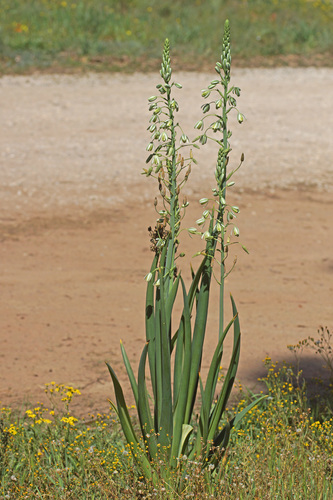
iNaturalist· cc-by-nc-sa
(c) Dinesh Valke, some rights reserved (CC BY-NC-SA)
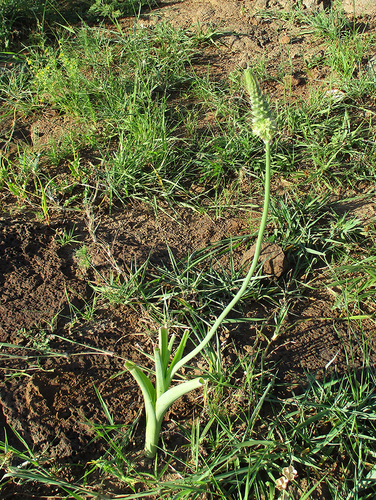
iNaturalist· cc-by-nc
(c) darien, some rights reserved (CC BY-NC), uploaded by darien
iNaturalist· cc-by-nc
(c) Juan David Jaramillo, some rights reserved (CC BY-NC), uploaded by Juan David Jaramillo
Description
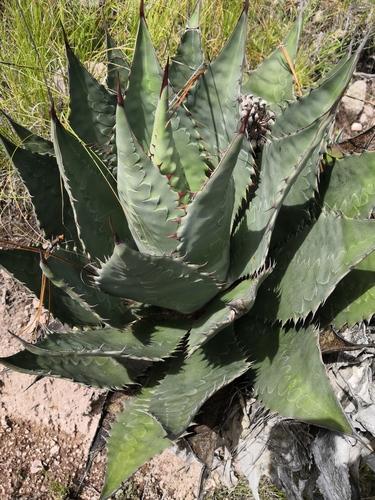
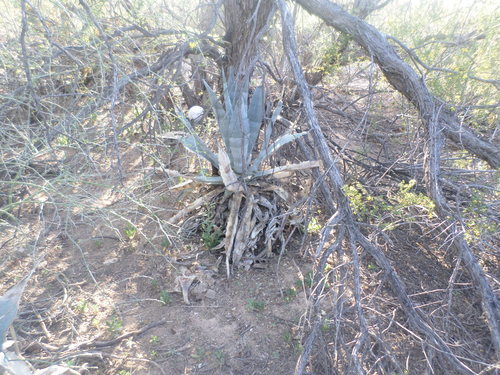
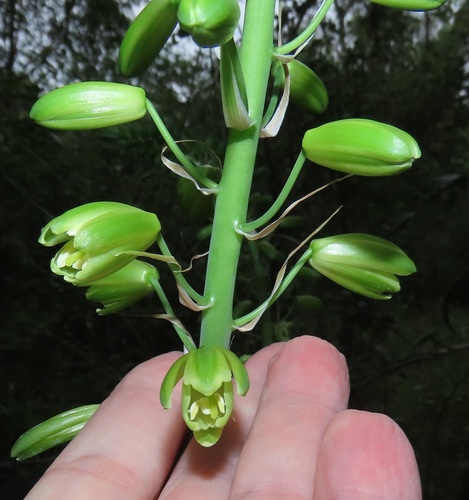
A plant which keeps growing for 6-10 years. It is a tufted shrub. It grows 4-7 m high when flowering. It has underground runners. The leaves are bluish-green and 1.3-1.6 m long by 8-10 cm wide. It as a long black curved spine and spines along the edges. These curve upwards. About 250 leaves are produced during the life of a plant. The flower occurs as a long stalk 6 m high and produces flowers 6-8 cm long. These are followed by bulbils.
Edible Uses
The heart at the top is cooked and eaten, typically cut into pieces and cooked with coconut milk, salt, sugar and herbs. The flower stalks are roasted and eaten.
Traditional Uses
The heart at the top is cooked and eaten. It is cut into small pieces and cooked with coconut milk, salt and sugar and some herbs. The flower stalks are roasted and eaten.
Medicinal Uses
The leaf is used in the treatment of wounds. (The sap is probably used)
Known Hazards
Many Agave species have strong, sharp spines on the leaves and leaf tips. In theory at least, the flowers, nectar, immature flowering stem and the centre of the rosette of all Agave species is edible and, with proper preparation, can provide a sweet, tasty foodstuff. Some species, however, contain relatively high levels of saponins (which makes them taste bitter) and some other compounds which can cause bellyache, and so these would only be eaten in times of desperation. In addition, many people may find these foods to be strongly laxative the first few times they eat them.
Distribution
It can grow in hot dry climates. It grows in areas with 2,500 mm rainfall. It will tolerate wet conditions of climate and soil. It can grow in warmer areas than sisal. In Java it grows up to 1,700 m above sea level.
Where It Grows
Asia, Central America, Himalayas, India, Indonesia, Mexico, North America, Pacific, Philippines, SE Asia,
Cultivation
It is normally grown from suckers. Suckers 40-60 cm high are used and they are planted 90 cm apart. It can be grown from seed. It can also be grown from runners or stolons and from bulbils.
Propagation
Seed - surface sow in a container in a light position. The seed usually germinates in 1 - 3 months at 15 - 20°c. Prick out the seedlings into individual pots of well-drained soil when they are large enough to handle and grow them on in a sunny position until they are at least 10cm tall before planting out. Offsets and suckers can be potted up at any time they are available. Bulbils, where produced, are an easy method of propagation. Simply pot them up and plant out at the beginning of a growing season when they are 10cm or more tall.
Other Uses
A fibre is obtained from the leaves. It is mainly used for baskets, mats, fishing-nets, ropes, harvest binding strings, hammocks, bags and sandals. The fibre is finer but less strong than that of sisal (Agave sisalana) and henequen (Agave fourcroydes). It is more suitable for spinning than that of sisal. Wrapping paper is produced from the remainders. The fibre is prepared by boiling the leaves for six hours, then forcing them through rollers, and scraping the flesh away. The roots contain saponins and can be used as a soap substitute. Often planted as a hedge along the roadsides and in gardens, it is also used for reducing soil erosion along rivers and brooks. The plant is traditionally grown in living fences in the northwestern Himalayas, where it helps to exclude livestock and other animals; mark out land boundaries; whilst also providing a range of medicinal and other uses.
Notes
The leaves are used for fibre. There are about 250 Agave species. The Agavaceae are mostly in the tropics and subtropics. It is used for medicine in Nepal.
Synonyms
Also Known As
Bombay aloe, Ganas sabrang, Ketuki, Kitki, Lanas balandha, Nanas balandha, Nanas kosta, Nanas sabrang, Ramban
References (11)
- Ambasta S.P. (Ed.), 2000, The Useful Plants of India. CSIR India. p 20
- Fl. ind. ed 1932, 2:167. 1832 (Hort. bengal. 25. 1814, nom. nudum "cantala")
- Kumar, P. D., et al, 2015, Ethnobotanical Knowledge and Usage of Wild Plants in Theog Forest Division, Himachal Pradesh, North Western Himalaya. The Journal of Ethnobiology and Traditional Medicine. Photon 124(2015) 922-935
- Manandhar, N.P., 2002, Plants and People of Nepal. Timber Press. Portland, Oregon. p 76
- Martin, F.W. & Ruberte, R.M., 1979, Edible Leaves of the Tropics. Antillian College Press, Mayaguez, Puerto Rico. p 174
Show all 11 references Hide references
- Ochse, J.J. et al, 1931, Vegetables of the Dutch East Indies. Asher reprint. p 31
- Purseglove, J.W., 1972, Tropical Crops. Monocotyledons. Longmans p 10
- Siemonsma, J. S. & Kasem Piluek, eds. 1993. Vegetables. In: Plant Resources of South-East Asia (PROSEA) 8:311
- Terra, G.J.A., 1973, Tropical Vegetables. Communication 54e Royal Tropical Institute, Amsterdam, p 19
- Vickery, M.L. and Vickery, B., 1979, Plant Products of Tropical Africa, Macmillan. p 75
- Wienk, J.F. and S’chendellaan, A.,van; Sisal and relatives, in Simmonds, N.W., (Ed.), 1979, Evolution of Crop Plants. Longman. p 3