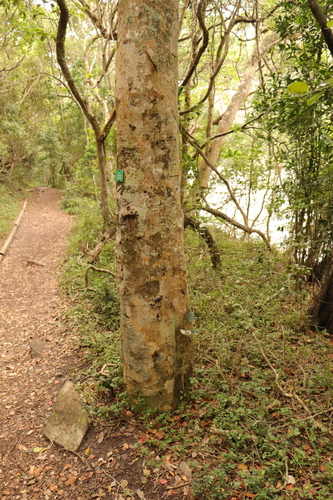
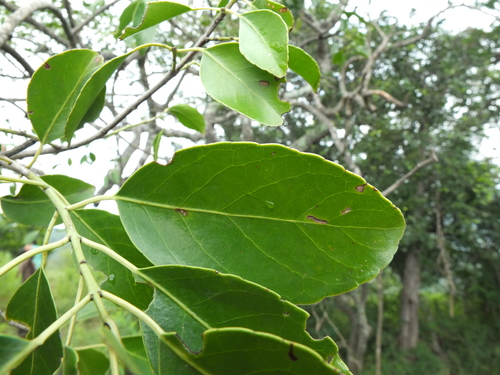
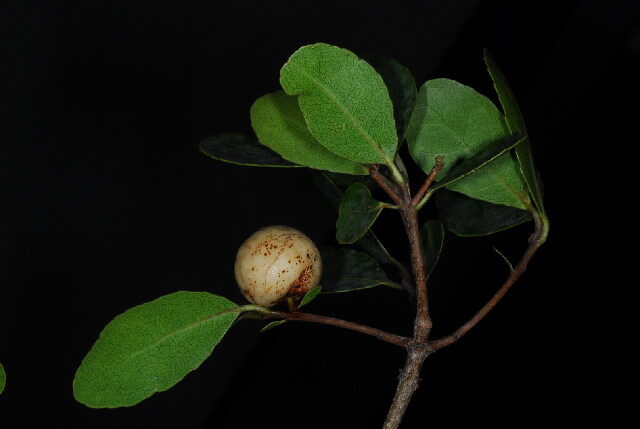
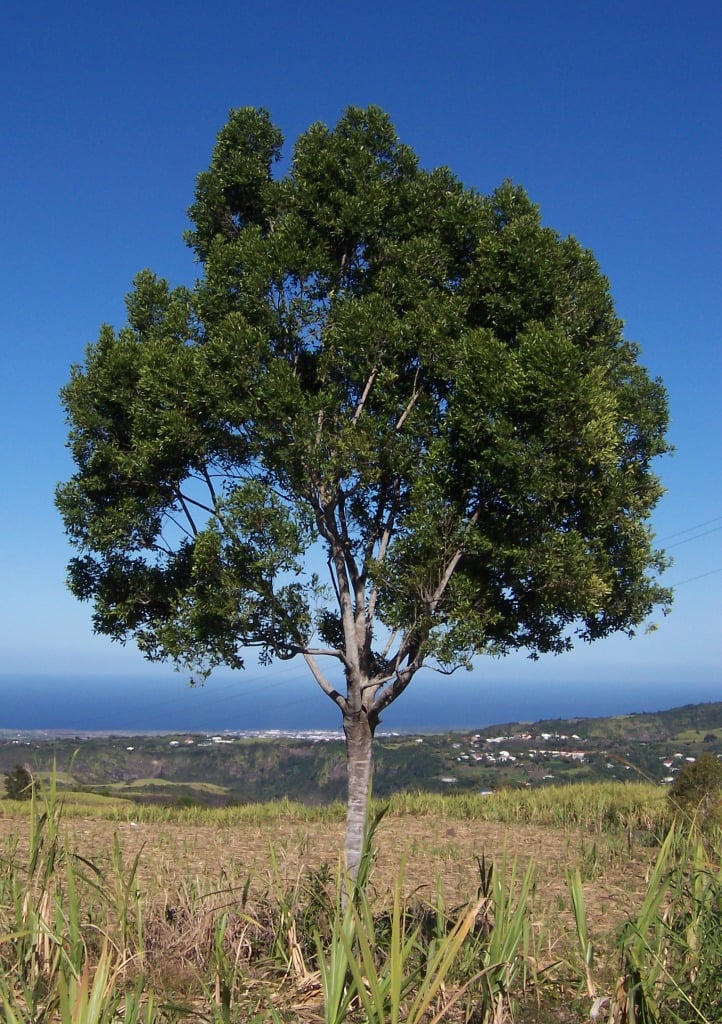
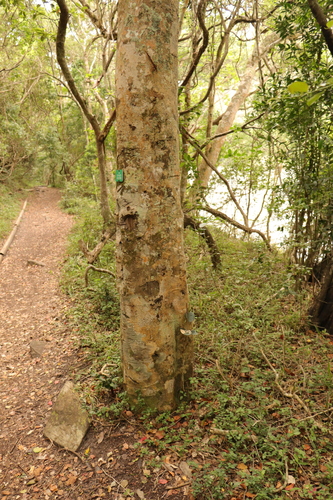
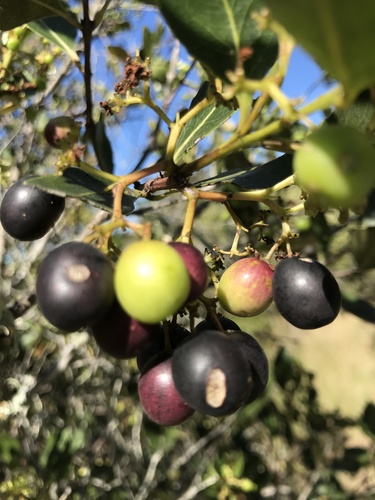
Salacia verrucosa
Wight
Pilutang roots
gbif· cc0
President and Fellows of Harvard College
gbif· cc0
President and Fellows of Harvard College
gbif· cc0
President and Fellows of Harvard College
Description
A woody climber. It grows 6 m long. The branches usually are covered with lenticels. The flowers are pale green to yellow. The fruit is a flattened berry. It is 2 cm across.
Edible Uses
The ripe fruit are eaten fresh.
Traditional Uses
The ripe fruit are eaten fresh.
This uses section is brief — help expand it
Distribution
It is a tropical plant. It grows in lowland forests up to 920 m above sea level.
Where It Grows
Asia, Cambodia, India, Indochina, Indonesia, Laos, Malaysia, Malesia, Myanmar, Philippines, SE Asia, Thailand, Vietnam,
Cultivation
Plants can be grown from seeds.
Notes
It is an unresolved name in The Plant List.
Synonyms
Also Known As
Kam dong, Kradon yen, Salasia pilutang, Sauk-kala, Ta kwaang
References (5)
- Eiadthong, W., et al, 2010, Management of the Emerald Triangle Protected Forests Complex. Botanical Consultant Technical Report. p 51
- Hou, D., et al, Celastraceae. Flora of Thailand. 10, 2: 141-198 p 195
- Kachenchart, B., et al, 2008, Phenology of Edible Plants at Sakaerat Forest. In Proceedings of the FORTROP II: Tropical Forestry Change in a Changing World. Bangkok, Thailand.
- Suksri, S., et al, 2005, Ethnobotany in Bung Khong Long Non-Hunting Area, Northeast Thailand. Kasetsart J., (Nat. Sci) 39: 519-533
- Sukarya, D. G., (Ed.) 2013, 3,500 Plant Species of the Botanic Gardens of Indonesia. LIPI p 968