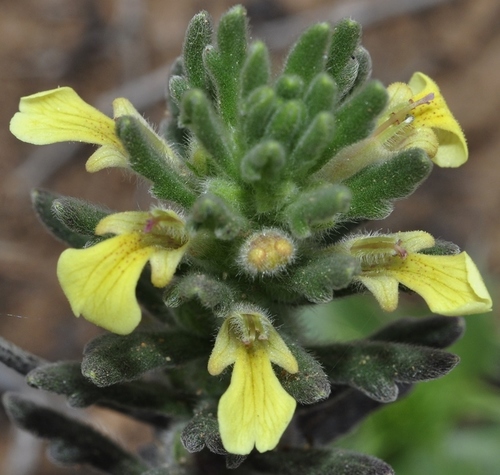
Agastache urticifolia
(Benth.) Kuntze.
Giant Hyssop, Horsemint, Nettle-leaf Giant-hyssop, Nettleleaf Giant Hyssop, Sawtooth mountain mint
iNaturalist· cc-by-nc
(c) jamesjarrett00, some rights reserved (CC BY-NC), uploaded by jamesjarrett00
iNaturalist· cc-by-nc
(c) Liam O'Brien, some rights reserved (CC BY-NC), uploaded by Liam O'Brien
iNaturalist· cc-by-nc
(c) nhooper, some rights reserved (CC BY-NC)
Summary
Source: WikipediaAgastache urticifolia is a species of flowering plant in the mint family known by the common name nettleleaf giant hyssop or horse mint.
Description
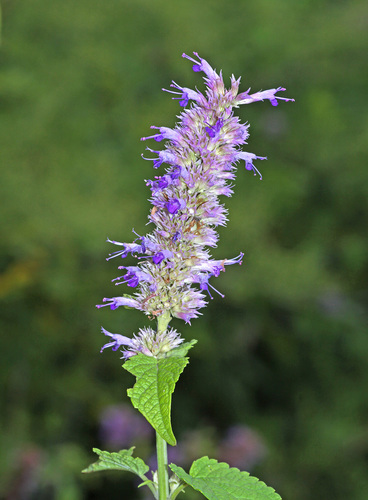
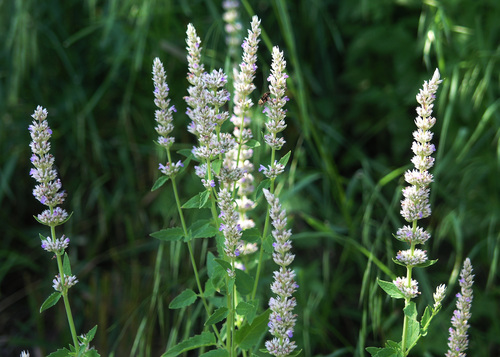
A perennial plant which grows up to 1.2 m tall. It has nettle like leaves. The sepals are longer than the other Agastache species listed. The flower spikes are 15 cm long. They are pink or blue.
Edible Uses
The leaves are most likely used as an aromatic flavouring in salads and cooked foods, though no further details are given. The seed can be eaten raw or cooked, but is very small and fiddly to work with. Dried flowers and leaves make a herbal tea. Fresh leaves have a distinctive minty flavour — mild and pleasant raw, though boiling softens them without fully removing a gritty texture. The flowers are stronger in taste but hairy, making them less appealing eaten raw; both leaves and flowers can be added to salads or lightly cooked. The seeds (nutlets) have an unpleasant raw flavour described as tarry or resinous, but processing improves them: light toasting followed by boiling reduces bitterness and produces a usable porridge or flour. Nutlets can be collected in large numbers by tapping the flowering heads, though separating the seed coats is difficult. Even after preparation, the seeds remain one of the less palatable wild foods, though they provide some calories and were historically used.
Traditional Uses
The leaves are used most likely as a flavouring. The seeds are eaten raw or cooked. The dried flowers and leaves are used for herbal tea.
This uses section is brief — help expand it
Medicinal Uses
The leaves are analgesic and antirheumatic. A decoction is taken internally for rheumatism, measles, stomach pains, and colds. Externally, a poultice of mashed leaves is applied to swellings.
Distribution
It is a temperate plant. It grows naturally in moist soils from the foothills to about 2,500 metres in Western North America from Montana to British Columbia and south to California and Colorado. It does best in warm sunny positions in well drained soil. When dormant they can stand low temperatures to -40°C.
Where It Grows
Australia, Canada, North America, USA,
Cultivation
Plants can be grown from seed. They should just be covered with soil and germinate in 1-3 months at 13°C. They should be grown in the nursery for the first year. Plants can also be grown by dividing clumps and can be grown from basal cuttings. These root in 3 weeks.
Propagation
Sow seed in spring in a greenhouse, barely covering it. Germination typically takes 1–3 months at 13°C. Prick seedlings into individual pots once large enough to handle and grow on under glass for the first year, then plant out in late spring or early summer. Division in spring is straightforward — large divisions can go straight into their permanent positions. For basal cuttings, harvest young shoots at around 10–15cm tall in spring, pot them in a lightly shaded greenhouse, and they should root within 3 weeks, ready to plant out in summer or the following spring.
Other Uses
None known
Notes
There are about 20-30 Agastache species.
Synonyms
References (7)
- Beckstrom-Sternberg, Stephen M., and James A. Duke. "The Foodplant Database." http://probe.nalusda.gov:8300/cgi-bin/browse/foodplantdb.(ACEDB version 4.0 - data version July 1994)
- Facciola, S., 1998, Cornucopia 2: a Source Book of Edible Plants. Kampong Publications, p 125
- MacKinnon, A., et al, 2009, Edible & Medicinal Plants of Canada. Lone Pine. p 275
- Menninger, E.A., 1977, Edible Nuts of the World. Horticultural Books. Florida p 114
- Plants for a Future database, The Field, Penpol, Lostwithiel, Cornwall, PL22 0NG, UK. http://www.scs.leeds.ac.uk/pfaf/
Show all 7 references Hide references
- Revis. gen. pl. 2:511. 1891
- Vermeulen, N, 1998, The Complete Encyclopedia of Herbs. Rebo Publishers. p 28