Echinochloa frumentacea
(Roxb.) Link.
Japanese millet, Japanese Barnyard millet
Wikipedia· cc-by-sa
Wikimedia Commons - Echinochloa_frumentacea.jpg
iNaturalist· cc-by-nc
(c) Elavarasan M, some rights reserved (CC BY-NC)
iNaturalist· cc-by-nc
(c) SONU KUMAR, some rights reserved (CC BY-NC)
Summary
Source: WikipediaEchinochloa frumentacea (Indian barnyard millet, sawa millet, or billion dollar grass) is a species of Echinochloa. Both Echinochloa frumentacea and E. esculenta are called Japanese millet. This millet is widely grown as a cereal in India, Pakistan, and Nepal. Its wild ancestor is the tropical grass Echinochloa colona, but the exact date or region of domestication is uncertain. It is cultivated on marginal lands where rice and other crops will not grow well. The grains are cooked in water, like rice, or boiled with milk and sugar. Sometimes it is fermented to make beer. While also being part of the staple diet for some communities in India, these seeds are, in particular, (cooked and) eaten during religious fasting (willingly abstaining from some types of food / food ingredients). For this reason, these seeds are commonly also referred to as "vrat ke chawal" in Hindi (i.e., "rice for fasting", literally). Also, in India, the barnyard millet is known as Sama ke chawal/ Samak chawal/ Sama rice/ Samak rice. Other common names to identify these seeds include oodalu (ಊದಲು) in Kannada, Shyamak (শ্যামাক) or Shyama Chal (শ্যামা চাল) in Bangla, jhangora in the Garhwal Hills, bhagar (भगर) in Marathi-speaking areas, samo or morio (mario, moraiaya) seeds in Gujarati, bonthasaamalu (బొంతసామలు) in Telugu, and kuthiraivaali (குதிரைவாளி) in Tamil.
Description
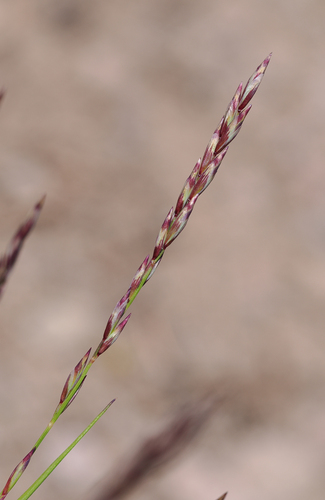
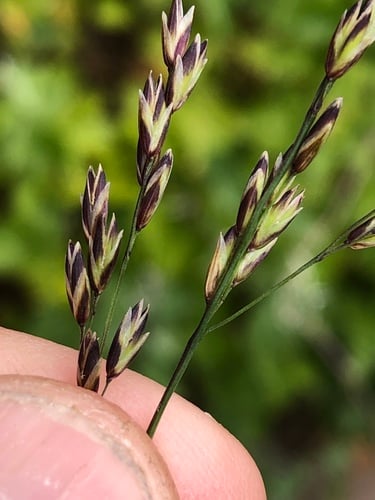
A cereal or millet. It is an annual grass. The culms are robust. It grows 1-1.5 m tall. The leaf sheaths are smooth. The leaves are broad. The leaf blade is soft and narrow. It is 15-40 cm long and 1-2.4 cm wide. The edges are thickened and wavy. The flower is erect and sword shaped. It is 10-20 cm long. The racemes are 1-3 cm long and closely spaced and overlapping. The spikelets are greenish. The grains are oval and light brown to purple.
Edible Uses
The seed is cooked and used as a millet — it can be prepared whole or ground into flour, and is usually eaten as a porridge. The seed contains approximately 72.5% starch, 3.12% fat, 11.8% protein, and 2.65% ash.
Traditional Uses
The grains are used as food. They are cooked like rice or turned into flour. This is used in porridge or gruel. It is also boiled in milk. The young shoots are also eaten.
Medicinal Uses
The plant is useful in the treatment of biliousness and constipation.
Distribution
It is a temperate plant. It is cultivated in S China. It can grow in arid places. Tasmanian Herbarium. In Sichuan and Yunnan.
Where It Grows
Africa, Asia, Australia, Britain, China, East Africa, Europe, India, Japan, Kenya, Korea, Malawi, Middle East, Mozambique, Myanmar, Namibia, Pacific, Pakistan, Philippines, Saudi Arabia, SE Asia, Southern Africa, Sri Lanka, Taiwan, Tanzania, Tasmania, West Africa, Zambia, Zimbabwe,
Cultivation
Japanese millet is an annual plant that can succeed in a wide range of environments from the temperate zone to the tropics. It can be found at elevations up to 1,500 metres. It grows best in areas where annual daytime temperatures are within the range 25 - 30°c, but can tolerate 10 - 35°c. It prefers a mean annual rainfall in the range 500 - 750mm, but tolerates 450 - 1,000mm. Requires a sunny position. Prefers a rich moist soil but succeeds in ordinary garden soil. Plants can succeed in soils with a pH as low as 4.5. Prefers a pH in the range 5.5 - 6.5, tolerating 4.8 - 7.2. The fastest growing of the millets, it can produce a crop of seeds within 6 weeks of sowing in warmer areas of the world. There are some named varieties.
Propagation
Sow seed in early spring in a greenhouse, barely covering it. Prick seedlings into individual pots when large enough to handle and plant out into permanent positions in early summer. A direct sowing in late spring may also succeed, but is unlikely to ripen a seed crop in cool, wet summers.
Other Uses
None known Special Uses
Production
It grows quickly. It can be ready for harvest in about 6 weeks. It is used as a substitute crop if the rice crop fails.
Other Information
A cultivated crop plant.
Notes
There are about 35 Echinochloa species. They grow in tropical to warm temperate regions.
Synonyms
Also Known As
Bavto, Billion-dollar grass, Bonta chamalu, Bonta shama, Hie, Hu nan bai zi, Janglisama, Kudraivali pillu, Myet-thi, Oddalu, Samai, Samo ghas, Samul, Sanwa, Sanwak, Savai, Sawa, Sawan, Sawank, Shama, Shamula, Shyama, Shyamaka, Siberian Millet, Syama dhan
References (28)
- Ambasta, S.P. (Ed.), 2000, The Useful Plants of India. CSIR India. p 189
- Brouk, B., 1975, Plants Consumed by Man. Academic Press, London. p 25
- Cobley, L.S. (rev. Steele, W.M.) 2nd Ed., 1976, An Introduction to the Botany of Tropical Crops. Longmans. p 56
- Curtis, W.M., & Morris, D.I., 1994, The Student's Flora of Tasmania. Part 4B St David's Park Publishing, Tasmania, p 338
- Dobriyal, M. J. R. & Dobriyal, R., 2014, Non Wood Forest Produce an Option for Ethnic Food and Nutritional Security in India. Int. J. of Usuf. Mngt. 15(1):17-37
Show all 28 references Hide references
- Facciola, S., 1998, Cornucopia 2: a Source Book of Edible Plants. Kampong Publications, p 175
- Flora of China. Poaceae
- Flora of Pakistan. www.eFloras.org
- Hort. berol. 1:204. 1827
- Hu, Shiu-ying, 2005, Food Plants of China. The Chinese University Press. p 288 (As var. frumentacea)
- Jardin, C., 1970, List of Foods Used In Africa, FAO Nutrition Information Document Series No 2.p 2
- Kiple, K.F. & Ornelas, K.C., (eds), 2000, The Cambridge World History of Food. CUP p 118, 1791
- Lazarides, M. & Hince, B., 1993, Handbook of Economic Plants of Australia, CSIRO. p 86
- Macmillan, H.F. (Revised Barlow, H.S., et al), 1991, Tropical Planting and Gardening. Sixth edition. Malayan Nature Society. Kuala Lumpur. p 353
- Mishra, S. & Chaudhury, S. S., 2012, Ethnobotanical flora used by four major tribes of Koraput, Odisha, India. Genetic Resources Crop Evolution 59:793-804
- Paczkowska, G. & Chapman, A.R., 2000, The Western Australian Flora. A Descriptive Catalogue. Western Australian Herbarium. p 102
- Plants for a Future database, The Field, Penpol, Lostwithiel, Cornwall, PL22 0NG, UK. http://www.scs.leeds.ac.uk/pfaf/
- Purseglove, J.W., 1972, Tropical Crops. Monocotyledons. Longmans p 145
- Romanowski, N., 2007, Edible Water Gardens. Hyland House. p 94
- Royal Botanic Gardens, Kew (1999). Survey of Economic Plants for Arid and Semi-Arid Lands (SEPASAL) database. Published on the Internet; http://www.rbgkew.org.uk/ceb/sepasal/internet [Accessed 3rd June 2011]
- Small, E., 2009, Top 100 Food Plants. The world's most important culinary crops. NRC Research Press. p 352
- Smith, P.M., 1979, Japanese Barnyard Millet, in Simmonds, N.W., (ed), Crop Plant Evolution. Longmans. London. p 308
- Tanaka,
- Tasmanian Herbarium Vascular Plants list p 84
- van Wyk, B., 2005, Food Plants of the World. An illustrated guide. Timber press. p 183
- Wheeler, J.R.(ed.), 1992, Flora of the Kimberley Region. CALM, Western Australian Herbarium, p 1152
- World Checklist of Useful Plant Species 2020. Royal Botanic Gardens, Kew
- Zeven, A. C. & de West, J. M. J., 1982, Dictionary of cultivated plants and their regions of diversity. Wageningen. p 36