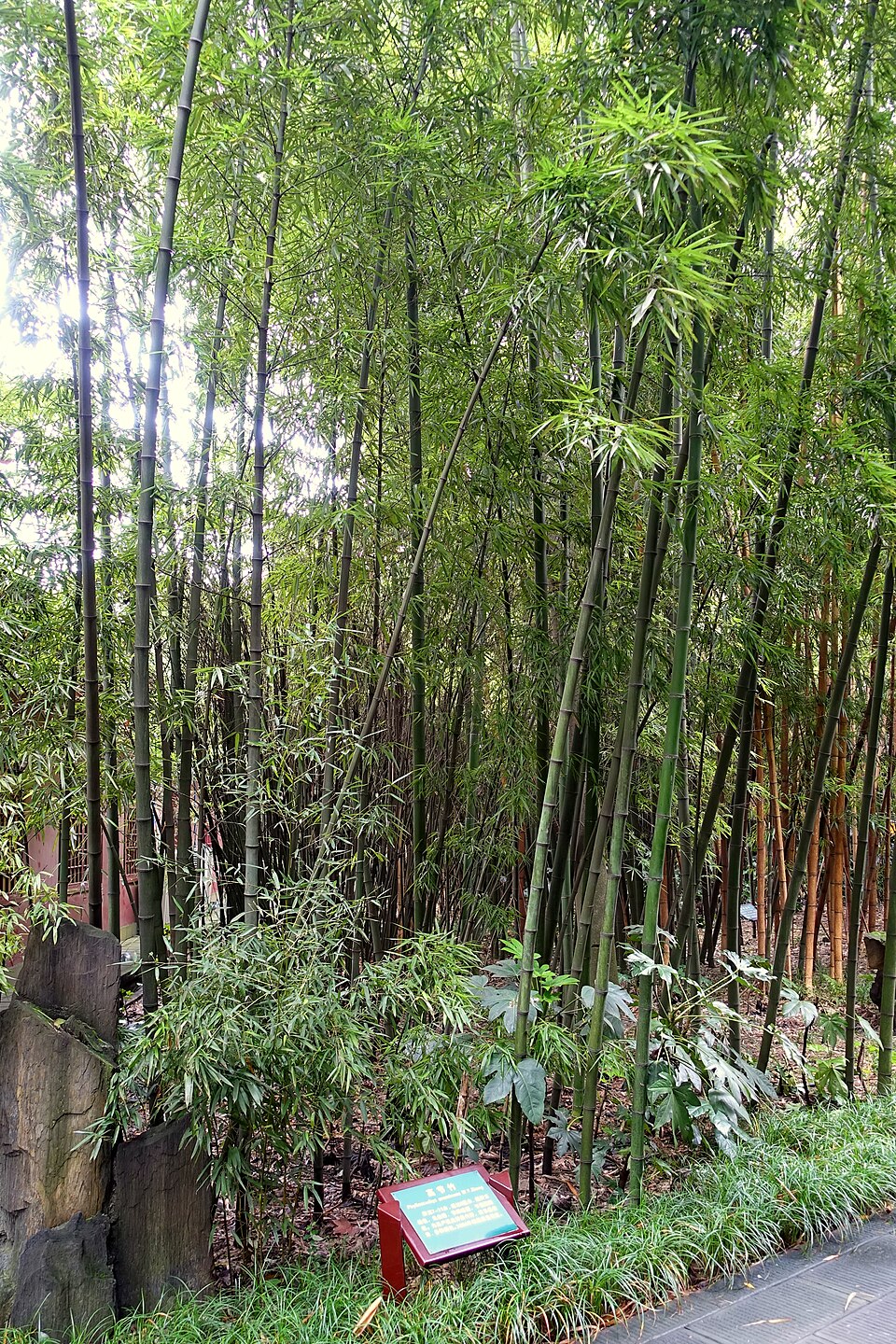
Echinochloa esculenta
(A. Braun) H. Scholz
Japanese barnyard millet, Japanese millet
iNaturalist· cc-by-nc
(c) cricketfrog13, some rights reserved (CC BY-NC), uploaded by cricketfrog13
iNaturalist· cc-by-nc
(c) Nikolay Panasenko, some rights reserved (CC BY-NC)
iNaturalist· cc-by-nc
(c) Игорь Поспелов, some rights reserved (CC BY-NC)
Summary
Source: WikipediaEchinochloa esculenta or Echinochloa utilis is a type of millet originating from East Asia, and is part of the Poaceae family, making it a grass. E. esculenta is colloquially known as Japanese millet, but possesses many other names, such as: Japanese barnyard millet, marsh millet, Siberian millet, and white millet. Its primary usage in the USA is for forage and for wildlife habitats. In Japan, Korea and northeastern China, the millet is grown on a small scale primarily for fodder. Japanese millet is not a main cereal crop, and is therefore considered an alternative crop. Echinochloa species are generally considered to be short-lived, tropical short-day C4 plants that possess high vitality in humid conditions. Seeding is done in spring and flowering takes place in mid summer. Species from this genus show strong adaptation to soils with poor drainage and low fertility.
Description
An annual millet grass. It grows 1-1.5 m tall. It forms tussocks. The leaf sheaths are smooth. The leaf blades are 20-50 cm long by 1.2-2.5 cm wide. The edges are thickened and wavy. It is flat and tapers to a point. The inflorescence is an erect panicle 6-20 cm long. The seed heads are purplish. This is probably the cultivated form of Sawa millet (Echinochloa colona).
Edible Uses
The seeds are boiled with rice, used in porridge, or made into rice cakes.
Traditional Uses
The seeds are boiled with rice or used in porridge or rice cakes.
This uses section is brief — help expand it
Distribution
It is cultivated in warm temperate areas of the world. It is grown as a summer growing annual. It needs a highly fertile soil. It can withstand some water-logging but is not resistant to drought. It is less drought tolerant than sorghum. It can grow in arid places. Tasmanian Herbarium.
Where It Grows
Africa, Asia, Australia, Belgium, Brazil, Britain, China, East Africa, Europe, India, Japan, Korea, Madagascar, North America, South Africa, Southern Africa, Sri Lanka, Tanzania, Tasmania, USA, Zimbabwe,
Other Information
A crop plant.
Notes
There are about 35 Echinochloa species. They grow in tropical to warm temperate regions.
Synonyms
Also Known As
Sanwa millet, Zi sui bai
References (15)
- Acta Phytotax. Geobot. 20:50. 1962 (As Echinochloa utilis)
- Hussey, B.M.J., Keighery, G.J., Cousens, R.D., Dodd, J., Lloyd, S.G., 1997, Western Weeds. A guide to the weeds of Western Australia. Plant Protection Society of Western Australia. p 52
- Lamp, C.A., Forbes, S.J. and Cade, J.W., 1990, Grasses of Temperate Australia. Inkata Press. p 146 (As Echinochloa utilis)
- Lazarides, M. & Hince, B., 1993, Handbook of Economic Plants of Australia, CSIRO. p 86 (As Echinochloa utilis)
- Paczkowska, G. & Chapman, A.R., 2000, The Western Australian Flora. A Descriptive Catalogue. Western Australian Herbarium. p 102
Show all 15 references Hide references
- Royal Botanic Gardens, Kew (1999). Survey of Economic Plants for Arid and Semi-Arid Lands (SEPASAL) database. Published on the Internet; http://www.rbgkew.org.uk/ceb/sepasal/internet [Accessed 3rd June 2011]
- Song, M., et al, 2013, Traditional knowledge of wild edible plants in Jeju Island, Korea. Indian Journal of Traditional Knowledge. 12(2) pp 177-194 (As Echinochloa utilis)
- Tasmanian Herbarium Vascular Plants list p 84
- Tasmanian Herbarium Vascular Plants list p 84 (As Echinochloa utilis)
- Taxon 41:523. 1992
- USDA, ARS, National Genetic Resources Program. Germplasm Resources Information Network - (GRIN). [Online Database] National Germplasm Resources Laboratory, Beltsville, Maryland. Available: www.ars-grin.gov/cgi-bin/npgs/html/econ.pl (10 April 2000)
- van Wyk, B., 2005, Food Plants of the World. An illustrated guide. Timber press. p 183 (As Echinochloa utilis)
- Wiersema, J. H. & Leon, B., 2013, World Economic Plants. A Standard Reference CRC Press. 2nd Ed. p 263
- Wheeler, J.R.(ed.), 1992, Flora of the Kimberley Region. CALM, Western Australian Herbarium, p 1154 (As Echinochloa utilis)
- World Checklist of Useful Plant Species 2020. Royal Botanic Gardens, Kew