Echinocereus dasyacanthus
Engelm.
Golden rainbow hedgehog cactus, Texas rainbow cactus, Texas rainbow hedgehog, Yellow-flowered pitaya, Chuhuahua
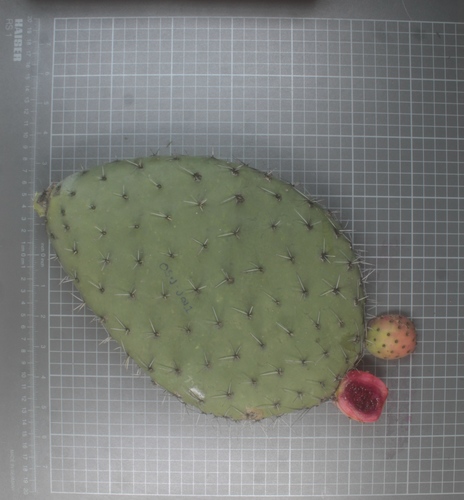
iNaturalist· cc-by-nc
(c) Christopher Rustay, some rights reserved (CC BY-NC), uploaded by Christopher Rustay
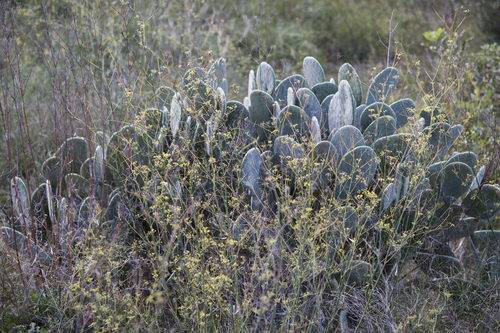
iNaturalist· cc-by-nc
(c) Pepe Paulín, some rights reserved (CC BY-NC), uploaded by Pepe Paulín
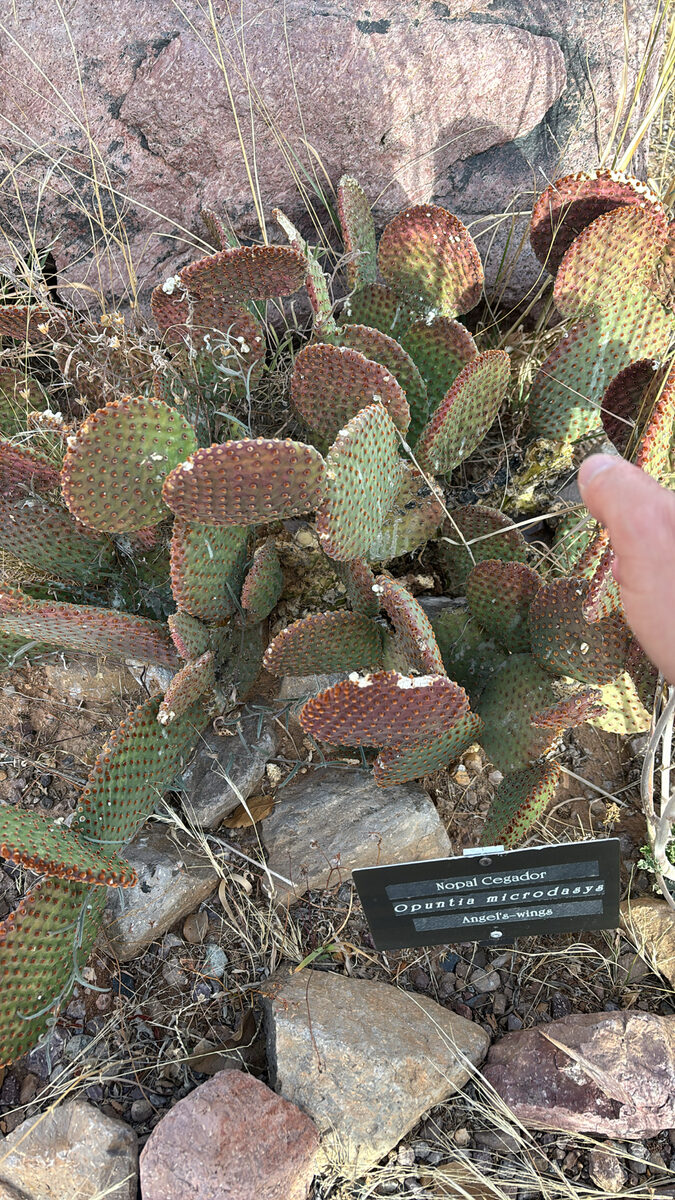
iNaturalist· cc-by-nc
(c) Clifton Ladd, C.W.B., some rights reserved (CC BY-NC), uploaded by Clifton Ladd, C.W.B.
Summary
Source: WikipediaEchinocereus dasyacanthus is a member of the cactus family, Cactaceae. It is one of about 2000 total species belonging to this family. The cactus is commonly known as Texas rainbow cactus because of the subtle rings or bands of contrasting colors along the stem of the plant. Not all Texas rainbow cacti have the "rainbow" coloration on their stems. Another common name is spiny hedgehog cactus. E. dasyacanthus can be identified as a tetraploid with predominantly yellow flowers. Experiments suggest this is due to the hybridization of E. dasyacanthus and E. coccineus. The E. dasyacanthus received its specific epithet from the two Greek words dasys and akantha, which mean "shaggy" and "thorns" respectively.
Description
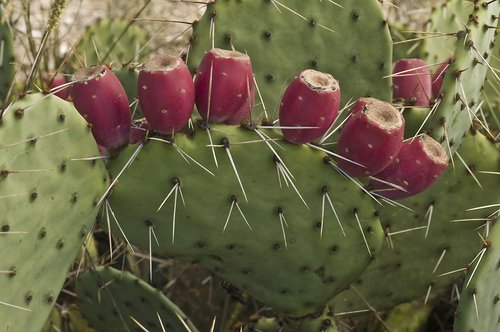
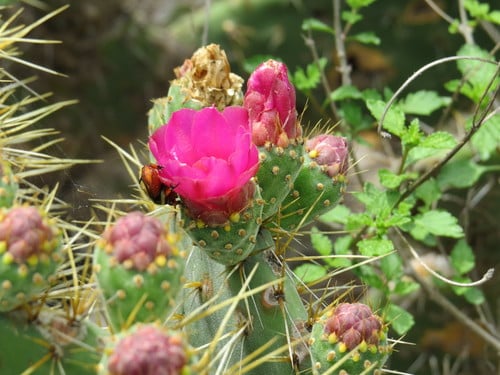
A cactus. Plants are usually single. The stems are almost round and taper towards the tip. They are 35 cm high and 13 cm across. They are covered with spines. There are 12-21 ribs. The flowers are often on the side of the stems. They are usually yellow but can be pink or purple. They are 5-15 cm across. The fruit are round and 3-4 cm across. They are green to greenish-purple. The spines on them fall off.
Edible Uses
Spiny hedgehog cactus is a larger, more upright hedgehog cactus with conspicuous spination and showy flowers. Like other Echinocereus, it can produce edible fruit, but fruit harvest is frequently undermined by ants and by irregular fruiting. Edibility Summary. Fruits are edible but inconsistent as a dependable yield; treat them as a seasonal snack rather than a core resource. Edible Uses & Rating. Fruits are the edible target; overall rating is “good when found intact, low reliability.” Taste, Processing & Kitchen Notes. Reports generally place hedgehog cactus fruits in the “pleasant-to-delicious” range, but your project’s practical constraint still applies: many fruits may be hollowed. Spine clusters on fruits often detach, making careful brushing the first-line processing step. Seasonality (Phenology). Typically, flowers in spring and fruits in early to mid-summer, with timing shifting by elevation and rainfall. Safety & Cautions (Food Use). Avoid harvesting where populations are protected. Handle fruits and plants with tools/gloves as needed; spines can detach and embed easily. Harvest & Processing Workflow. Check fruits for maturity and for ant excavation by opening before committing time. Brush off spines, open, scoop edible pulp/seed mass, and keep spines out of the food stream. Cultivar/Selection Notes. Often grown ornamentally for its impressive spination and flowers, fruit selection is generally informal (local provenances that actually fruit well). Look-Alikes & Confusion Risks. Confusion mainly within Echinocereus; use the ribbed stem and laterally borne flower/fruit pattern to separate from similar-sized cacti. Traditional/Indigenous Use Summary. Echinocereus fruits were used traditionally in parts of the Southwest. They are valued, yet not always dependable in quantity.
Traditional Uses
The fully ripe fruit are eaten.
This uses section is brief — help expand it
Medicinal Uses
Echinocereus dasyacanthus (commonly known as the Texas Rainbow Cactus or Spiny Hedgehog Cactus) is primarily valued as an ornamental plant for landscaping and indoor pot cultivation due to its vibrant flowers and unique, spiny appearance. Based on the available search results, specific, documented medical uses for Echinocereus dasyacanthus are not explicitly listed in the same way they are for other Echinocereus species, such as E. enneacanthus or E. stramineus (which are known for their edible fruit) or E. viridiflorus. However, the following can be noted regarding its context: Safety: It is reported to be non-toxic to humans and pets. General Echinocereus Uses: While E. dasyacanthus is not specifically highlighted, the Echinocereus genus is generally known for producing edible fruit that tastes similar to strawberries. Therapeutic Value: Like many succulents, it is often kept for its aesthetic, stress-reducing, and therapeutic, "zen-like" gardening benefits. It is important to distinguish this species from other, more specialized medicinal cacti, such as Peniocereus greggii (used for respiratory ailments) or Lophocereus schottii (used in studies for cancer and diabetes), which are often mentioned in the same regional contexts.
Known Hazards
Avoid harvesting where populations are protected. Handle fruits and plants with tools/gloves as needed; spines can detach and embed easily.
Distribution
It is a temperate plant.
Where It Grows
Mexico, North America, USA,
Cultivation
A high-ornamental, drought-adapted cactus with edible fruit potential, but a foraging target that rewards opportunism rather than planning. Growing Conditions. Full sun, heat tolerant, very sharp drainage, and minimal winter moisture. Habitat & Range. Rocky desert and desert grassland/transition habitats across parts of the Southwest and adjacent regions (species-level range varies with taxonomy). Size & Landscape Performance. Upright to clumping habit; strong presence in xeriscapes; spines and flowers provide year-round structure and seasonal color. Cultivation (Horticulture). Best in mineral soils, raised beds, or slopes; protect from winter wet in colder climates. Pests & Problems. Ants commonly compromise fruit; rot is the big cultivation problem where drainage is poor. Identification & Habit. Ribbed stems with strong spine clusters; flowers borne laterally; fruits spiny and small. Pollinators. Typically visited by native bees and other insects; yellow-flowered forms are especially associated with bee visitation, though local pollinator assemblages vary with habitat. Spiny Hedgehog Cactus (Echinocereus dasyacanthus). Family: Cactus family (Cactaceae). Genus: Echinocereus. Common names: Spiny hedgehog cactus (often encountered in horticulture as a yellow-flowered hedgehog cactus). USDA Hardiness Zones and size: Commonly cited for garden use around Zones 6–9; typically about 30–60 cm tall and 30–60 cm wide (clumping with age).
Propagation
Seed and offsets (where clumping produces divisions); seed is preferred for conservation-minded plantings.
Notes
There are about 60 Echinocereus species.
Synonyms
Also Known As
Spiny hedgehog cactus (often encountered in horticulture as a yellow-flowered hedgehog cactus).
References (4)
- Anderson, E.F., 2001, The Cactus Family, Timber Press p 234
- Beckstrom-Sternberg, Stephen M., and James A. Duke. "The Foodplant Database." http://probe.nalusda.gov:8300/cgi-bin/browse/foodplantdb.(ACEDB version 4.0 - data version July 1994)
- Facciola, S., 1998, Cornucopia 2: a Source Book of Edible Plants. Kampong Publications, p 63
- Hedrick, U.P., 1919, (Ed.), Sturtevant's edible plants of the world. p 180