Eberhardtia aurata
(Pierre ex Dubard) Lecomte
Mountain loquat
Wikipedia· cc-by-sa
Wikimedia Commons - Eberhardtia_aurata.jpg
wikimedia· cc-by-sa
Wikimedia Commons (via Wikimedia Commons)
Summary
Source: WikipediaEberhardtia aurata is a plant in the family Sapotaceae. It grows as a tree up to 8 metres (30 ft) tall. The twigs are rusty brown. Fruit is subglobose, rusty-brown, up to 5 centimetres (2 in) long. Its habitat is forests. E. aurata is found in China and northern Vietnam.
Description
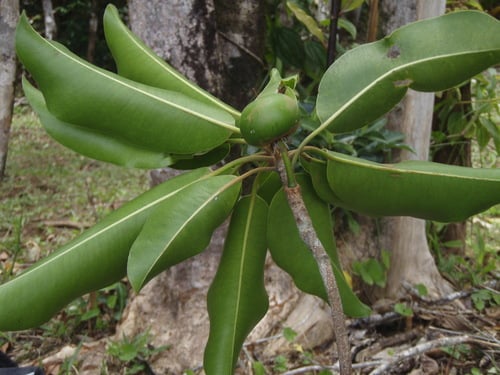
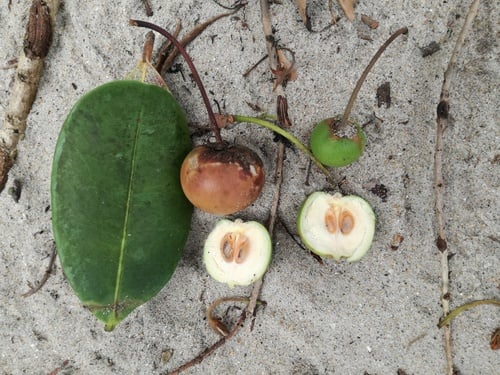
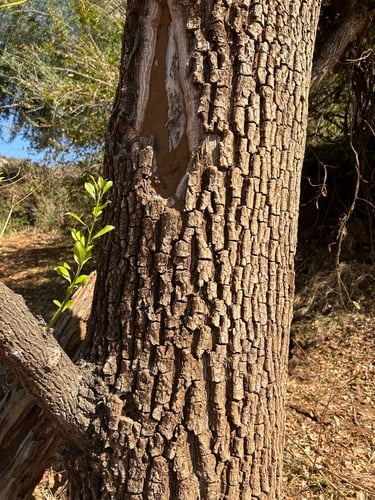
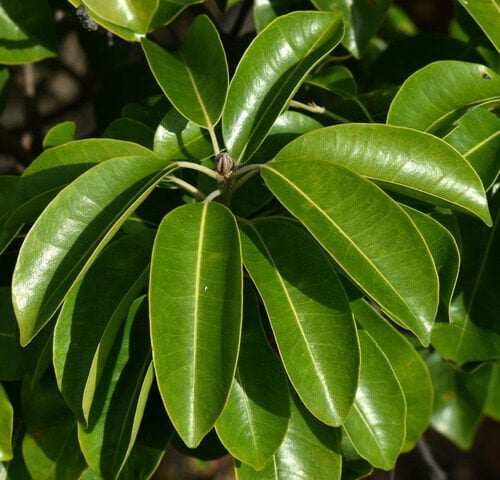
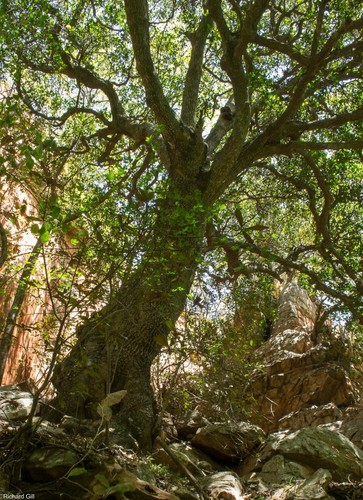
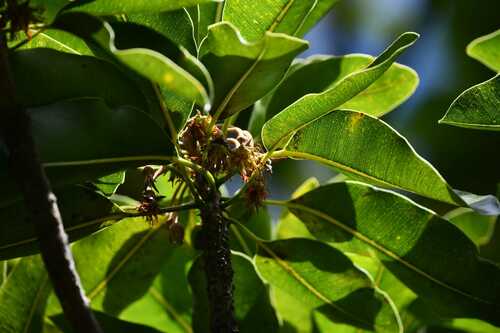
A small tree 7-15 m tall. The trunk is 20-40 cm across about 1 m from the ground. The bark is dark grey. The leaf stalk is 2-3.5 cm long. They are rust coloured and hairy. The leaf blade is oblong and 12-24 cm long by 4.5-9.5 cm wide. The flowers have a smell. The fruit have a persistent calyx. The fruit are almost round and 2.5-3.5 cm across. They have 5 ribs. The seeds are flat and shiny and 1.5 by 2.5 cm in size.
Edible Uses
Oil extracted from the seeds is edible.
Traditional Uses
The seed oil is edible.
This uses section is brief — help expand it
Distribution
A tropical plant. They occur in mixed forest in China and Vietnam between 700-1300 m. It needs shade when young. It needs deep, well-drained soils. In Yunnan.
Where It Grows
Asia, China, Indochina, SE Asia, Vietnam,
Other Uses
An oil from the seed is used for making soap. A high quality timber is obtained from the tree.
Production
A fast growing tree.
Synonyms
Also Known As
Bara vang, Cong sua, Mae nieng, Xiu mao suo zi guo
References (4)
- Flora of China. Vol. 15, p 207 and Flora of China. www.eFloras.org
- Forest Inventory and Planning Institute, 1996, Vietnam Forest Trees. Agriculture Publishing House p 663
- Hu, Shiu-ying, 2005, Food Plants of China. The Chinese University Press. p 620
- Pham-Hoang Ho, 1999, An Illustrated Flora of Vietnam. Nha Xuat Ban Tre. p 636