Dysphania kalpari
Paul G. Wilson
Rats tails, Rat-tail goosefoot, Green crumbweed
iNaturalist· cc-by-nc
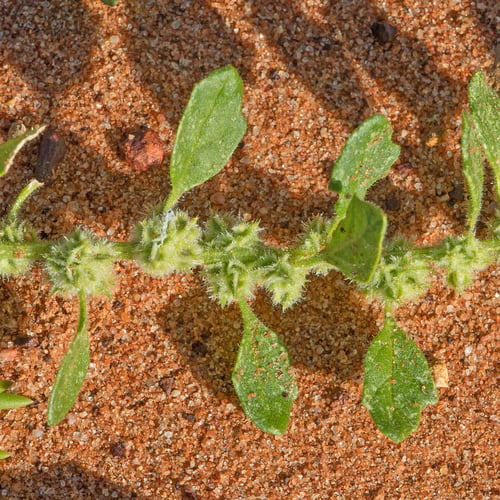
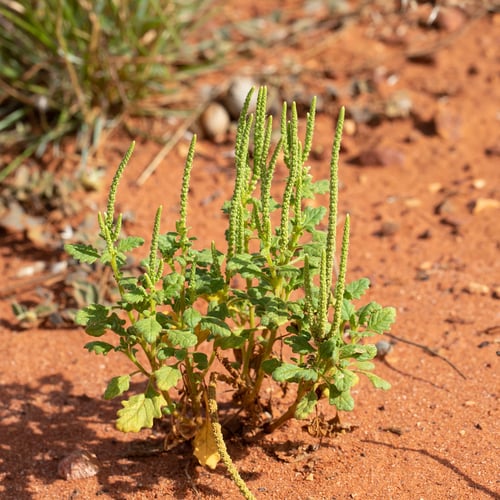
(c) Lorraine Phelan, some rights reserved (CC BY-NC), uploaded by Lorraine Phelan
iNaturalist· cc-by-nc
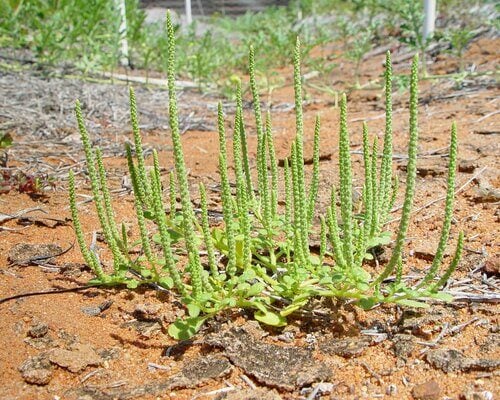
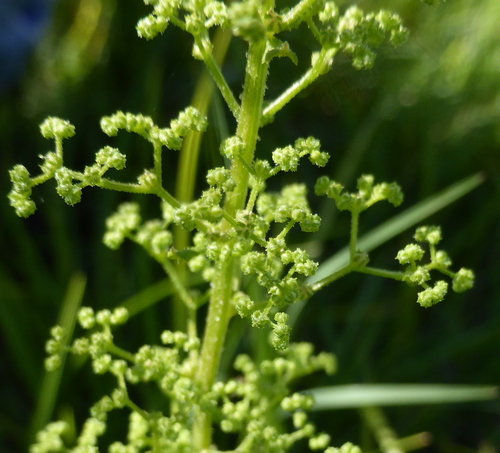
(c) geoffbyrne, some rights reserved (CC BY-NC)
iNaturalist· cc-by-nc
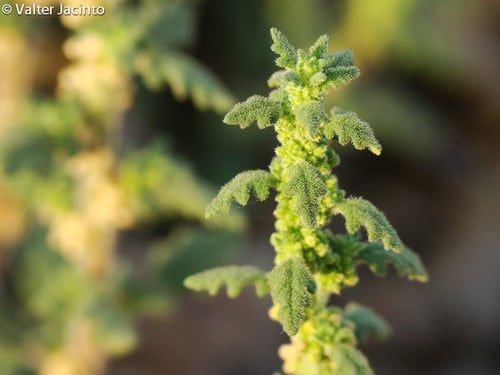
(c) Sacha R, some rights reserved (CC BY-NC), uploaded by Sacha R
Description
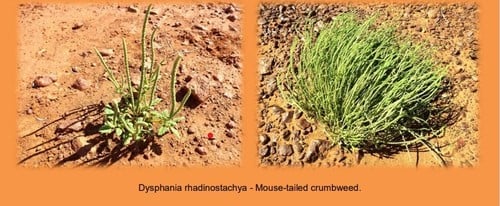
An annual herb. It lies along the ground. It grows 7-20 cm high. It spreads 40 cm wide. The flowers are green.
This description is brief — help expand it
Edible Uses
The seeds are used to make damper.
Traditional Uses
The seeds are used to make damper.
This uses section is brief — help expand it
Distribution
It is a tropical plant. It grows on red sand and red sand loam. It can grow in arid places.
Where It Grows
Australia*,
Notes
There are 9 Dysphania species. Also put in the family Chenopodiaceae.
Nutrition
| Part | Moisture | kJ | kcal | Protein | Vit A | Vit C | Iron | Zinc |
|---|---|---|---|---|---|---|---|---|
| Seed | 7.8 | 1672 | 400 | 15.2 | — | — | — | — |
Also Known As
Kalpari
References (6)
- Cancilla, D., 2018, Ethnobotanical and Ethnozoological Values Desktop Assessment - Eliwana Project. p 11
- Flora of Australia, Volume 4, Phytolaccaceae to Chenopodiaceae, Australian Government Publishing Service, Canberra (1984) p 160
- Hunter, J.T., 2017, Is there a relationship between contemporary high Aboriginal plant resource locations and mapped vegetation communities? Cunninghamia 17:27-34. The Royal Botanic Garden Sydney. ISSN 2200 - 405X
- Latz, P.K., 1996, Bushfires and Bushtucker: Aboriginal plant use in Central Australia. IAD Press Alice Springs p 164
- Latz, P & Wightman, G., 1995, Desert Bush Tucker Identikit. Common Native Food Plants of Central Australia. Parks & Wild Commission Northern territory. p 46
Show all 6 references Hide references
- Paczkowska, G. & Chapman, A.R., 2000, The Western Australian Flora. A Descriptive Catalogue. Western Australian Herbarium. p 203