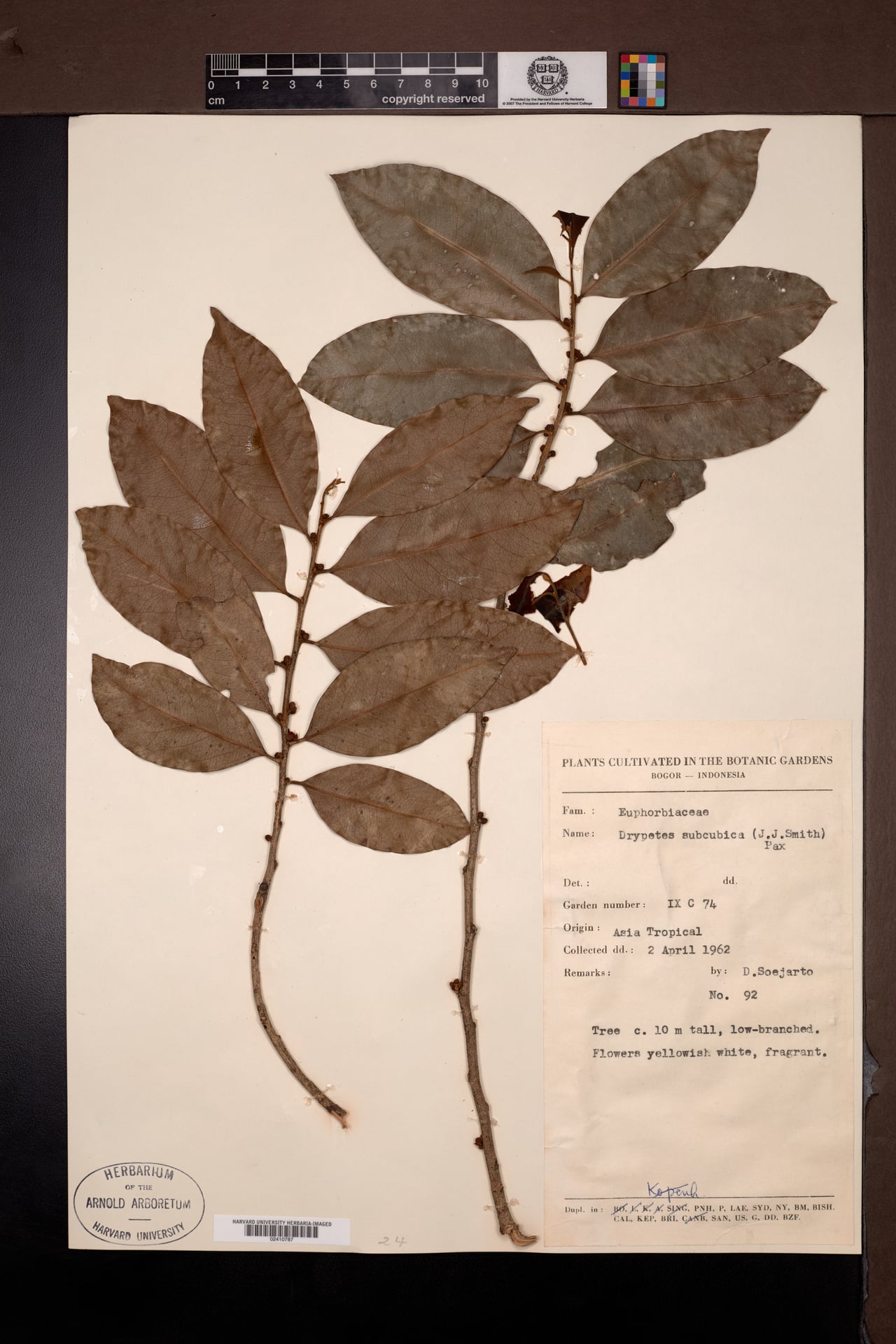
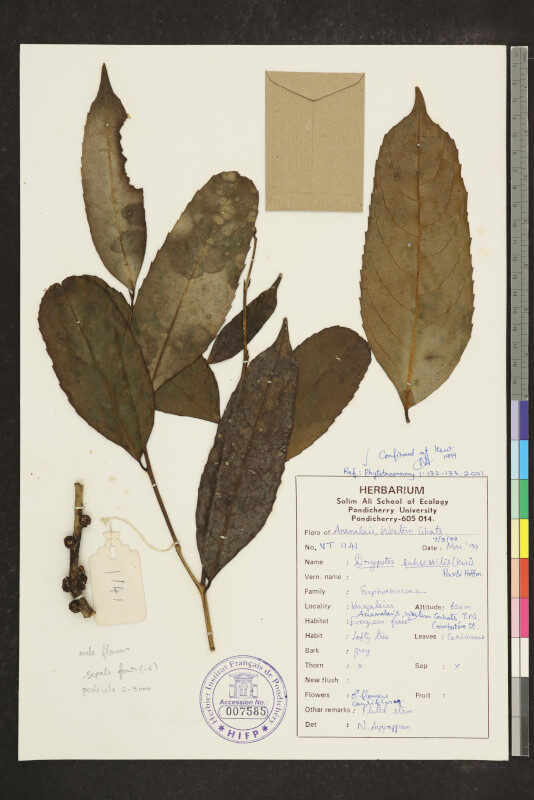
Drypetes sepiaria
(Wight & Arn.) Pax & Hoffm.
iNaturalist· cc-by-nc
(c) V.Arun, some rights reserved (CC BY-NC), uploaded by V.Arun
iNaturalist· cc-by-nc
(c) V.Arun, some rights reserved (CC BY-NC)
Summary
Source: WikipediaDrypetes sepiaria is a species of small tree in the family Putranjivaceae. This tree is very common in India and Sri Lanka. It is known by many local names, including vellakasavu, veeramaram in Malayalam, vellilambu, veerai (வீரை), aadumilukkan, kaayalakkamaram in Tamil, and weera (වීර) in Sinhala.
Description
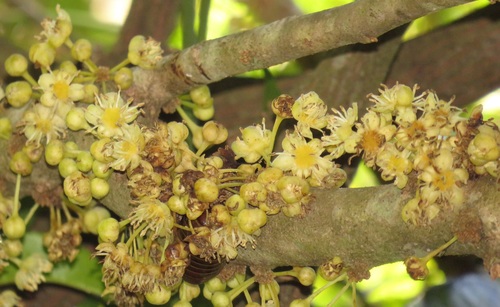
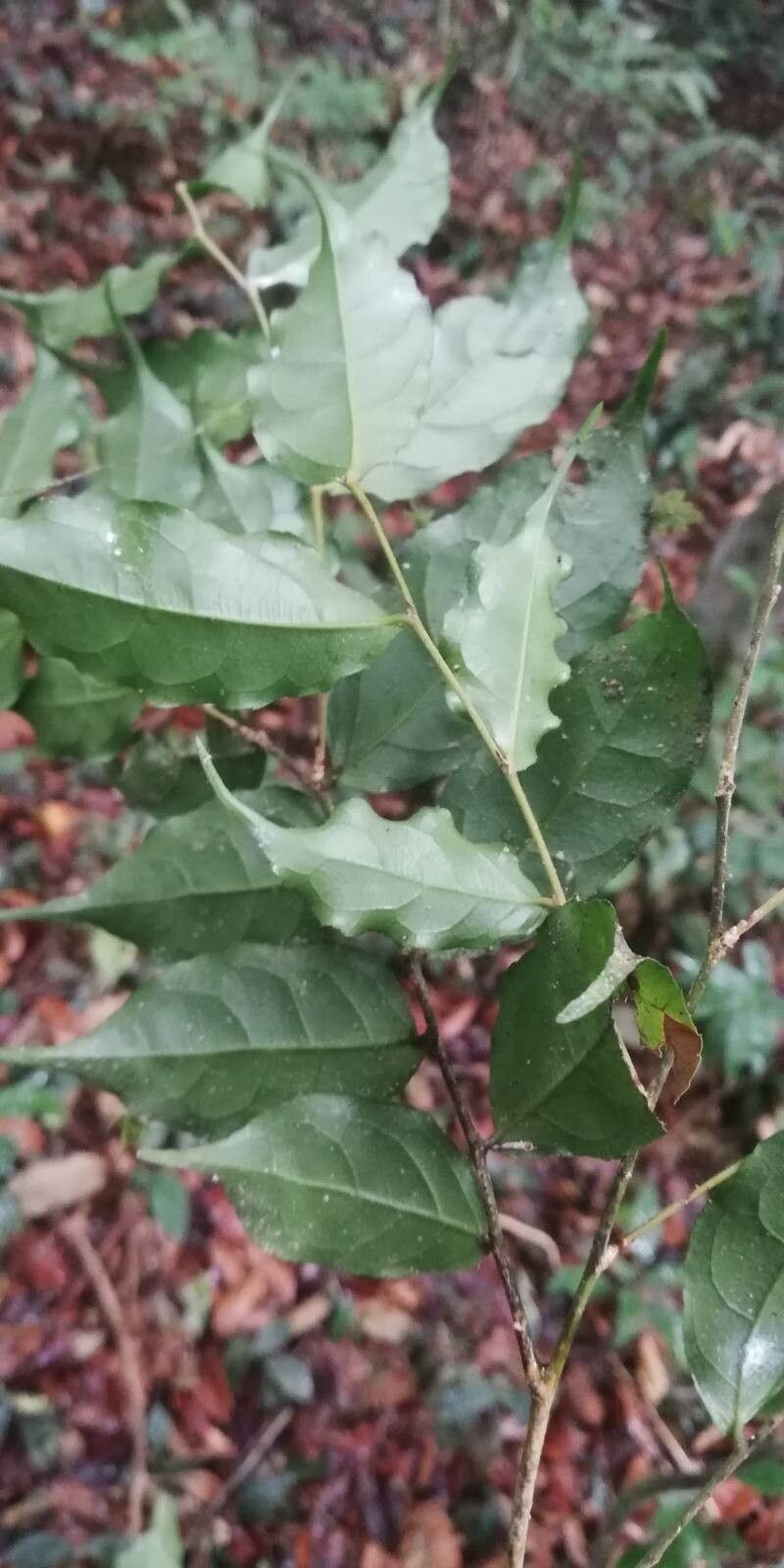
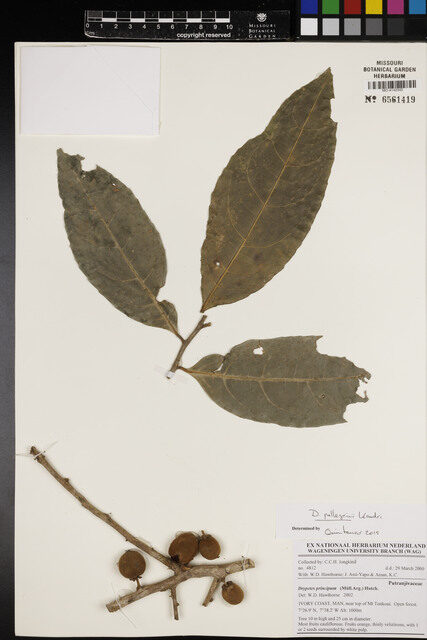
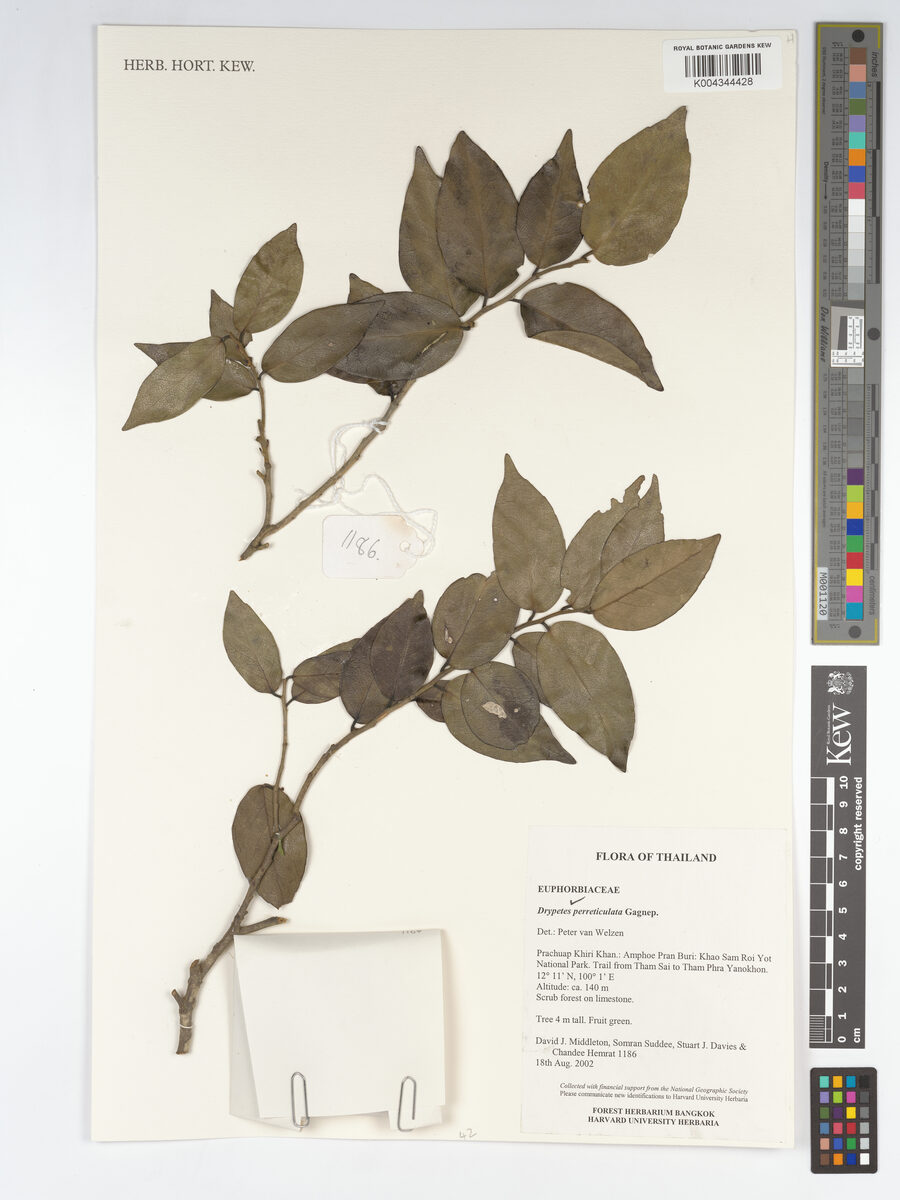
A large tree. The stem has grooves. There can be small buttresses at the base. The bark is pale grey. The branches are irregular and often in clusters and with erect twigs. The leaves are alternate and vary. They are about 5 cm long by 3 cm wide. They are almost heart shaped at the base and round at the tip. They are shiny green above and dull green underneath. The flowers are small and pale yellow. The male flowers are in clusters and the female flowers are almost without stalks. The fruit is small and bright red.
Edible Uses
The tree has edible tropical fruit. Its trunk uses in fence and other mature branch and fence use as firewood.
Traditional Uses
The ripe fruit are eaten fresh.
This uses section is brief — help expand it
Distribution
It is a tropical and subtropical plant.
Where It Grows
Asia, India, Northeastern India, Sri Lanka*,
Other Information
The fruit are popular in local markets.
Notes
There are about 200 Drypetes species.
Synonyms
Also Known As
Kalvirai, Thanuvam, Veera, Virai, Weerapalam, Wirai
References (7)
- Ambasta, S.P. (Ed.), 2000, The Useful Plants of India. CSIR India. p 185
- Arinathan, V., et al, 2007, Wild edibles used by Palliyars of the western Ghats, Tamil Nadu. Indian Journal of Traditional Knowledge. 6(1) pp 163-168
- Ashton, M. S., et al 1997, A Field Guide to the Common Trees and Shrubs of Sri Lanka. WHT Publications Ltd. p 199
- Rajapaksha, U., 1998, Traditional Food Plants in Sri Lanka. HARTI, Sri Lanka. p 210
- Rasingam, L., 2012, Ethnobotanical studies on the wild edible plants of Irula tribes of Pillur Valley, Coimbatore district, Tamil Nadu, India. Asian Pacific Journal of Tropical Biomedicine. (2012) S1493-S1497
Show all 7 references Hide references
- Reis, S. V. and Lipp, F. L., 1982, New Plant Sources for Drugs and Foods from the New York Botanical Garden herbarium. Harvard. p 157
- Singh, V. B., et al, (Ed.) Horticulture for Sustainable Income and Environmental Protection. Vol. 1 p 216