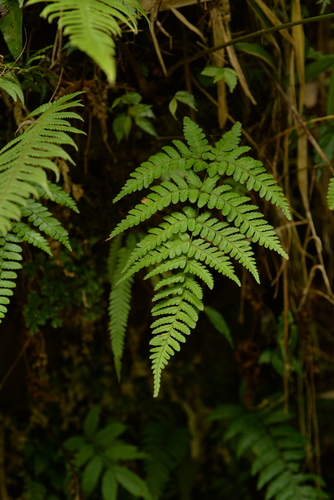
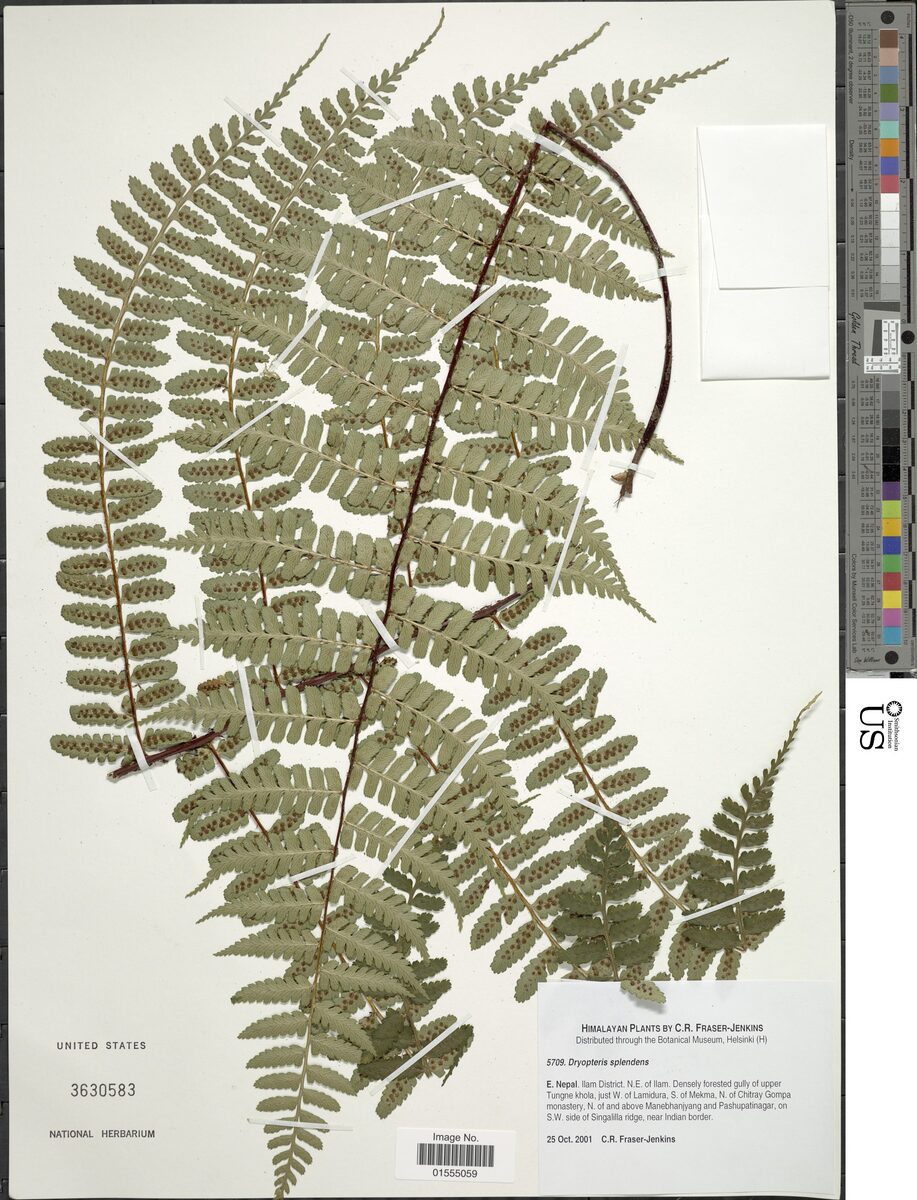
Dryopteris filix-mas
(L.) Schott.
Male fern, Sweet Brake
iNaturalist· cc-by-nc
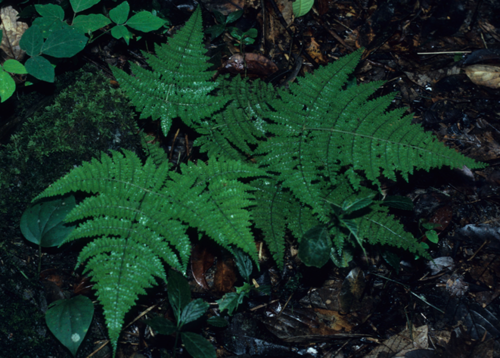
(c) Alexander Baransky, some rights reserved (CC BY-NC), uploaded by Alexander Baransky
iNaturalist· cc-by-nc
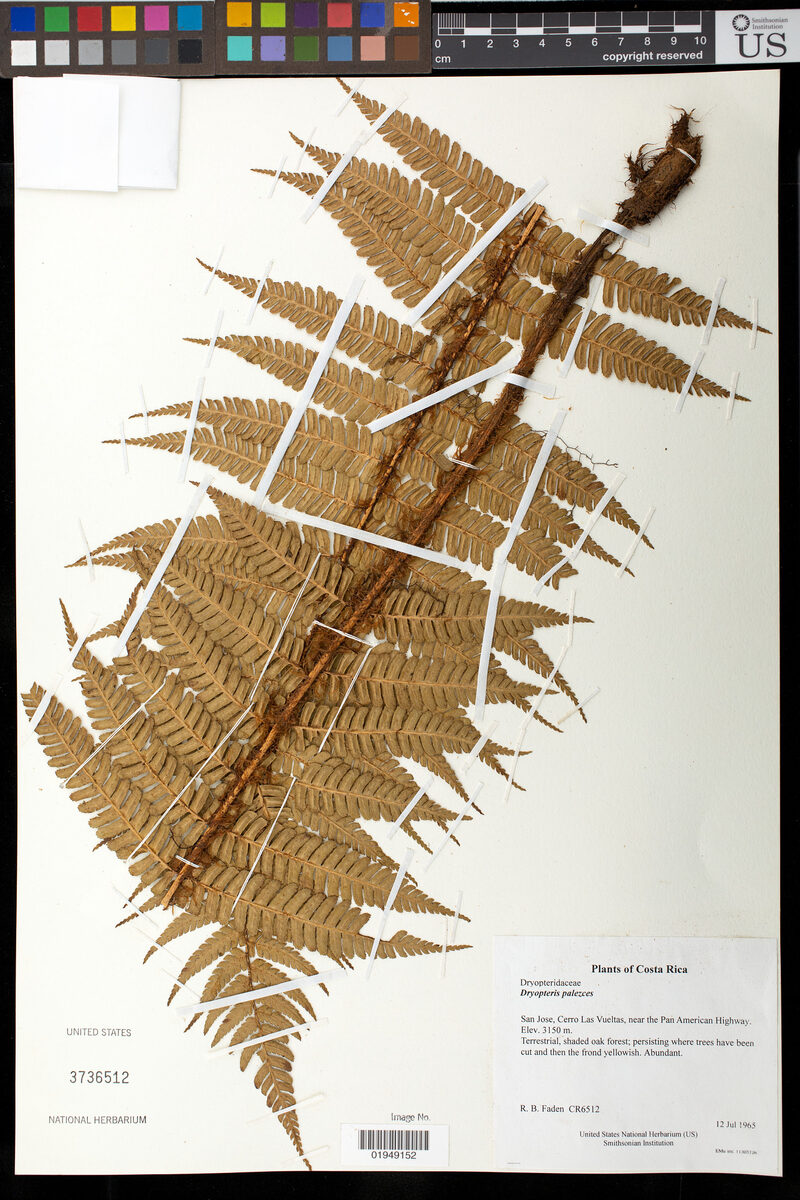
(c) Valentin Hamon, some rights reserved (CC BY-NC), uploaded by Valentin Hamon
iNaturalist· cc-by-nc
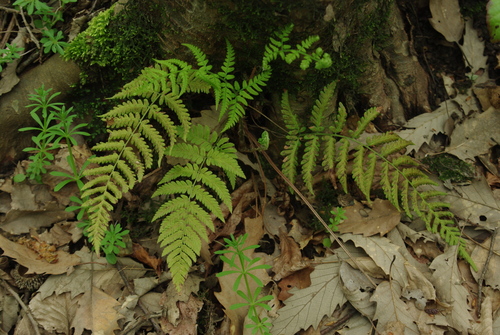
(c) Chris Ecroyd, some rights reserved (CC BY-NC), uploaded by Chris Ecroyd
Summary
Source: WikipediaDryopteris filix-mas, the male fern, is a common fern of the temperate Northern Hemisphere, native to much of Europe, Asia, and North America. It favours damp shaded areas in the understory of woodlands, but also shady places on hedge-banks, and rocks, and screes. Near the northern limit of its distribution it prefers sunny, well-drained sites. It is much less abundant in North America than in Europe.
Description
A large fern. It grows 60-120 cm high and wide. The fronds are spear-shaped and deep glossy green. They are finely divided and they arch so that the tips almost touch the ground. It forms spores prolifically. There are some named cultivated varieties.
Edible Uses
Young fronds can be cooked and have a flavour reminiscent of asparagus, broccoli, and artichokes, though some caution is advised given the plant's toxicity. The rhizomes can be eaten raw or cooked and were historically consumed raw as part of a weight-loss regime.
Traditional Uses
Caution: This fern is toxic. It is used in medicine. The root is crushed and used in porridge and bread. The leaves are used in pickles and a walnut dish in Georgia.
Medicinal Uses
Male fern is one of the most popular and effective treatments for tapeworms. The root stalks are anodyne, antibacterial, anti-inflammatory, antiviral, astringent, febrifuge, vermifuge, and vulnerary. The root contains an oleoresin that paralyses tapeworms and other internal parasites; the active ingredient is filicin, present at around 1.5–2.5% in this species. After treatment, a non-oily purgative such as magnesium sulphate, Convolvulus scammonia, or Helleborus niger must follow immediately to expel the worms. An oily purge such as castor oil increases absorption of the fern root and can be dangerous. Internally, the root is also used to treat internal haemorrhage, uterine bleeding, mumps, and feverish illnesses. The root is harvested in autumn and can be dried for later use. This remedy should only be used under the supervision of a qualified practitioner — the root is toxic and dosage is critical. It is not suitable for pregnant women or those with heart complaints. Externally, the root is applied as a poultice for abscesses, boils, carbuncles, and sores.
Known Hazards
The rhizomes of D. filix-mas are toxic. Doses too big can cause serious poisoning, blindness and even death.
Distribution
It is frost hardy. It suits temperate regions and needs moderate shelter. It can grow in moist soils but also survive quite dry conditions. It suits hardiness zones 4-8.
Where It Grows
Afghanistan, Africa, Andamans, Andorra, Argentina, Asia, Australia, Balkans, Bangladesh, Bosnia, Britain, Canada, Caucasus, Central America, Central Asia, Chile, China, Egypt, Europe, Georgia, India, Kazakhstan, Lithuania, Luxembourg, Mexico, New Zealand, North Africa, North America, Northeastern India, Norway, Pakistan, Russia, Scandinavia, Slovenia, South America, Spain, Tajikistan, Turkey, Türkiye,
Cultivation
Plants can be grown from spores at a temperature of 15°C. They can also be grown by division of the plant.
Propagation
Spores can be sown at any time of year in a greenhouse. Surface sow on sterilised compost and keep moist, for example by placing the pot in a plastic bag. Germination takes 1–3 months at 20°C. Pot up small clumps when large enough to handle and grow on in a shady part of the greenhouse until ready to plant out. Divide in spring — larger clumps can go directly into permanent positions, while smaller clumps are best potted up and grown on in a cold frame until rooting well before planting out in spring.
Other Uses
A compost made from the leaves is highly beneficial on tree seed beds, aiding germination. The plant's ashes are rich in potash and have been used in making soap and glass. It makes an effective ground cover plant; though usually deciduous, its decaying fronds form a weed-suppressing mulch through winter — space plants about 60cm apart in each direction. The roots contain approximately 10% tannin.
Notes
There are about 200 Dryopteris species. It is used in medicine.
Synonyms
Also Known As
Chaduna, Dhekishak, Muska paprat, Navadna glistovnica
References (18)
- Bodkin, F., 1991, Encyclopedia Botanica. Cornstalk publishing, p 110, 365 (Also as Aspidium filix-mas)
- Bremness, L., 1994, Herbs. Collins Eyewitness Handbooks. Harper Collins. p 287
- Brouk, B., 1975, Plants Consumed by Man. Academic Press, London. p 66
- Brown, D., 2002, The Royal Horticultural Society encyclopedia of Herbs and their uses. DK Books. p 197
- Bussman, R. W., et al, 2016, A comparative ethnobotany of Khevsureti, Samtskhe-Javakheti, Tusheti, Svaneti, and Racha-Lechkhumi, Republic of Georgia (Sakartvelo), Caucasus. Journal of Ethnobiology and Ethnomedicine (2016) 12:4
Show all 18 references Hide references
- Bussman, R. W., et al, 2021, Unity in diversity—food plants and fungi of Sakartvelo (Republic of Georgia), Caucasus. Journal of Ethnobiology and Ethnomedicine (2021) 17:72 p 9
- Cerne, M., 1992, Wild Plants from Slovenia used as Vegetables. Acta Horticulturae 318.
- Cundall, P., (ed.), 2004, Gardening Australia: flora: the gardener's bible. ABC Books. p 516
- Gen. fil. t. 67. 1834
- Ghosh, C. & Das A. P., 2011, Some useful and poisonous tea garden weeds from the Darjiling District of West Bengal, India. Pleione 5(1): 91 - 114
- Goudey, C.J., 1988, A Handbook of Ferns for Australia and New Zealand. Lothian. p 102
- Hibbert, M., 2002, The Aussie Plant Finder 2002, Florilegium. p 90
- Joyce, D., 1998, The Garden Plant Selector. Ryland, Peters and Small. p 335
- MacKinnon, A., et al, 2009, Edible & Medicinal Plants of Canada. Lone Pine. p 380
- Plants for a Future database, The Field, Penpol, Lostwithiel, Cornwall, PL22 0NG, UK. http://www.scs.leeds.ac.uk/pfaf/
- Redzic, S. J., 2006, Wild Edible Plants and their Traditional Use in the Human Nutrition in Bosnia-Herzegovina. Ecology of Food and Nutrition, 45:189-232
- Sher, H. et al, 2011, Ethnobotanical and Economic Observations of Some Plant Resources from the Northern Parts of Pakistan. Ethnobotany research & Applications 9:027-041
- Slocum, P.D. & Robinson, P., 1999, Water Gardening. Water Lilies and Lotuses. Timber Press. p 116