Dryopteris dilatata
(Hoffm.) A. Gray
Broad Buckler Fern, Shield fern
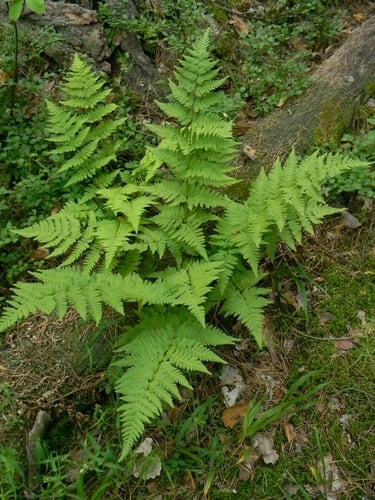
iNaturalist· cc-by-nc
(c) Laurent Quéno, some rights reserved (CC BY-NC), uploaded by Laurent Quéno
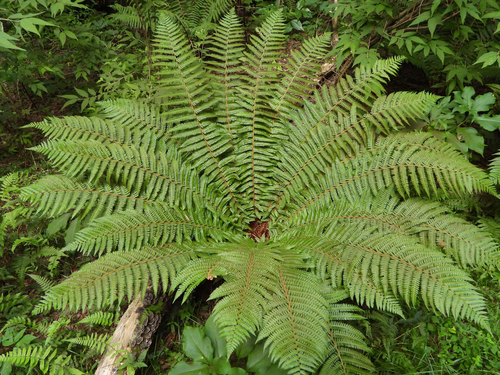
iNaturalist· cc-by-nc
(c) Laurent Quéno, some rights reserved (CC BY-NC), uploaded by Laurent Quéno
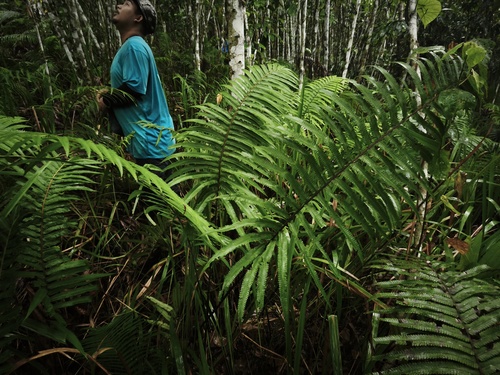
iNaturalist· cc-by-nc
(c) Amanda Cogan Barber, some rights reserved (CC BY-NC), uploaded by Amanda Cogan Barber
Summary
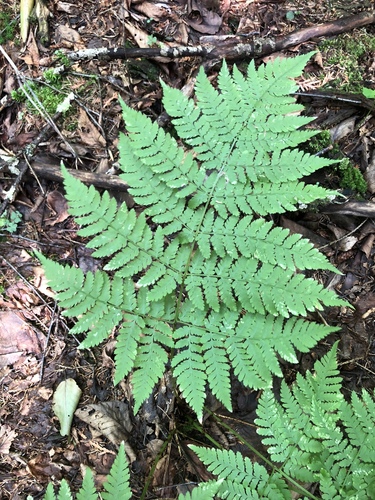
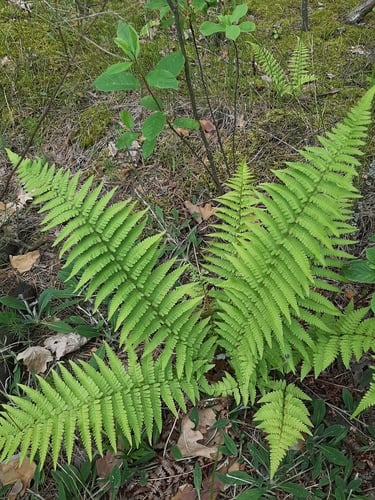
Source: WikipediaDryopteris dilatata, the broad buckler-fern, is a robust species of deciduous or semievergreen fern in the family Dryopteridaceae, native to Europe, particularly western and central Europe. In southern Europe, it is mostly found in mountainous regions. It is also found between the Black Sea and the Caspian Sea. It grows to 90 cm (35 in) tall by 120 cm (47 in) wide, with dark green tripinnate fronds, the ribs covered in brown scales. The Latin specific epithet dilatata means "spread out". The species and the cultivars 'Crispa Whiteside' and 'Lepidota Cristata' have gained the Royal Horticultural Society's Award of Garden Merit.
Description
A fern. It grows 60-120 cm high and wide. The rhizome is erect. The fronds are arching, triangular and divided. The fronds are pale green when young and become dark green. The midribs are covered with brown scales with buff brown edges.
Edible Uses
Young fronds must be cooked before eating; some caution is advised due to toxicity. The root is also edible cooked — harvest in spring and bake.
Traditional Uses
The young plant is boiled and eaten with seal oil. It is also added to soup.
This uses section is brief — help expand it
Medicinal Uses
The root contains filicin, a substance that paralyses tapeworms and other internal parasites, and is one of the most effective known treatments for tapeworms. Its use must be immediately followed by a non-oily purgative such as magnesium sulphate to expel the worms. An oily purge such as castor oil increases absorption of the fern root and can be dangerous. The root is harvested in autumn and dried for later use; it should not be stored for longer than 12 months. This remedy should be used with caution and only under the supervision of a qualified practitioner, as the root is toxic and dosage is critical. The root is also used in the treatment of dandruff.
Known Hazards
Fronds must be cooked before eating. Root is toxic and dosage is critical. An oily purge such as caster oil increases fern root absorption and can be dangerous.
Distribution
It is a temperate plant. It is frost hardy. It grows in sheltered gullies in Alaska. It suits hardiness zones 5-8.
Where It Grows
Alaska, Argentina, Australia, Britain, Europe, Falklands, France, Italy, Luxembourg, Mediterranean, Mongolia, North America, South America, Spain, USA,
Propagation
Spores can be sown at any time of year in a greenhouse. Surface sow on sterilised compost, keep moist — possibly by placing the pot in a plastic bag. Germinates in 1–3 months at 20°C. Pot up small clumps when large enough to handle and grow on in a shady part of the greenhouse until ready to plant out. Divide in spring; larger clumps can go directly into permanent positions, though smaller clumps are best potted up and grown on in a cold frame until rooting well, then planted out in spring.
Other Uses
An infusion of the fronds is used as a hair rinse and to treat dandruff. The leaves can be used as packing material for fruit and similar items. Plants can be grown as ground cover when spaced about 60 cm apart each way.
Production
Young fiddleheads are harvested in the spring.
Notes
There are about 200 Dryopteris species.