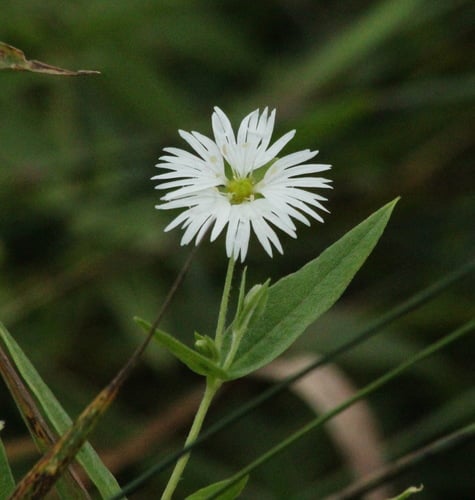
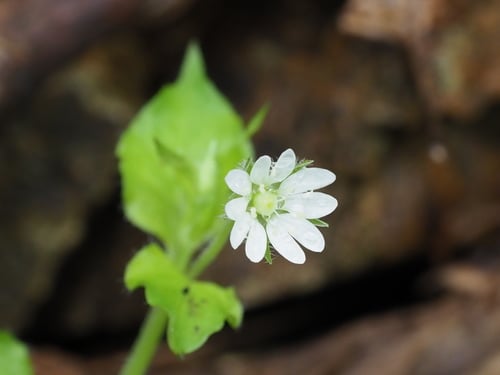
Drymaria cordata
(L.) Willd. ex Schult.
West Indian chickweed, Tropical chickweed
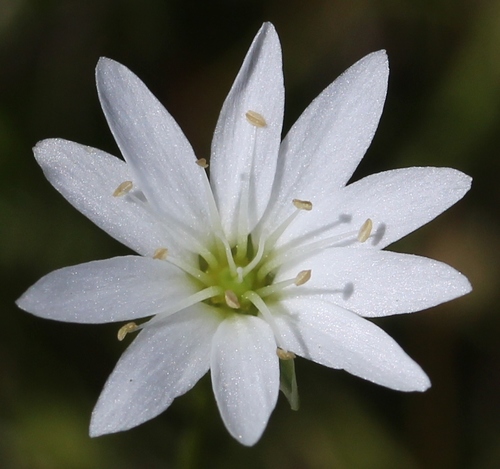
iNaturalist· cc0
no rights reserved, uploaded by 葉子
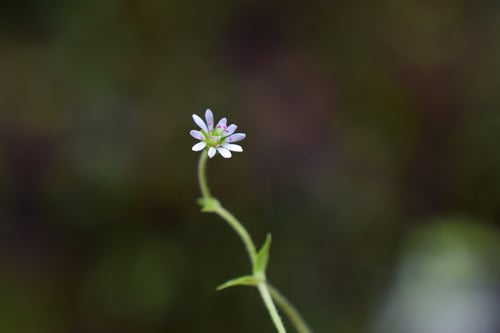
iNaturalist· cc-by-nc
(c) dani1997, some rights reserved (CC BY-NC)
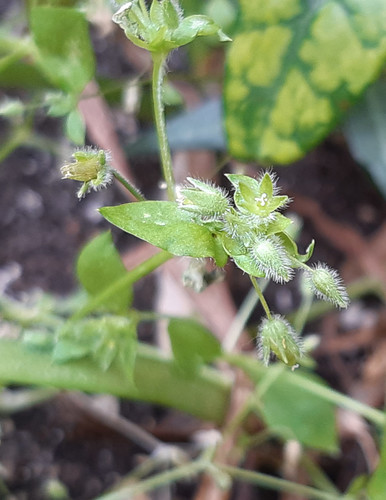
iNaturalist· cc-by-sa
(c) Douglas Goldman, some rights reserved (CC BY-SA), uploaded by Douglas Goldman
Summary
Source: WikipediaDrymaria cordata, the tropical chickweed, stangries, West Indian chickweed, or golondrina, is a species of flowering plant in the family Caryophyllaceae. It is native to moist habitats in Latin America and sub-Saharan Africa, and has been introduced to many places in the tropics and subtropics, including the southeast US, the Caribbean, the Indian Subcontinent, southern China, Japan, and a number of islands. It is known as one of the most aggressive weeds of the tropical and subtropical parts of the world.
Description
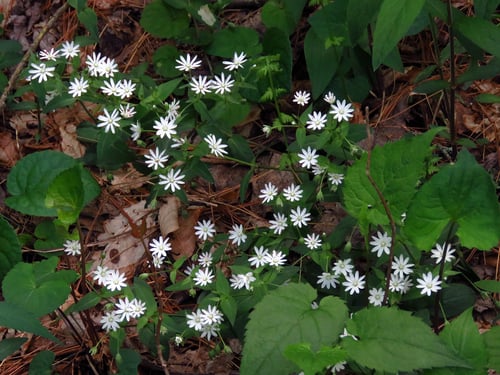
An annual herb. It climbs or creeps along the ground. It has branches that divide in two. It often forms a dense ground cover. The stems form roots at the nodes. The leaves are small, opposite and heart shaped. The leaves are 0.8-2 cm long by 0.5-2 cm wide. The flowers are small and white. The are in twice branched heads at the ends of the stems. The fruit is a capsule. It splits to release small seeds.
Edible Uses
Tender young leaves and shoots can be eaten raw or cooked as a vegetable. The leaves are used in salads for their cooling properties. The herb is also reported to be eaten raw or cooked as a stimulant.
Traditional Uses
The tender shoots and leaves are cooked as a vegetable. They are also eaten in salads. They are also used for drinks. The shoots can be stored for 4-5 days.
Medicinal Uses
Pounded leaves are applied to snake bites in China. The plant is appetizer, depurative, emollient, febrifuge, laxative, and stimulant; the juice of the plant is used medicinally.
Known Hazards
The plant has been shown to contain alkaloid-like chemicals, and is potentially poisonous to cattle[1093.
Distribution
A tropical plant. It grows in damp shaded sites, often near streams or under shrubs, disturbed areas between 200–1900(–2400) m altitude in China. It grows in wetlands. It grows in Nepal between 2200-4300 m altitude. In Tanzania it grows between 900-2,700 m above sea level. It grows in open areas. In XTBG Yunnan. In Sichuan.
Where It Grows
Africa, America, Asia, Australia, Bahamas, Bolivia, Brazil, Central Africa, Central America, China, Colombia, Dominican Republic, East Africa, Ecuador, Ethiopia, Fiji, Gabon, Guiana, Guianas, Guyana, Haiti, Hawaii, Himalayas, Honduras, India, Jamaica, Japan, Indonesia, Lesser Antilles, Madagascar, Malawi, Malaysia, Mexico, Mozambique, Nepal, New Caledonia, North America, Northeastern India, Pacific, Peru, Philippines, Puerto Rico, Sao Tome and Principe, SE Asia, Sikkim, South America*, Sri Lanka, Suriname, Taiwan, Tanzania, Venezuela, West Indies, Zambia, Zimbabwe,
Cultivation
Plants are grown from seed.
Propagation
Sow seed in situ in spring. Germination usually takes place within 1–4 weeks at 20°C.
Other Uses
None known.
Production
Leaves can be collected all year round in damp places.
Notes
It is used in medicine.
Synonyms
Also Known As
Abhijalo, Abijalo, Anantsaritaka, Berro cimarron, Chimjera, Dalokshal, Erva-de-jaboti, He lian dou cao, Jaboticaa, Jabshri, Jabsri, Kur-vengso, Lai jabori, Laijabri, Lengua de pajaro, Linyolo, Lugulashili, Mibnonette, Petit quinine, Piki fowroesopo, Sadhab, Samsang-karing, Samsithalap, Shirapi kiyan, Sisente, Timignonette, Ukiko, Yurak shullu
References (47)
- Ambasta, S.P. (Ed.), 2000, The Useful Plants of India. CSIR India. p 184
- Baro, D., Baruah, S. and Borthukar, S. K. 2015, Documentation on wild vegetables of Baksa district, BTAD (Assam). Scholars Research Library. Archives of Applied Science Research, 2015, 7 (9):19-27
- Barua, U., et al, 2007, Wild edible plants of Majuli island and Darrang districts of Assam. Indian Journal of Traditional Knowledge 6(1) pp 191-194
- Burkill, I.H., 1966, A Dictionary of the Economic Products of the Malay Peninsula. Ministry of Agriculture and Cooperatives, Kuala Lumpur, Malaysia. Vol 1 (A-H) p 875
- Dangol, D. R. et al, 2017, Wild Edible Plants in Nepal. Proceedings of 2nd National Workshop on CUAOGR, 2017.
Show all 47 references Hide references
- Deka, N. & Devi, N., 2015, Wild edible aquatic and marshland angiosperms of Baka district, BTC area, Assam, India. Asian J. Plant Sci. Res. 5(1):32-48
- Diaz-Betancourt, M., et al, 1999, Weeds as a future source for human consumption. Rev. Biol. Trop. 47(3):329-338
- Dutta, U., 2012, Wild Vegetables collected by the local communities from the Churang reserve of BTD, Assam. International Journal of Science and Advanced Technology. Vol. 2(4) p 121
- Ekman Herbarium records Haiti
- Farfan, B., et al, 2007, Mazahua Ethnobotany and Subsistence in the Monarch Butterfly Biosphere Reserve, Mexico. Economic Botany 61(2) 2007, pp 173-191
- Flora of China @ efloras.org Volume 6
- Fowler, D. G., 2007, Zambian Plants: Their Vernacular Names and Uses. Kew. p 78
- Gangwar, A. K. & Ramakrishnan, P. S., 1990, Ethnobotanical Notes on Some Tribes of Arunachal Pradesh, Northeastern India. Economic Botany, Vol. 44, No. 1 pp. 94-105
- Gautam, R. S., et al, 2022, Ethnobotanical Review of Wild Edible Plants of Nepal. Journal of Natural History Museum Volume 32, 2021-22 p 109
- Grubben, G. J. H. and Denton, O. A. (eds), 2004, Plant Resources of Tropical Africa 2. Vegetables. PROTA, Wageningen, Netherlands. p 561
- Jackes, B.R., 2001, Plants of the Tropics. Rainforest to Heath. An Identification Guide. James Cook University. p 46
- Joshi, N., et al, 2007, Traditional neglected vegetables of Nepal: Their sustainable utilization for meeting human needs. Tropentag 2007. Conference on International Agricultural Research for Development.
- Kar, A., & Borthakur, S. K., 2008, Wild vegetables of Karbi - Anglong district, Assam, Natural Product Radiance, Vol. 7(5), pp 448-460
- Kew Plants of the World Online
- Kinupp, V. F., 2007, Plantas alimenticias nao-convencionais da regiao metropolitana de Porto Alegre, RS, Brazil p 73
- Kumar, S. A., Manus, D. & Mallika, M., 2018, Impact of non-timber forest products on Forest and in Livelihood Economy of the People of Adjoining Areas of Jalpaiguri Forest Division, West Bengal, India. Int. J. of Life Sciences, 2018; 6 (2):365-385
- Lu Dequan, Wu Zhengyi, Zhou Lihua, Chen Shilong; Michael G. Gilbert, Magnus Lidén, John McNeill, John K. Morton, Bengt Oxelman, Richard K. Rabeler, Mats Thulin, Nicholas J. Turland, Warren L. Wagner, CARYOPHYLLACEAE, Flora of China.
- Manandhar, N.P., 2002, Plants and People of Nepal. Timber Press. Portland, Oregon. p 208
- Medhi, P., Sarma, A and Borthakur, S. K., 2014, Wild edible plants from the Dima Hasao district of Assam, India. Pleione 8(1): 133-148
- Msuya, T. S., et al, 2010, Availability, Preference and Consumption of Indigenous Foods in the Eastern Arc Mountains, Tanzania, Ecology of Food and Nutrition, 49:3, 208-227
- Narzary, H., et al, 2013, Wild Edible Vegetables Consumed by Bodo tribe of Kokrajhar District (Assam), North-East India. Archives of Applied Science Research, 5(5): 182-190
- Pagag, K. & Borthakur, S.K., 2012, Wild edible wetland plants from Lakhimpur district of Assam, India. Pleione 6(2): 322 - 327
- Patiri, B. & Borah, A., 2007, Wild Edible Plants of Assam. Geethaki Publishers. p 8
- Pegu, R., et al, 2013, Ethnobotanical study of Wild Edible Plants in Poba Reserved Forest, Assam, India. Research Journal of Agriculture and Forestry Sciences 1(3):1-10
- Piedra-Malagón, E. M. et al, 2022, Edible native plants of the Gulf of Mexico Province. Biodiversity Data Journal 10: e80565 p 17
- Plants for a Future database, The Field, Penpol, Lostwithiel, Cornwall, PL22 0NG, UK. http://www.scs.leeds.ac.uk/pfaf/
- Plants of Haiti Smithsonian Institute http://botany.si.edu
- Raponda-Walker, A & Sillans, R., 1961, Les Plantes Utiles du Gabon. Editions Paul Lechevalier, Paris. p 119
- Ruffo, C. K., Birnie, A. & Tengnas, B., 2002, Edible Wild Plants of Tanzania. RELMA p 292
- Saikia, M., 2015, Wild edible vegetables consumed by Assamese people of Dhemaji District of Assam, NE India and their medicinal values. Archives of Applied Science Research, 2015, 7 (5):102-109
- Sakar, A. & Das, A. P., 2018, The traditional knowledge on edible wild leafy vegetables of Rabha Tribe in Duars of North Bengal: a potential reinforcement to food security. Pleione 12(2): 275 - 281. 2018.
- Sarma, H., et al, 2010, Updated Estimates of Wild Edible and Threatened Plants of Assam: A Meta-analysis. International Journal of Botany 6(4): 414-423
- Sasi, R. et al, 2011, Wild edible plant Diversity of Kotagiri Hills - a Part of Nilgiri Biosphere Reserve, Southern India. Journal of Research in Biology. Vol. 1 No. 2, pp 80-87
- Singh, B., et al, 2012, Wild edible plants used by Garo tribes of Nokrek Biosphere Reserve in Meghalaya, India. Indian Journal of Traditional Knowledge. 11(1) pp 166-171
- Smith, A.C., 1981, Flora Vitiensis Nova, Lawaii, Kuai, Hawaii, Volume 2 p 274
- Smith, N., Mori, S.A., et al, 2004, Flowering Plants of the Neotropics. Princeton. p 90
- Syst. veg. 5:406. 1819
- Teron, R. & Borthakur, S. K., 2016, Edible Medicines: An Exploration of Medicinal Plants in Dietary Practices of Karbi Tribal Population of Assam, Northeast India. In Mondal, N. & Sen, J.(Ed.) Nutrition and Health among tribal populations of India. p 150
- Torre, de la, L., et al, 2008, Enciclopedia de las Plantas Útiles del Ecuador. Herbario QCA. Pontificia Universidad Católica del Ecuador. p 277
- Wild edible plants of Himachal Pradesh
- World Checklist of Useful Plant Species 2020. Royal Botanic Gardens, Kew
- Yimer, A., et al, 2021, Ethnobotanical study of wild edible plants used by Meinit Ethnic Community at Bench-Maji Zone, Southwest Ethiopia. Research Square. p 5