Dombeya quinqueseta
Planch.
Greegdan
iNaturalist· cc-by-nc
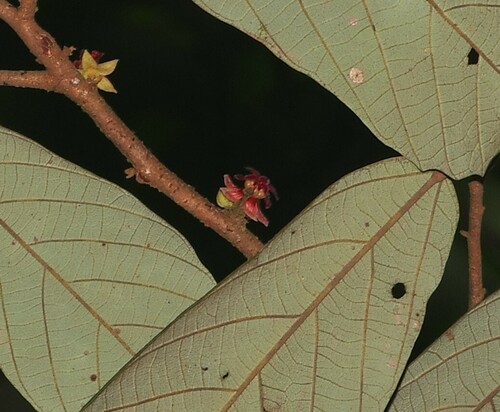
(c) ASSEDE Eméline S.P., some rights reserved (CC BY-NC), uploaded by ASSEDE Eméline S.P.
iNaturalist· cc-by-nc
(c) AMADOU BAHLEMAN FARID, some rights reserved (CC BY-NC)
Description
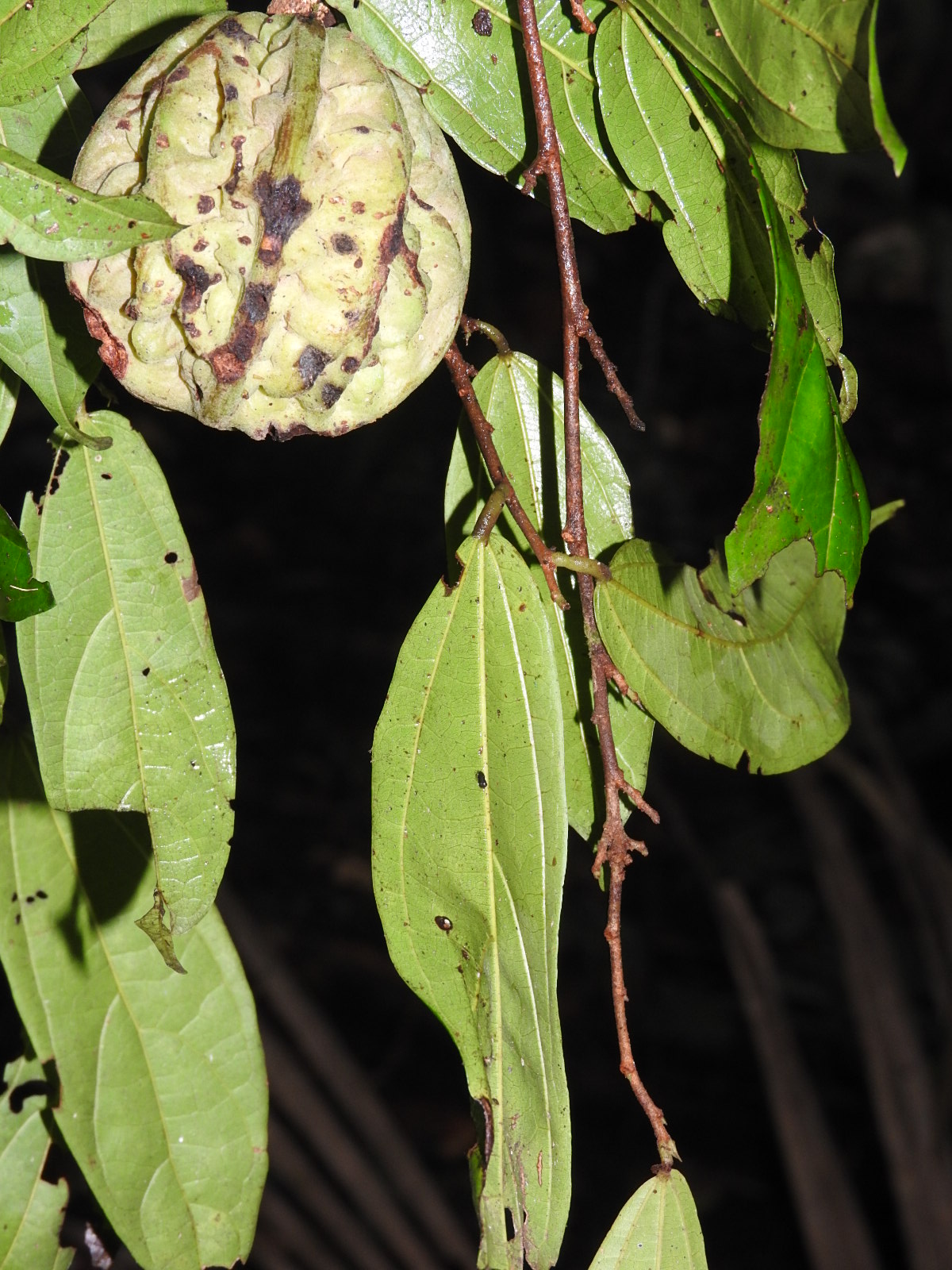
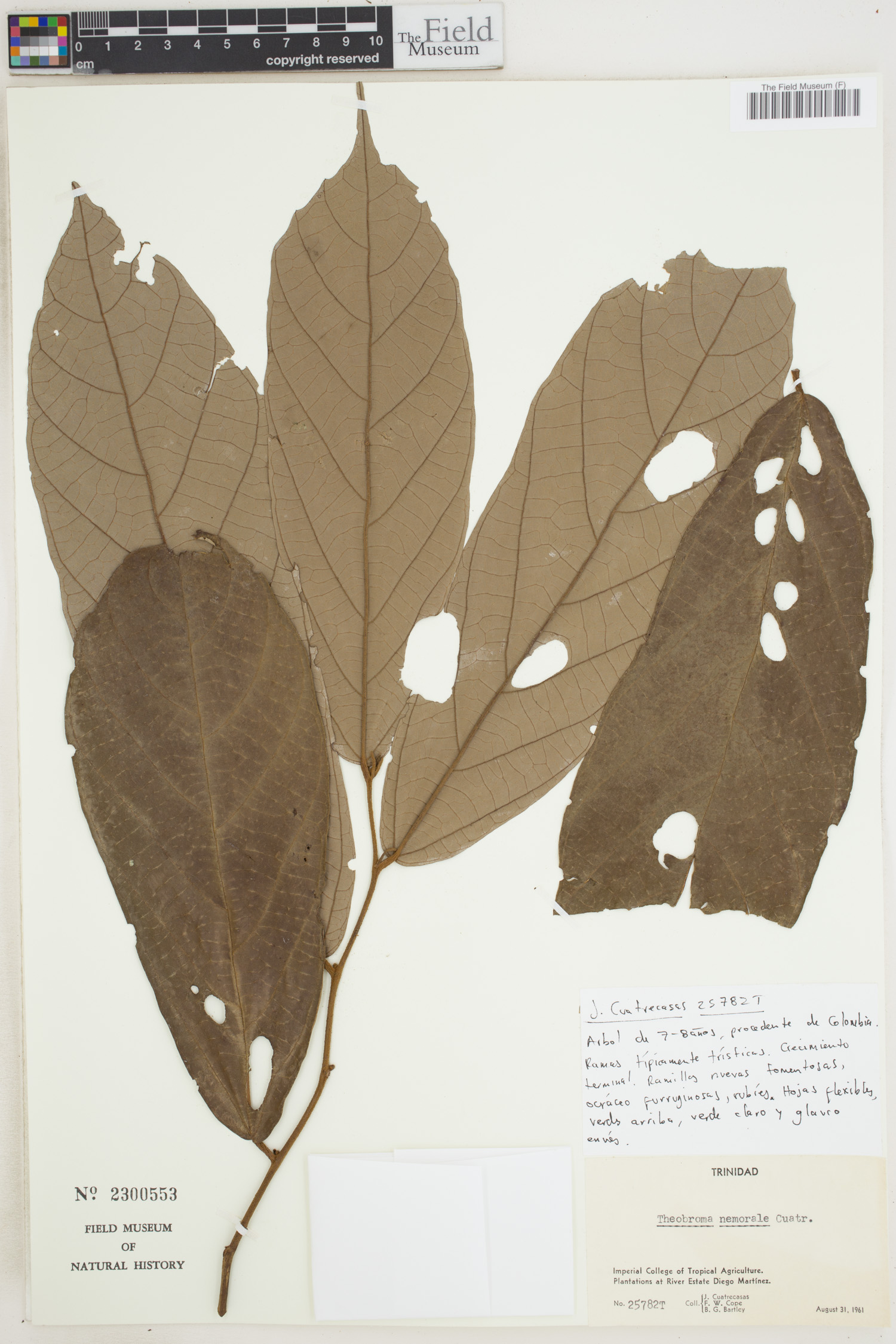
A shrub or small tree. It grows 6-12 m tall. The fruit is oval and 5 mm across. The leaves are almost round and can have 3 shallow lobes. The leaves are 12-24 cm long by 10-21 cm wide. They taper to a short tip and there are teeth along the edge. The flowering shoots occur as 2 together on short shoots in the axils of fallen leaves. They are 4-19 cm long. The petals are spreading and white and 1-2 cm long.
Edible Uses
The fruit are eaten fresh or made into a drink; they can also be dried and reconstituted with water. The bark ash is used as a salt.
Traditional Uses
The fruit are eaten fresh. They are also made into a drink. The fruit can be dried and water added again later.
This uses section is brief — help expand it
Medicinal Uses
A maceration of the root is used in the treatment of fevers. A decoction of the root is drunk in the treatment of fevers and stomach-ache. A decoction of the root bark is drunk to treat schistosomiasis. The root and the leaf are used in the treatment of dizziness. The stem bark is used in the treatment of malaria. A decoction of the stem bark is used as an antidote for snake-bites.
Known Hazards
The leaves are said to be poisonous for cattle.
Distribution
A tropical plant. They suit warm and subtropical climates. It grows between 900-1,900 m above sea level.
Where It Grows
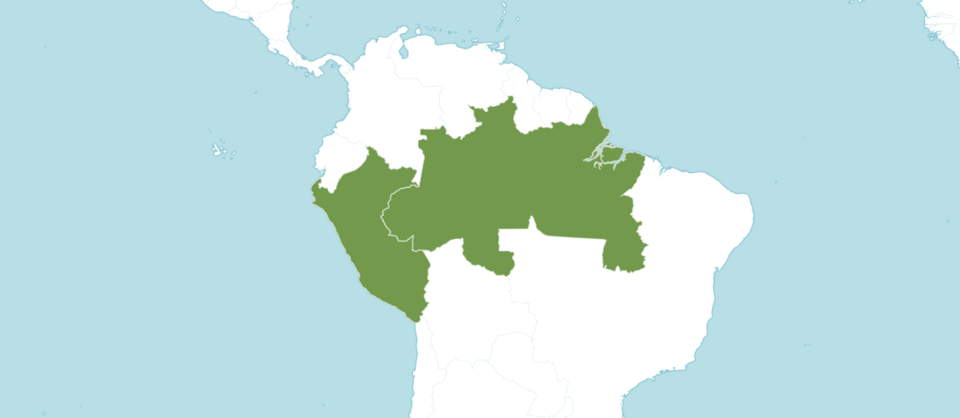
Africa, Benin, Cameroon, Chad, Central Africa, Central African Republic, CAR, Congo, East Africa, Eritrea, Ethiopia, Gambia, Ghana, Guinea, Guinée, Guinea-Bissau, Kenya, Nigeria, Senegal, Sierra Leone, Sudan, Uganda, West Africa,
Cultivation
In cultivation, species in this genus generally grow best in a moist but well-drained, fertile soil and a position in full sun or partial shade.
Propagation
Seed is very small but can be extracted from fully ripened, dry flower heads. Its viability declines within 3 months, so fresh seed has to be used for sowing. Seed is to be sown in properly drained seedbeds. Seedlings emerge in about 3 weeks. Cuttings of semi-ripe wood, preferably with some bottom heat to encourage rooting.
Other Uses
The fibre-rich bark is used to make ties and for cordage. It is also retted to obtain ribbons similar to raffia. The bark is said to have insecticidal properties. The wood is used for poles. The wood is used for fuel.
Other Information
It is a famine food.
Notes
There are about 250 Dombeya species. They are mostly in Africa. Chemical composition: Protein (crude) = 6.0% (dry). Fat = 0.1% (dry). Fibre (crude) = 6.3% (dry). Ash = 3.0% (dry). Carbohydrate (soluble): Starch = 24.3% (dry). Sucrose = 0% (dry). D-Glucose = 26.0% (dry). F-Fructose = 27.9% (dry). Amino acids ((g [16g N- 1]): Aspatic acid = 37.8g. Threonine = 3.0g. Serine = 7.9g. Glutamic acid = 7.9g. Proline = 11.1g. Glycine = 3.7g. Alanine = 3.7g Valine = 3.7g. Cysteine = 0.7g. Methionine = 0.8g. Isoleucine = 3.0g. Leucine = 4.5g. Tyrosine = 1.7g. Phenylalanine = 3.0g Lysine = 2.7g. Histidine = 1.5g. Arginine = 3.0g. Minerals: Sulphur = 0.07% (dry). Potassium = 0.08% (dry). Magnesium = 0.13% (dry). Calcium = 0.26% (dry). Na = 0.01% (dry). K = 1.50% (dry). Zinc = 21 mg/kg-1 (dry). Iron = 170 mg/kg-1 (dry). Manganese = 17 mg/kg-1 (dry). Copper = 8 mg/kg-1 (dry). Some Botanists put the Dombeya in the Byttneriaceae and the Sterculiaceae.
Synonyms
Also Known As
Fuyu, Fuyu faya
References (3)
- ABDELMUTI, (As Dombeya multiflora)
- Heywood, V.H., Brummitt, R.K., Culham, A., and Seberg, O. 2007, Flowering Plant Families of the World. Royal Botanical Gardens, Kew. p 245 (Genus)
- World Checklist of Useful Plant Species 2020. Royal Botanic Gardens, Kew