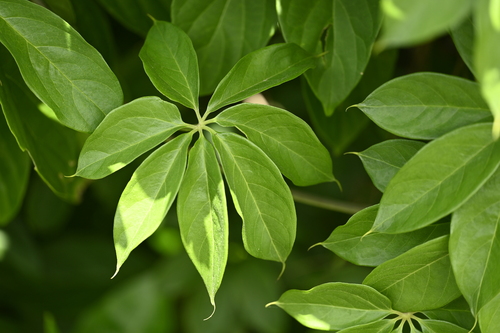
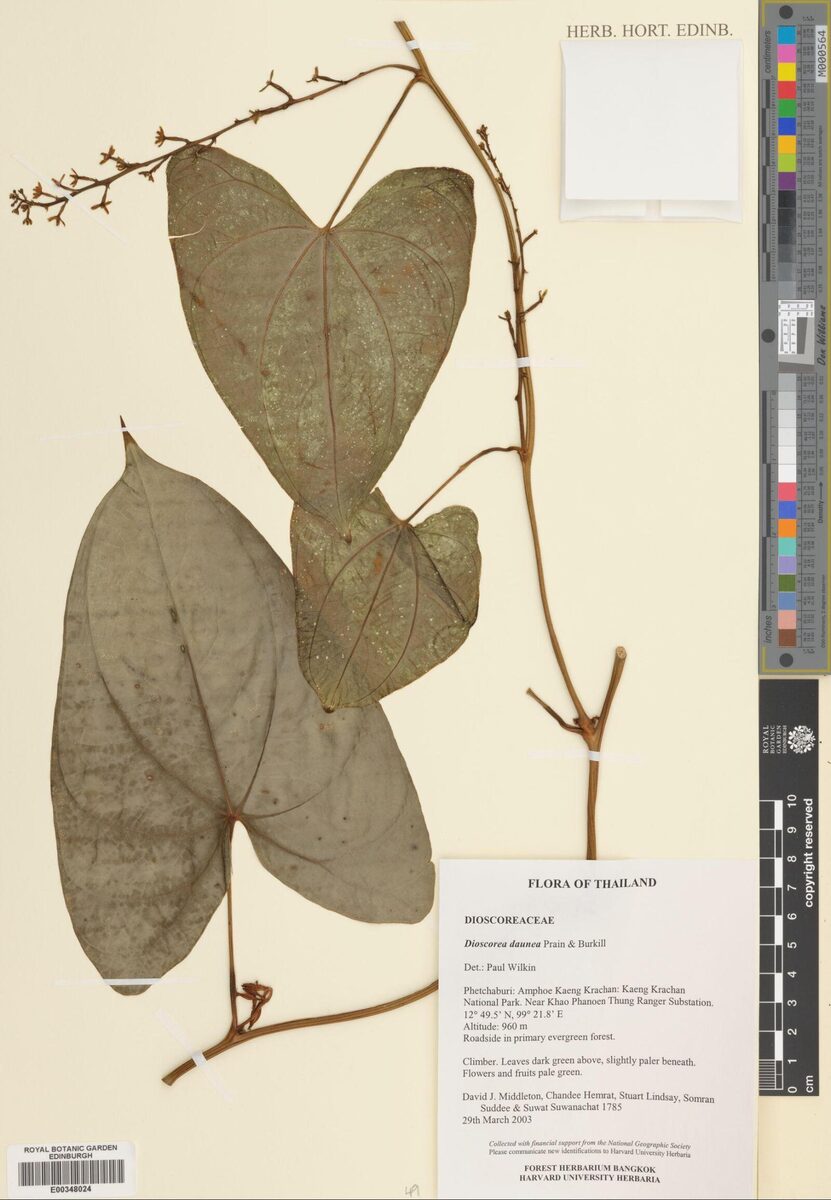
Dioscorea smilacifolia
De Wild. et Th. Durand
wikimedia· cc-by-sa
Wikimedia Commons
wikimedia· cc-by-sa
Wikimedia Commons - Krzysztof Ziarnek, Kenraiz
Description
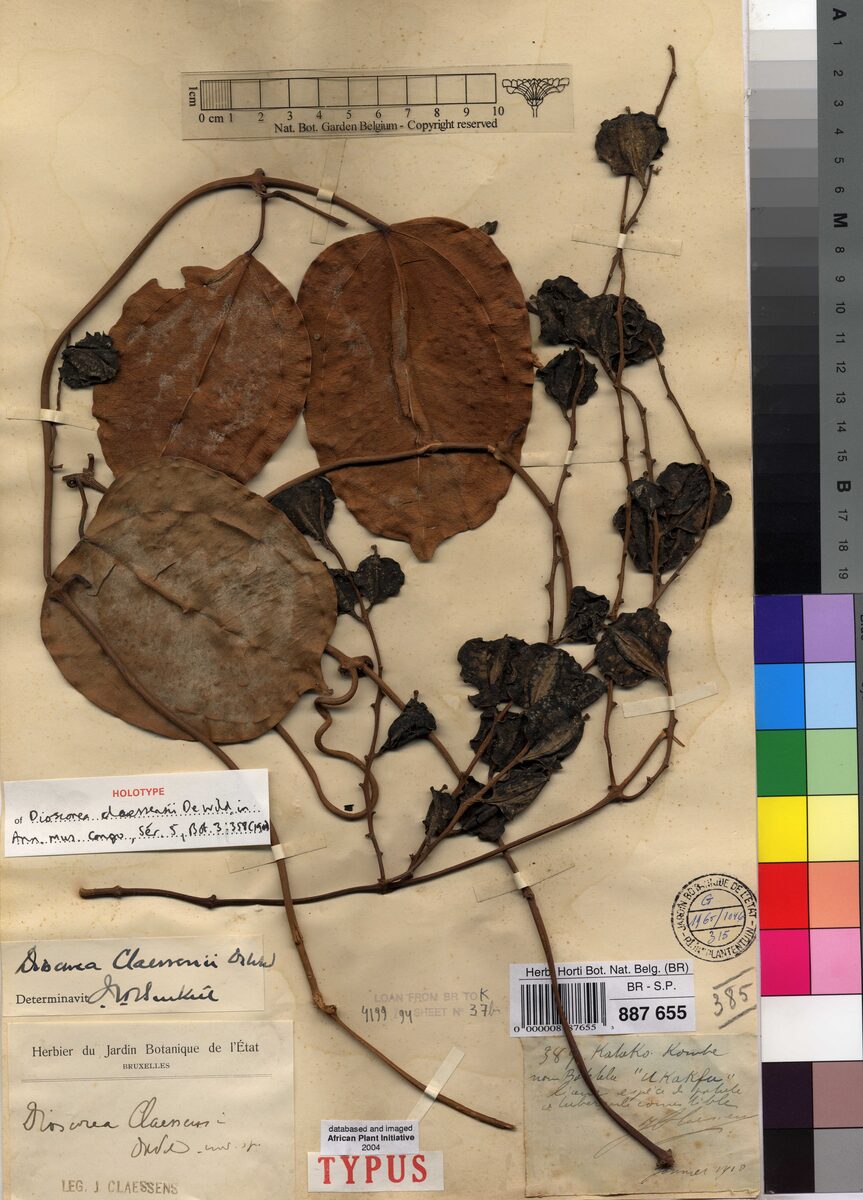
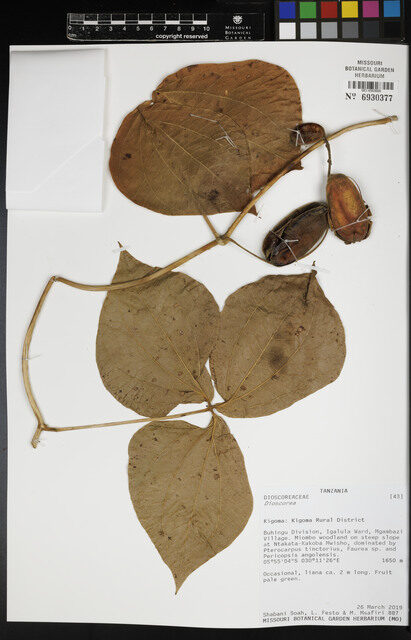
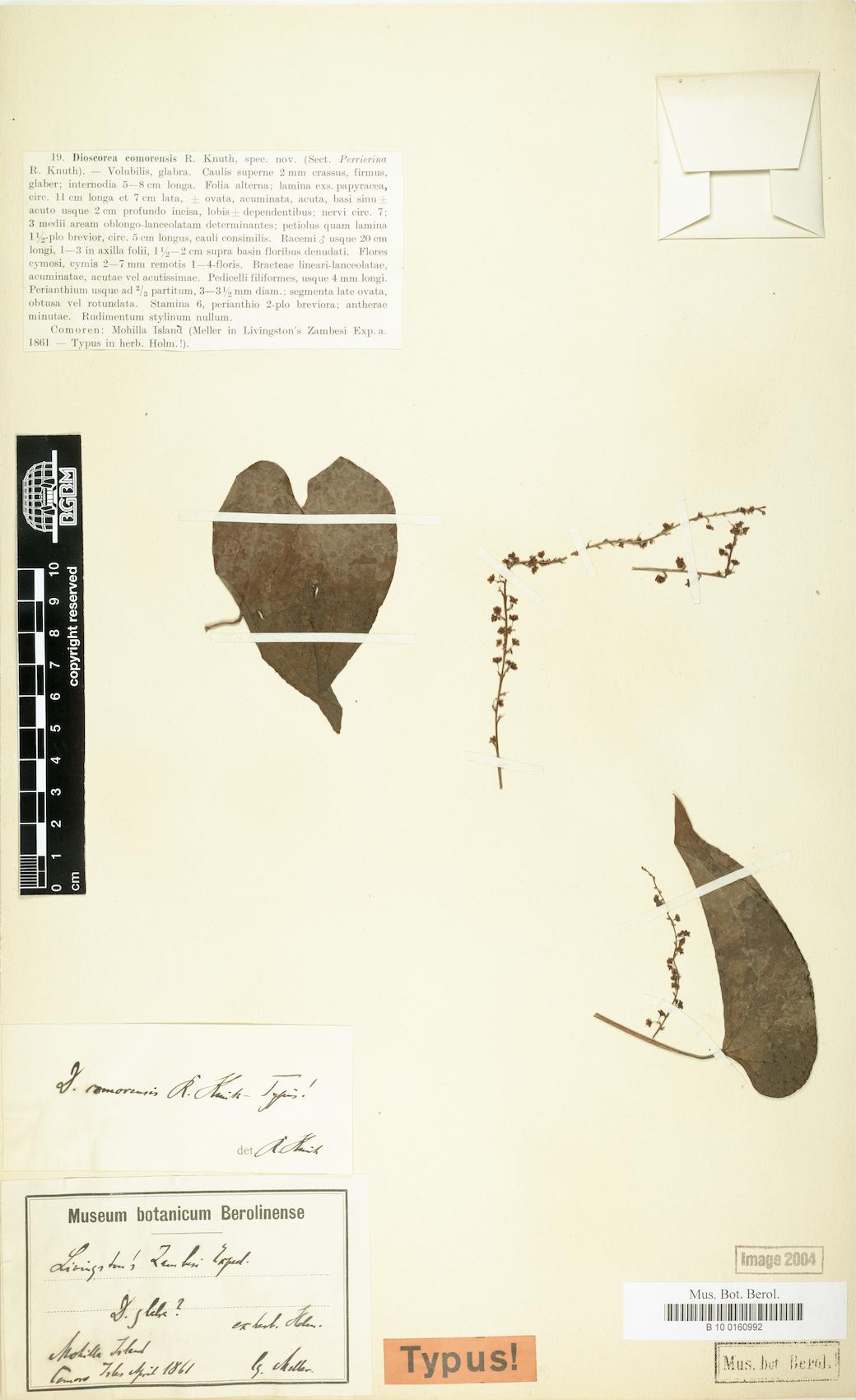
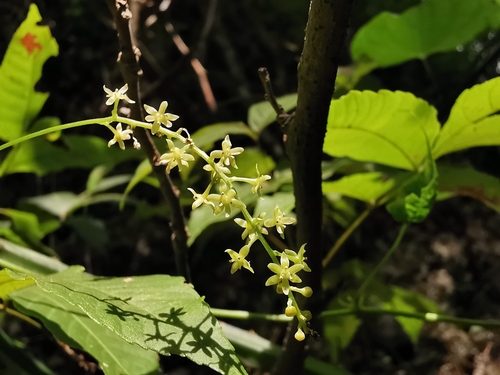
A yam. The tubers keep developing from year to year. The vines are spiny and grow 4 m high. The twine right handed. There can be bulbils along the vines.
Edible Uses
The root is only eaten in time of scarcity, and then after careful preparation. Even then a bitterness remains after cooking. Some alkaloid has been detected in Nigerian material.
Traditional Uses
Caution: The tuber needs careful preparation.
This uses section is brief — help expand it
Medicinal Uses
The leaves are rubbed onto cuts. Three leaves are rubbed on the temples in three applications in order to cure epilepsy. The leaves, after being passed through a fire, are pulped to a paste for rubbing on the head to relieve headache. A decoction of the stem is drunk as a treatment for vertigo and hernia.
Known Hazards
The tubers require careful preparation before consumption.
Distribution
A tropical plant. It grows in secondary clearings in rainforest in Congo. It suits humid locations.
Where It Grows
Africa, Burkina Faso, Cameroon, Central Africa, Central African Republic, CAR, Congo DR, Congo, Côte d'Ivoire, Equatorial-Guinea, Ghana, Ivory Coast, Liberia, Nigeria, Sierra Leone, West Africa,
Other Information
It is a popular food.
Notes
There are about 650 species of Dioscorea.
Synonyms
Also Known As
Amekiki, Akpa, Akponi, Apa, Baloko, Ekoko, Etaba, Ewo, Kokora, Kpeimkoh
References (12)
- Billong Fils, P. E., et al, 2020, Ethnobotanical survey of wild edible plants used by Baka people in southeastern Cameroon. Journal or Ethnobiology and Ethnomedicine. 16:64 p 7
- Burkill, H. M., 1985, The useful plants of west tropical Africa, Vol. 1. Kew.
- Dalziel, J. M., 1937, The Useful plants of west tropical Africa. Crown Agents for the Colonies London.
- Grivetti, L. E., 1980, Agricultural development: present and potential role of edible wild plants. Part 2: Sub-Saharan Africa, Report to the Department of State Agency for International Development. p 24, 32
- Hawthorne, W.& Marshall, C., 2013, Nimba Western Area Iron Ore Concentrator Mining Project Environmental and Social Impact Assessment. AcelorMittel Liberia. p 474
Show all 12 references Hide references
- Jardin, C., 1970, List of Foods Used In Africa, FAO Nutrition Information Document Series No 2.p 15
- Peters, C. R., O'Brien, E. M., and Drummond, R.B., 1992, Edible Wild plants of Sub-saharan Africa. Kew. p 17
- Sato, H., 2001, The potential of edible wild yams and yam-like plants as a staple food resource in the African Tropical Rain Forest. African Study Monographs Suppl. 26:123-134
- Tanno, T., 1981, Plant Utilization of the Mbuti Pygmies: With Special reference to their Material Culture and Use of Wild Vegetable Foods. Kyoto University Research. African Study Monographs 1:1-54
- Terashima, H., & Ichikawa, M., 2003, A comparative ethnobotany of the Mbuti and Efe hunter-gatherers in the Ituri Forest, Democratic Republic of Congo. African Study Monographs, 24 (1, 2): 1-168, March 2003
- World Checklist of Useful Plant Species 2020. Royal Botanic Gardens, Kew
- Yasuoka, H., 2009, Concentrated Distribution of Wild Yam Patches: Historical Ecology and the Subsistence of African Rainforest Hunter-Gatherers. Human Ecology 37:577-587