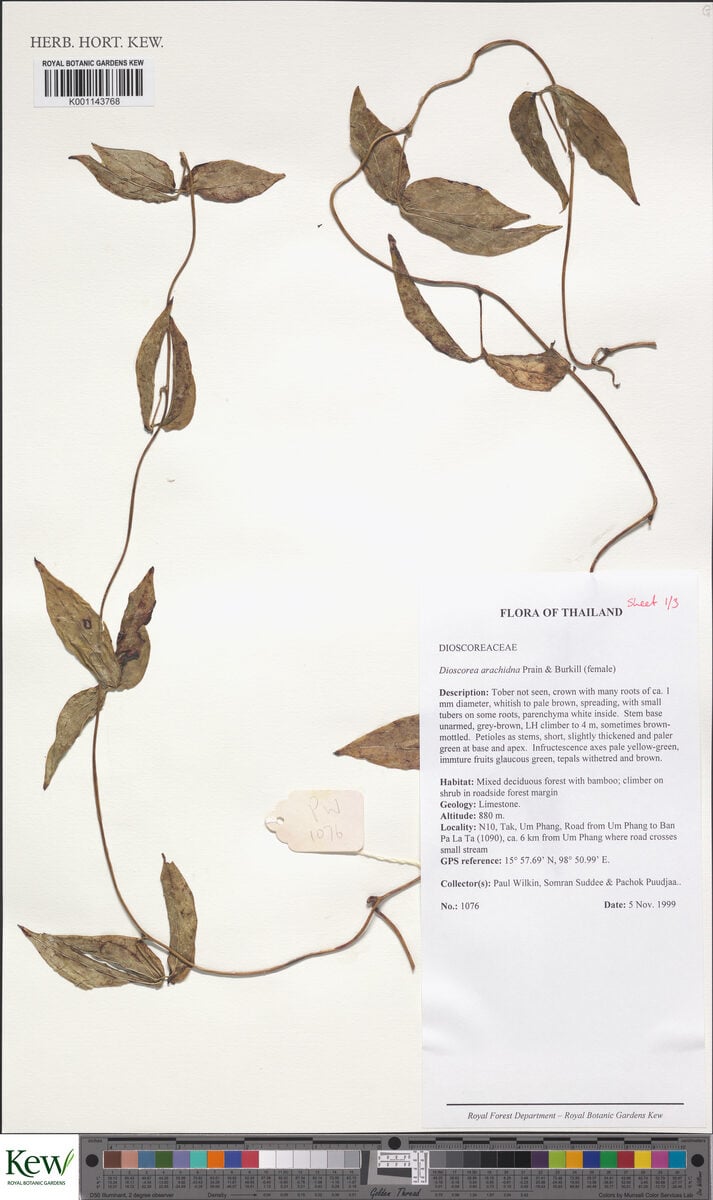
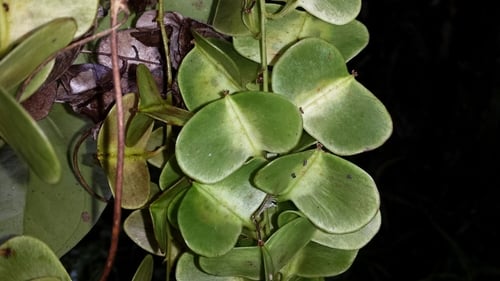
Dioscorea cochleariapiculata
De Willd.
gbif· cc-by-nc-sa
MBG
gbif· cc-by
Royal Botanic Gardens, Kew
gbif· cc-by
Royal Botanic Gardens, Kew
Description
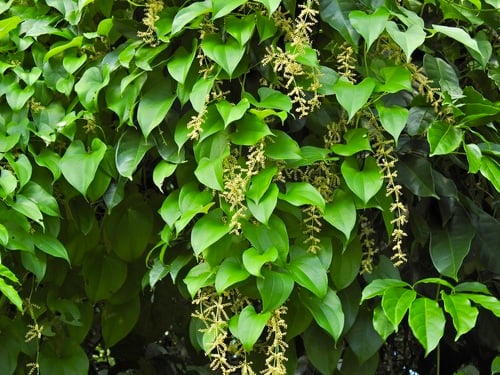
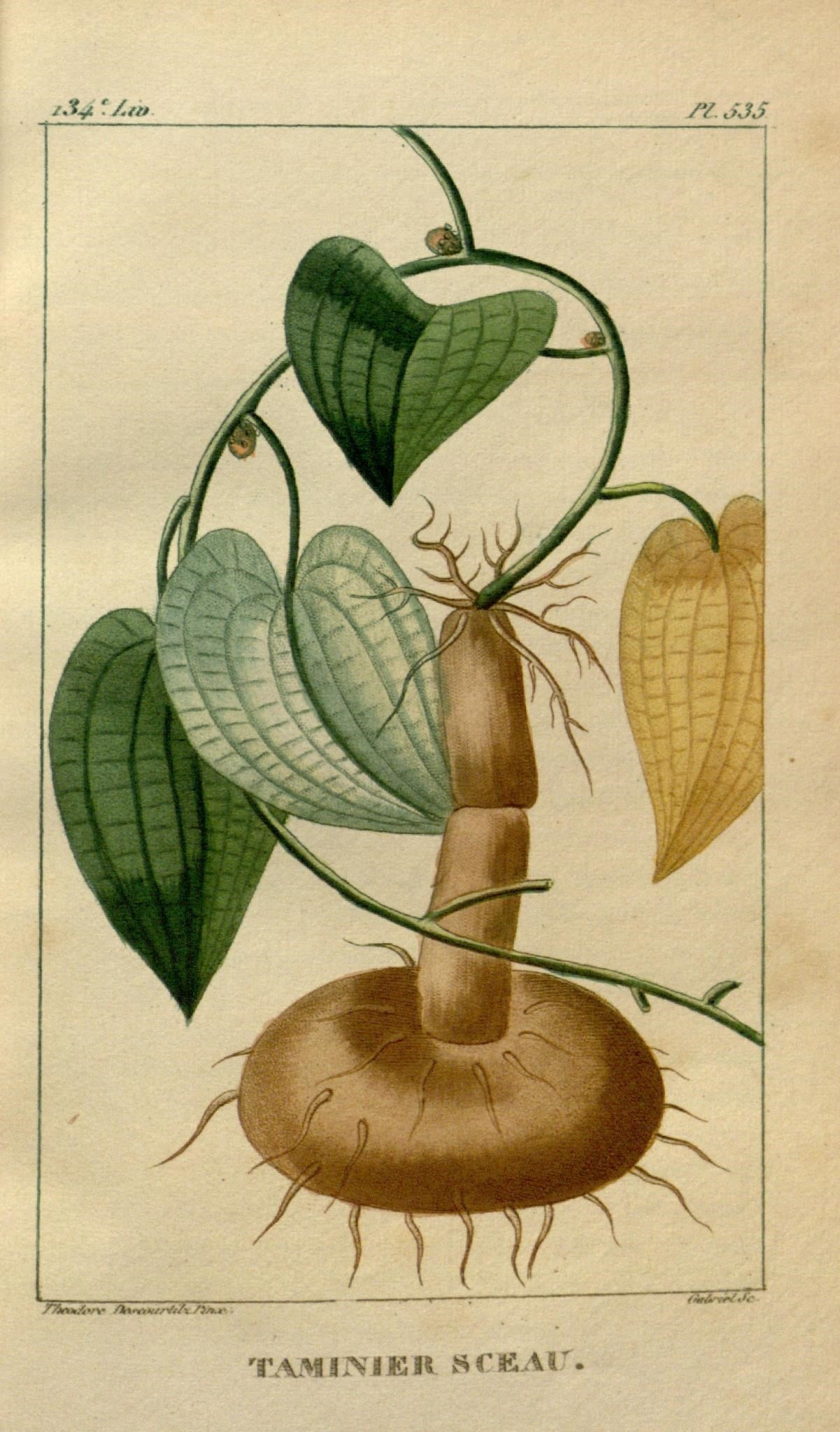
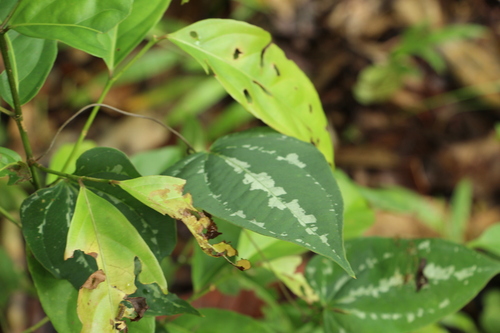
A yam. It is a climbing herb 10 m long. It has a single tuber with 4 lobes or there can be 4-5 tubers in a cluster. They are 10 cm across and a flattened round shape. They grow near the soil surface. The stem twines to the left. There are prickles near the base. The leaves are alternate and have 3 leaflets. These are rounded and have a tip at the end. There are often compound male flowers present when the leaves are just forming. The fruit is a capsule about 5 cm long by 2 cm wide.
Edible Uses
The tubers are used as a famine food after extensive cooking and processing—they must be washed and dried to remove alkaloids before consumption.
Traditional Uses
The tubers are used as a famine food after cooking and washing and drying to remove alkaloids.
This uses section is brief — help expand it
Known Hazards
The tubers contain alkaloids that must be removed by washing and drying before the plant is safe to eat.
Distribution
It is a tropical plant. It grows near the edges of forests and in termite mounds. It is often on sandy soils and near streams. It grows between 400-1,600 m altitude.
Where It Grows
Africa, Burundi, Central Africa, Congo DR, East Africa, Malawi, Mozambique, Namibia, Southern Africa, Tanzania, Zambia, Zimbabwe,
Cultivation
Prefers well-drained, sandy soils in the wild.
Other Information
A famine food.
Synonyms
Also Known As
Iligam Itugu, Ishariga, Kilumbu, Matembe, Mpeta, Ndia, Numbu
References (6)
- Bruschi, P., et al, 2014, Traditional use of plants in a rural community of Mozambique and possible links with Miombo degradation and harvesting sustainability. Journal of Ethnobiology and Ethnomedicine. 2014, 10:59
- Fowler, D. G., 2007, Zambian Plants: Their Vernacular Names and Uses. Kew. p 66
- http://aflora.africa.kyoto-u.ac.jp
- Ruffo, C. K., Birnie, A. & Tengnas, B., 2002, Edible Wild Plants of Tanzania. RELMA p 278
- Wilkin, P., 2001, Dioscoreaceae of South-Central Africa. Kew Bulletin, Vol. 56, No. 2 (2001), pp 361-404
Show all 6 references Hide references
- Yamada, T., 1999, A report of the Ethnobotany of the Nyindu in the Eastern part of the former Zaire. African Study Monographs 20(1):1-72