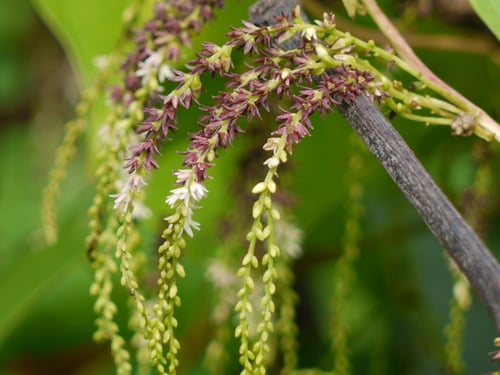
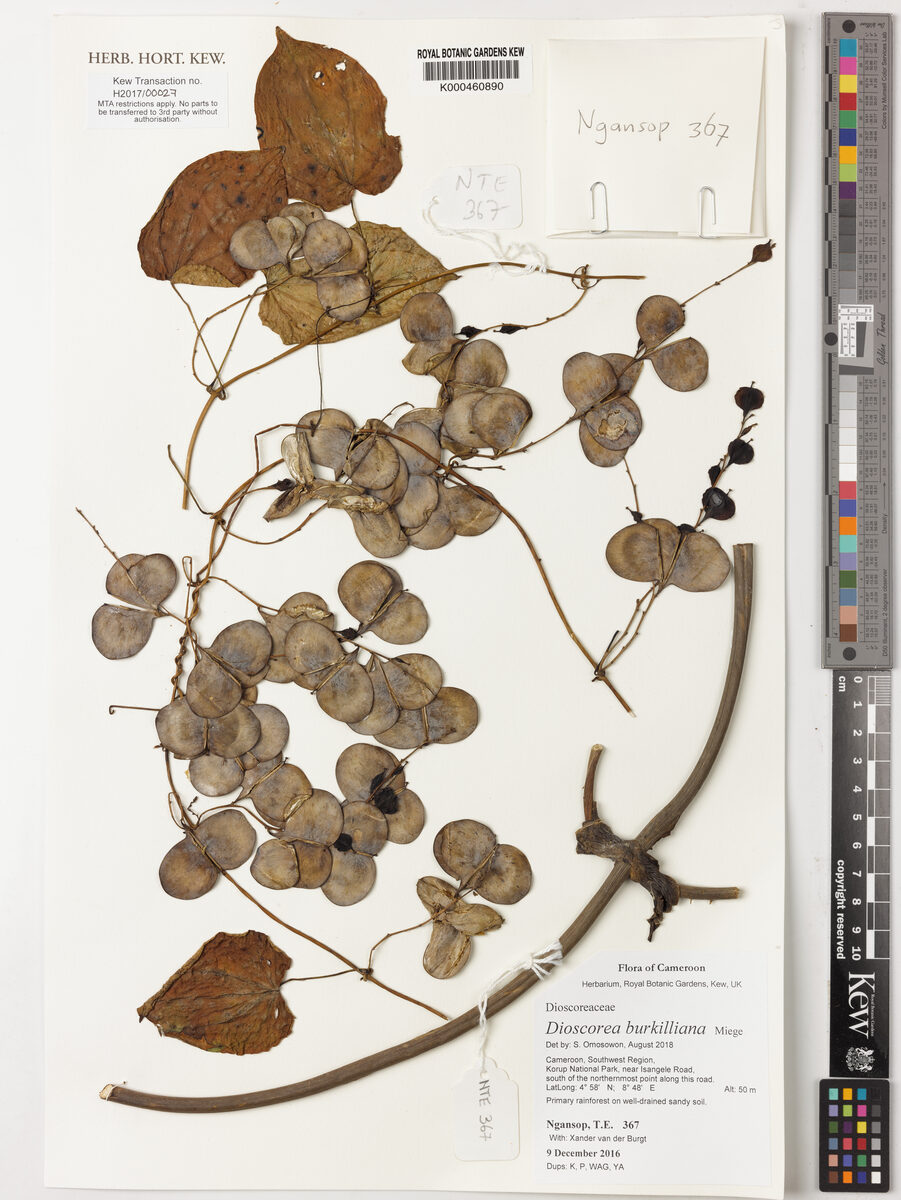
Dioscorea preussii
Pax
Preuss' dioscorea
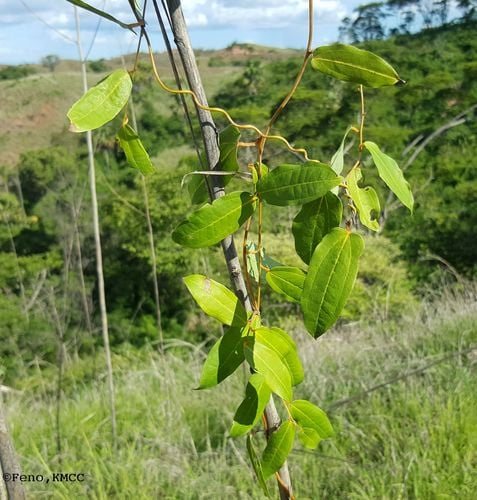
iNaturalist· cc-by-nc
(c) iles-ecologiques, some rights reserved (CC BY-NC)
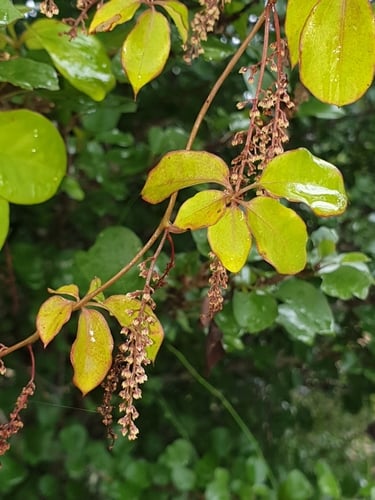
iNaturalist· cc-by-nc
(c) Bart Wursten, some rights reserved (CC BY-NC), uploaded by Bart Wursten
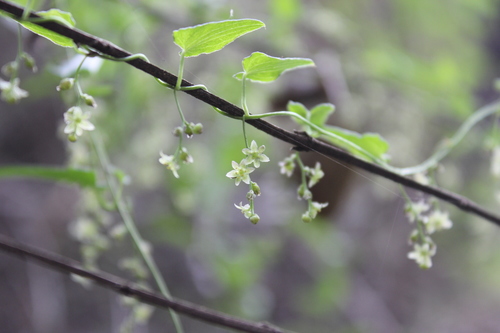
iNaturalist· cc-by-nc
(c) iles-ecologiques, some rights reserved (CC BY-NC)
Description
A yam. The vines can be 30 m long. There are 1 or 2 tubers. They are 2 cm wide and 50 cm long. These extend downwards into the soil and become fatter with depth.
Edible Uses
Tuber - cooked. The tubers are very caustic and are only used as a famine food, needing prolonged soaking and washing over a period of 15 days before being suitable to eat. The root is up to 40cm long, but narrow.
Traditional Uses
The tubers are eaten in times of famine.
This uses section is brief — help expand it
Distribution
A tropical plant. It grows in secondary clearings in rainforest in Congo. It suits humid locations. It grows in woodland savannah, along rivers and in palm groves.
Where It Grows
Africa, Angola, Benin, Cameroon, Central Africa, Central African Republic, CAR, Congo DR, Congo R, Côte d'Ivoire, East Africa, Gambia, Guinea, Guinée, Guinea-Bissau, Ivory Coast, Liberia, Mozambique, Nigeria, Senegal, Sierra Leone, Southern Africa, Sudan, Togo, Uganda, West Africa,
Other Uses
A fibre obtained from the stem is used for various purposes. (refers to var hylophila).
Other Information
They are also cultivated. It is often a famine food.
Notes
There are about 650 species of Dioscorea.
Nutrition
| Part | Moisture | kJ | kcal | Protein | Vit A | Vit C | Iron | Zinc |
|---|---|---|---|---|---|---|---|---|
| Tuber | 68.8 | 485 | 116 | 3 | — | — | — | — |
Synonyms
Also Known As
aka, AmambBombopale, Dandam-o, Dandam, Dena fare, Etete, Etoco-n'sanha, Etoe, Mala, Munhanha, N'paba, Umpaba
References (13)
- Bot. Jahrb. Syst. 15:147. 1892
- Bruschi, P., et al, 2014, Traditional use of plants in a rural community of Mozambique and possible links with Miombo degradation and harvesting sustainability. Journal of Ethnobiology and Ethnomedicine. 2014, 10:59
- Busson, 1965,
- Grivetti, L. E., 1980, Agricultural development: present and potential role of edible wild plants. Part 2: Sub-Saharan Africa, Report to the Department of State Agency for International Development. p 24, 32
- Herb., E. A., 1981,
Show all 13 references Hide references
- Jardin, C., 1970, List of Foods Used In Africa, FAO Nutrition Information Document Series No 2.p 14
- IRVINE,
- Lim, T. K., 2015, Edible Medicinal and Non Medicinal Plants. Volume 9, Modified Stems, Roots, Bulbs. Springer p 37
- N'Danikou, S. et al, 2010, Eliciting Local Values of Wild Edible Plants in Southern Bénin to Identify Priority Species for Conservation. Economic Botany, 20(10), 2011, pp. 1–15.
- Nkeoua, G. & Boundzanga, G. C., 1999, Donnees sur les produits forestieres non ligneux en Republique du Congo. FAO. p 25
- Peters, C. R., O'Brien, E. M., and Drummond, R.B., 1992, Edible Wild plants of Sub-saharan Africa. Kew. p 17
- Wilkin, P., 2001, Dioscoreaceae of South-Central Africa. Kew Bulletin, Vol. 56, No. 2 (2001), pp 361-404
- World Checklist of Useful Plant Species 2020. Royal Botanic Gardens, Kew