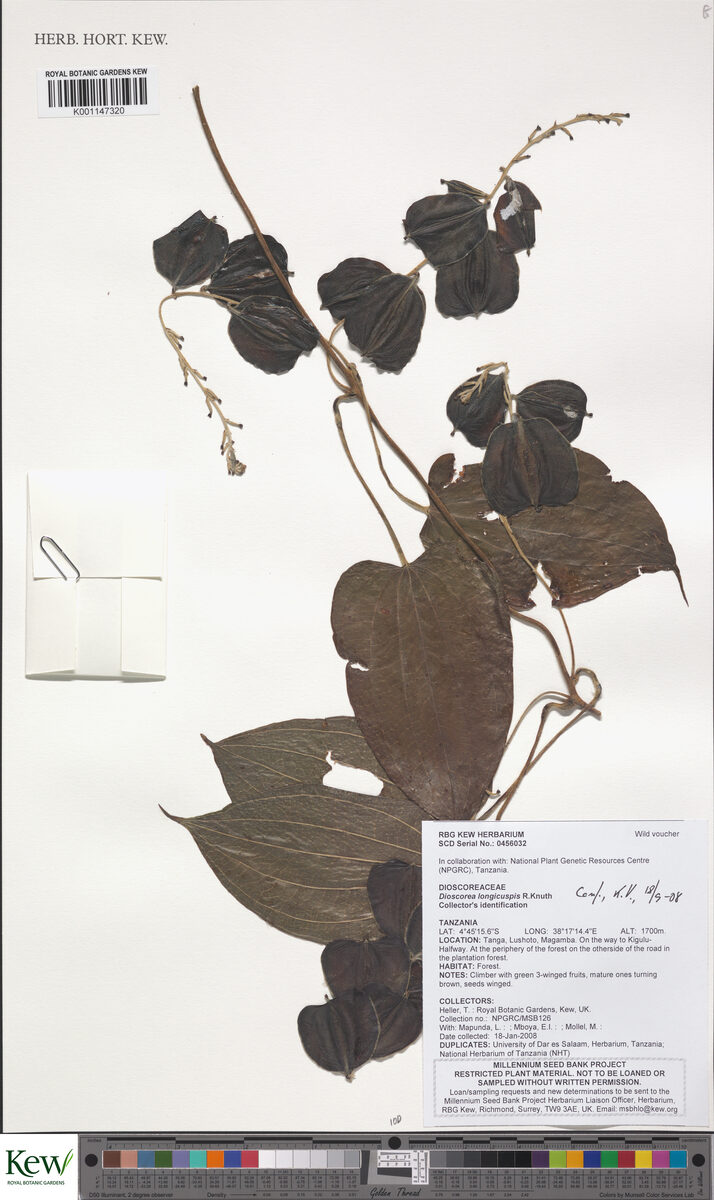
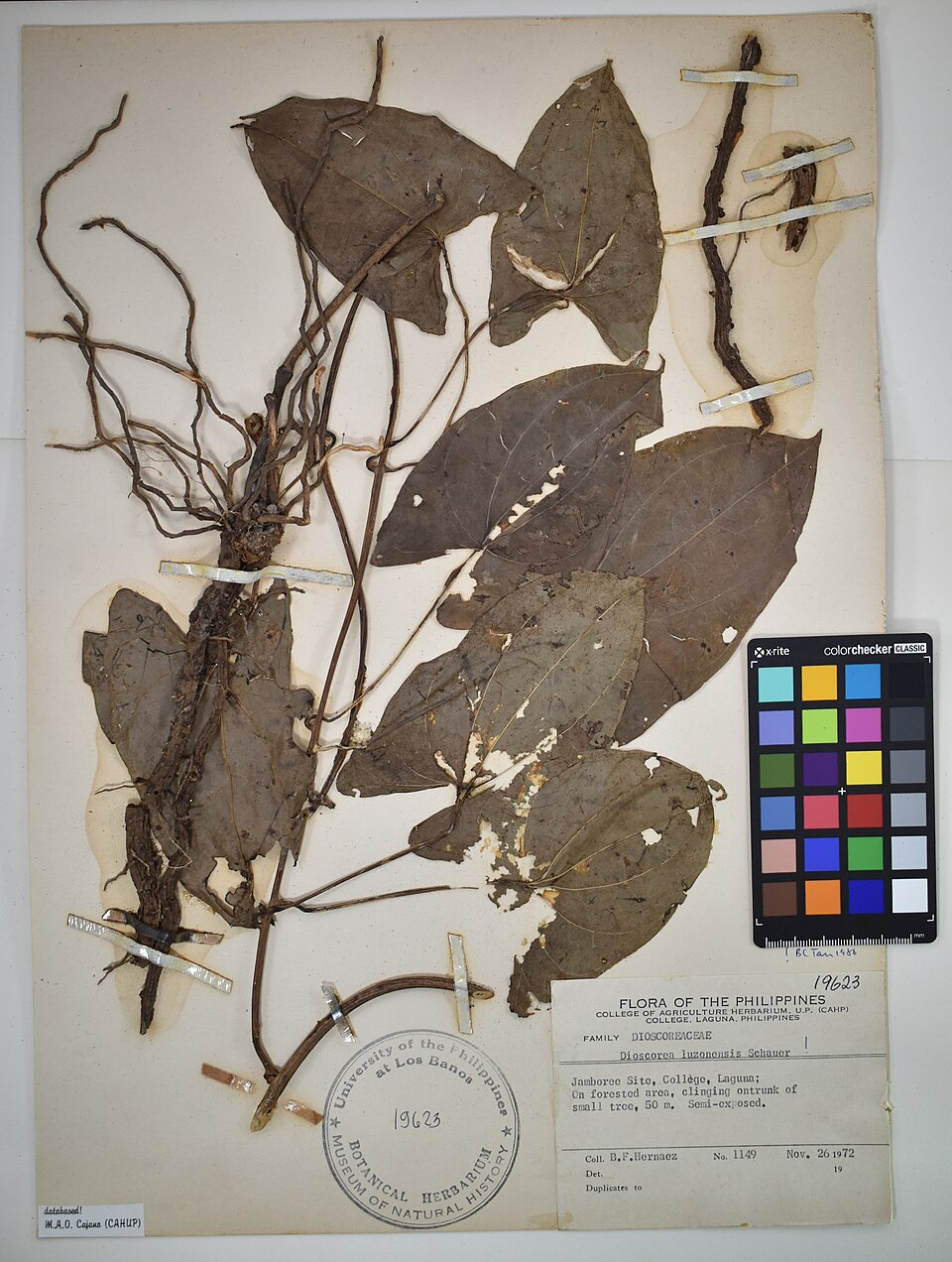
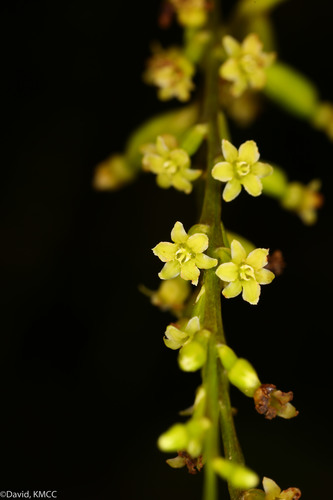
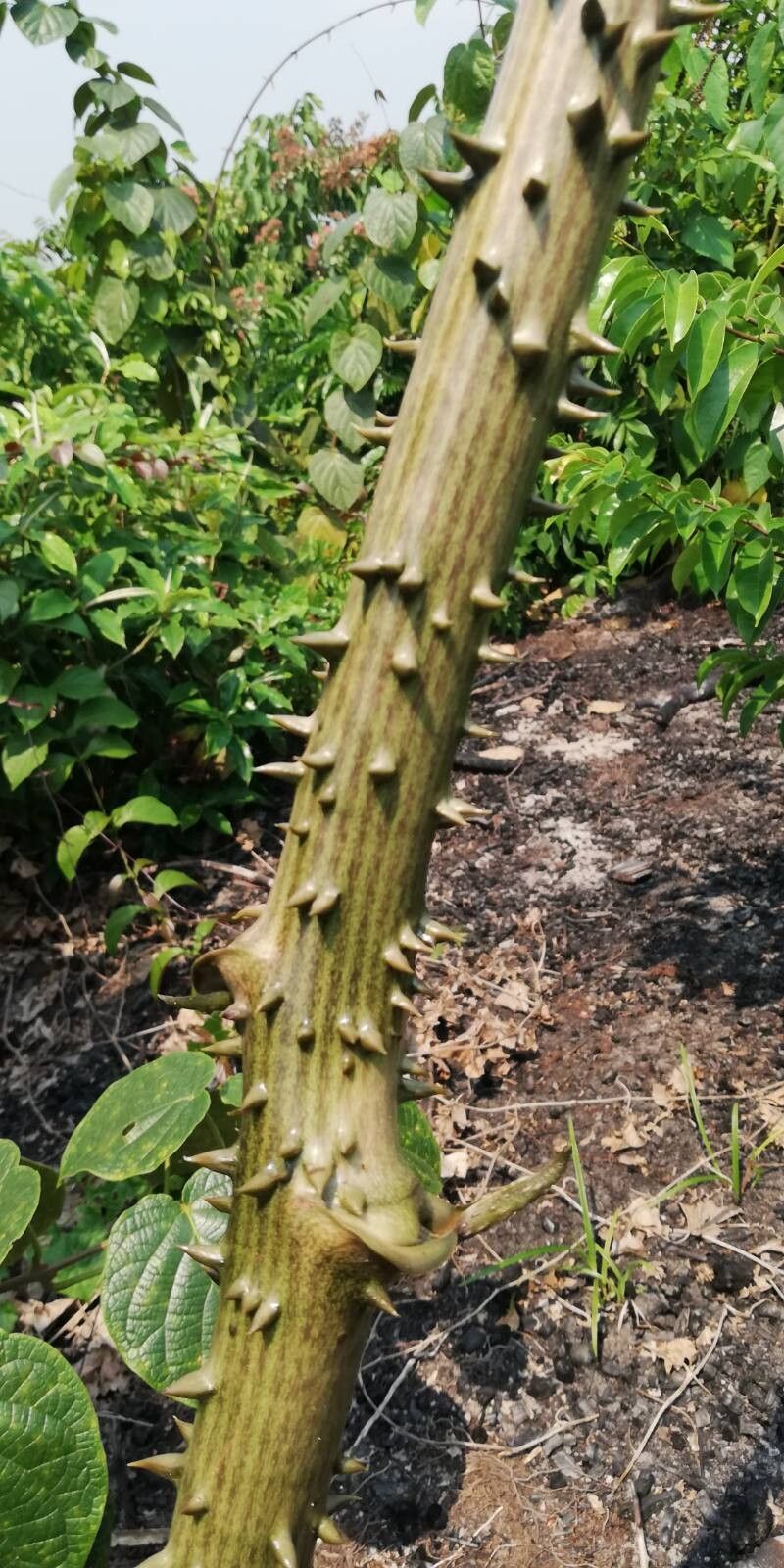
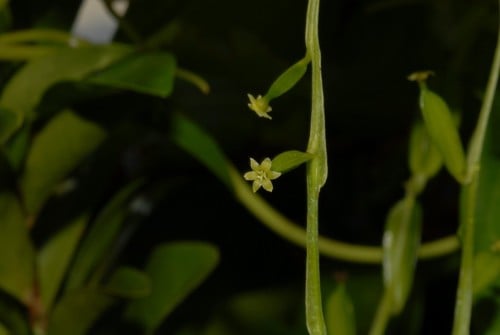
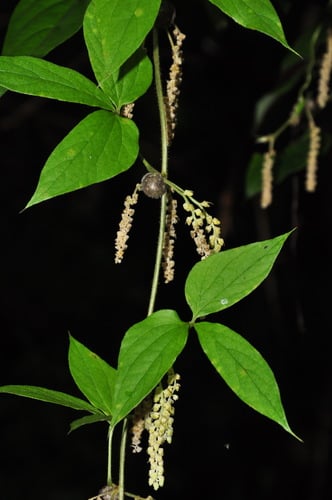
Dioscorea dodecaneura
Vell.
Cara barbado
iNaturalist· cc-by-nc-sa
(c) Rich Hoyer, some rights reserved (CC BY-NC-SA), uploaded by Rich Hoyer
iNaturalist· cc-by-nc
(c) dpriz, some rights reserved (CC BY-NC)
Description
A cultivated yam in the Dioscoreaceae family with edible tubers, native to tropical regions. About 650 species of Dioscorea exist, of which this is one.
Edible Uses
The tubers and roots are eaten.
Medicinal Uses
The root is said to be cardiotonic. It is used in the treatment of diabetes.
Distribution
A tropical plant.
Where It Grows
Brazil, Central America, Colombia, Ecuador, French Guiana, Guianas, Guyana, Paraguay, Peru, South America, Suriname,
Other Information
It is a cultivated yam.
Notes
There are about 650 species of Dioscorea.
Nutrition
| Part | Moisture | kJ | kcal | Protein | Vit A | Vit C | Iron | Zinc |
|---|---|---|---|---|---|---|---|---|
| Tubers | — | — | 9.7 | — | — | — | — | — |
Synonyms
Dioscorea anthropophagorum A. Chev. ex Jum.Dioscorea bangii R. KnuthDioscorea discolor KunthDioscorea dodecandra Steud. [Spelling variant]Dioscorea dodecaneura var. maronensis Uline ex R. KnuthDioscorea dodecaneura var. villosa R. KnuthDioscorea hebantha Mart. ex Griseb.Dioscorea huallagensis R. KnuthDioscorea illustrata W. BullDioscorea kita QuevaDioscorea racemosa Rusby [Illegitimate]Dioscorea sativa Thunb.Dioscorea vittata W. Bull ex Baker
Also Known As
Cara mimosa, Caratinga roxa, Inhame branco, Inhame de folha pintada, Maguma
References (11)
- Bernal, 2016, Catalogo de Plantas y Liquenes de Colombia, Volumen 1 p 1005
- Bortolotto, I. M., et al, 2018, Lista preliminar das plantas alimenticias nativas de Mato Grosso do Sul, Brasil. Iheringia, Serie Botanica, Porto Alegre, 73 (supl.):101-116
- Fl. flumin. icon. 10: t. 123. 1831 ("1827")
- Chu, E. P., Figueiredo-Ribeiro, R. C. L., 1991, Native and Exotic Species of Dioscorea Used as Food In Brazil. Economic Botany, Vol. 45, No. 4, pp. 467-479 (Also as Dioscorea illustrata)
- Gard. Chron. 1873:1730. 1873 (As Dioscorea illustrata)
Show all 11 references Hide references
- INFOODSUpdatedFGU-list.xls
- Keller, H., et al, 2010, Ethnobotanical resources of multipe-use Guarani Reserve, Misiones (Argentina): their importance to indigenous communities of Caramelito and Taruma Poty-1. Ethnobotany Bol. 22, 2010 pp 38-54
- Kermath, B. M., et al, 2014, Food Plants in the Americas: A survey of the domesticated, cultivated and wild plants used for Human food in North, Central and South America and the Caribbean. On line draft. p 308
- Kinupp, V. F., 2007, Plantas alimenticias nao-convencionais da regiao metropolitana de Porto Alegre, RS, Brazil p 76
- Kinupp, V. F. & Bergman, I., 2008, Protein and minerals of native species, potential vegetables and fruits. Cienc.Tecnol. Aliment. Vol. 28 No. 4 Campinas Oct/Dec.
- Mansfeld's Encyclopedia of Agrocultural and Horticultural Crops. Hanelt, P. (ed) p 2160