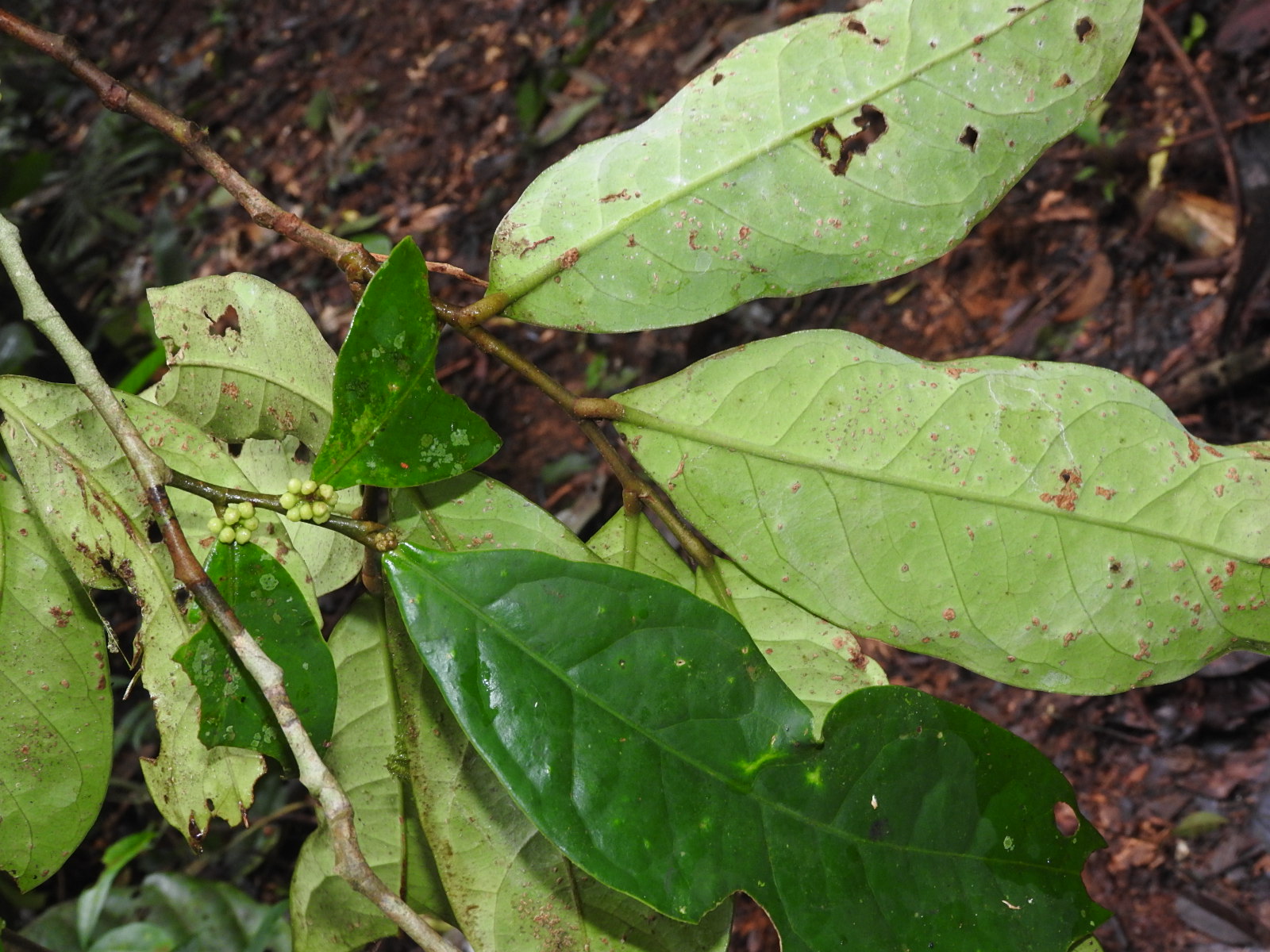
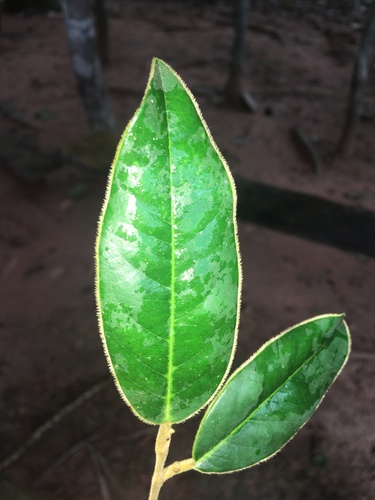
Dichapetalum papuanum
(Becc.) Boerl.
iNaturalist· cc-by-nc
(c) Rene, some rights reserved (CC BY-NC), uploaded by Rene
iNaturalist· cc-by
(c) Matthew Borella, some rights reserved (CC BY)
Description
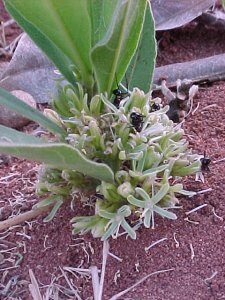
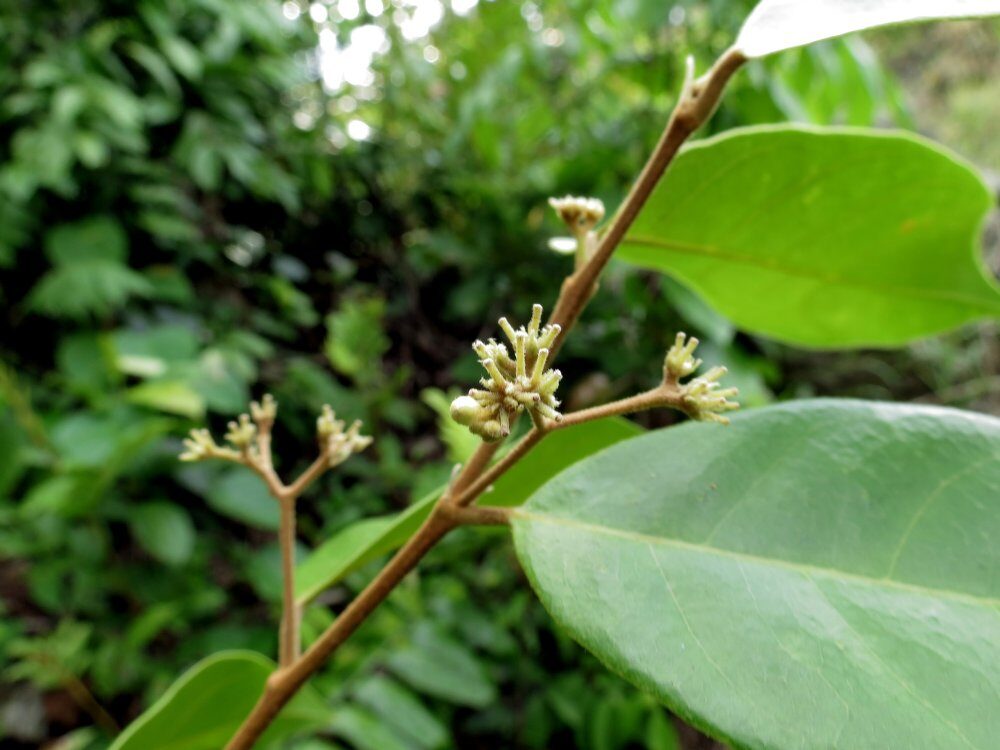
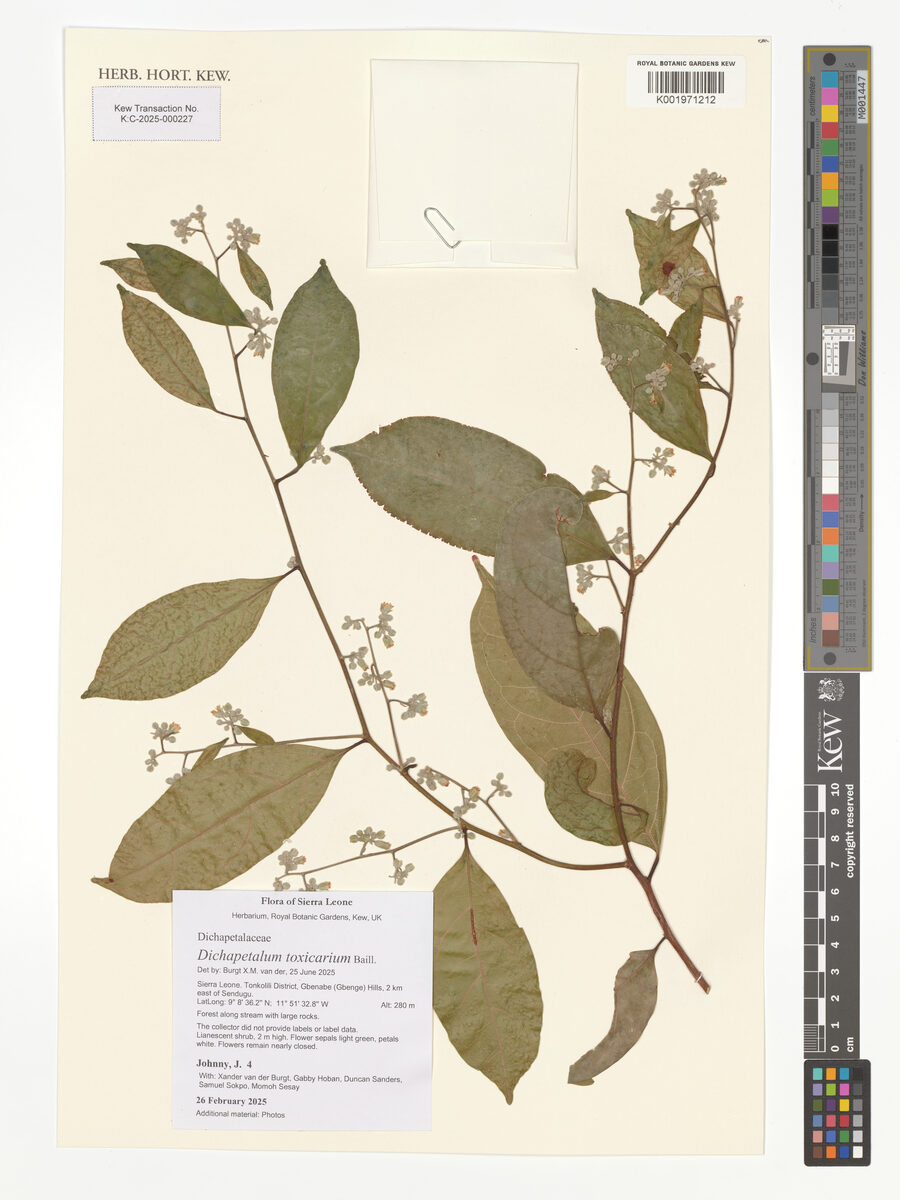
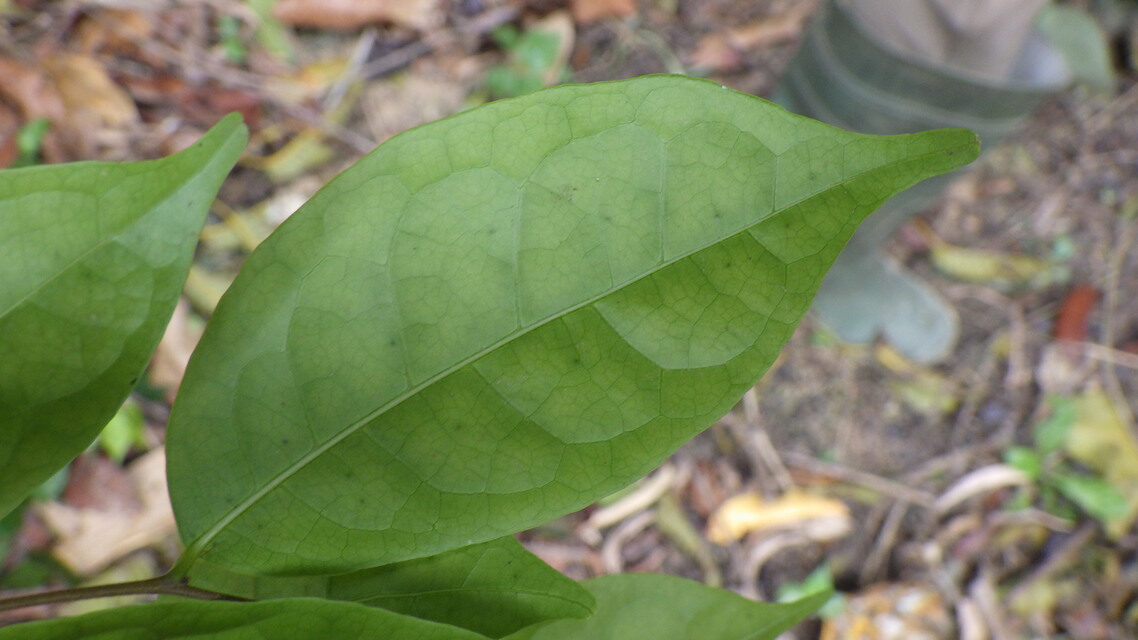
A bushy shrub up to 2 m tall. A shrub which climbs by attaching by roots from the nodes. Young shoots are hairy. The small branches are angular. The leaves are simple and oval or sword shaped. They are 12 cm long by 4 cm wide. They are bright green with wavy edges. The leaf stalk is 2-3 cm long. The flowers occur in clusters. They are small (0.5 cm across) and cream or green. The fruit are fleshy and orange. They have 1-4 lobes. They are about 1.5 cm long. They are edible.
Edible Uses
The fleshy orange fruit are edible.
Traditional Uses
CAUTION: The leaves are poisonous. The fruit are eaten.
This uses section is brief — help expand it
Known Hazards
The leaves are poisonous.
Distribution
It grows in hill forest. A tropical and subtropical plant. It needs a sheltered position. It needs a well aerated soil. It suits a shady position. In tropical Queensland it grows between sea level and 1130 m altitude.
Where It Grows
Australia*, Indonesia, Pacific, Papua New Guinea, PNG, SE Asia, Solomon Islands,
Cultivation
They can be grown from fresh seed. They can possibly also be grown from cuttings.
Production
Plants are slow growing. In Australia the fruit ripen in April to May.
Notes
There are 200 Dichapetalum species. Most are in Africa.
Nutrition
| Part | Moisture | kJ | kcal | Protein | Vit A | Vit C | Iron | Zinc |
|---|---|---|---|---|---|---|---|---|
| Fruit | 80.1 | — | — | 2.1 | — | — | — | — |
Synonyms
References (7)
- Boerlage, J. G., 1890, Handl. Fl. Ned. Ind. 1: 199
- Borrell, O.W., 1989, An Annotated Checklist of the Flora of Kairiru Island, New Guinea. Marcellin College, Victoria Australia. p 68
- Cooper, W. and Cooper, W., 2004, Fruits of the Australian Tropical Rainforest. Nokomis Editions, Victoria, Australia. p 149
- Elliot, W.R., & Jones, D.L., 1984, Encyclopedia of Australian Plants suitable for cultivation. Vol 3. Lothian. p 263
- French, B.R., 2010, Food Plants of Solomon Islands. A Compendium. Food Plants International Inc. p 321
Show all 7 references Hide references
- Jackes, B.R., 2001, Plants of the Tropics. Rainforest to Heath. An Identification Guide. James Cook University. p49
- Jones D, L, 1986, Ornamental Rainforest Plants in Australia, Reed Books, p 211, 340