Deinanthe bifida
Maxim.
iNaturalist· cc-by-nc
(c) 李先祐 (Hsien-Yu Lee), some rights reserved (CC BY-NC)
iNaturalist· cc-by-nc
(c) 李先祐 (Hsien-Yu Lee), some rights reserved (CC BY-NC)
iNaturalist· cc-by-nc
(c) hakkahamushi, some rights reserved (CC BY-NC)
Summary
Source: WikipediaA slow-growing perennial reaching 0.4 m tall by 0.3 m wide, hardy to UK zone 7. Flowers appear August to September. Hermaphroditic plant suitable for light sandy and medium loamy, well-drained soils with mildly acid to basic pH. Grows in full or semi-shade and prefers moist conditions.
Description
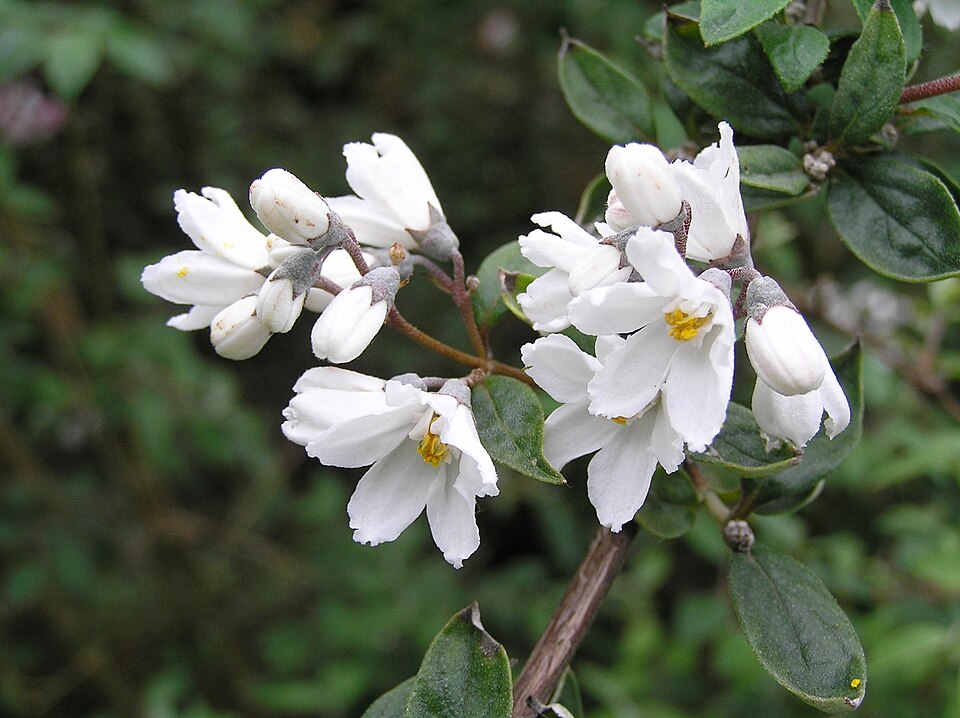
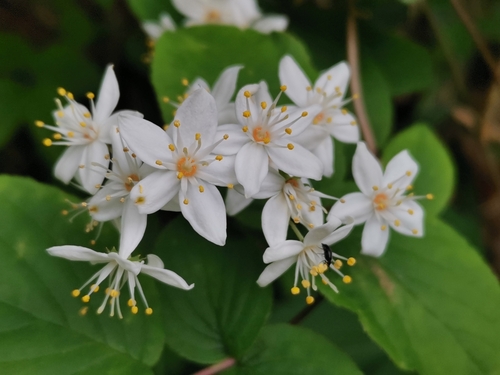
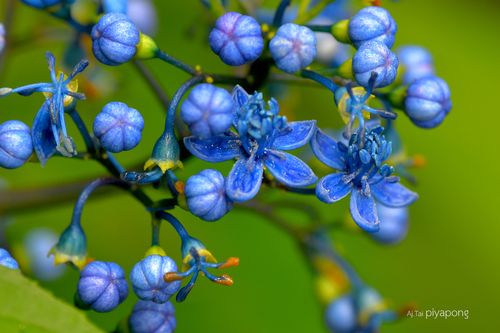
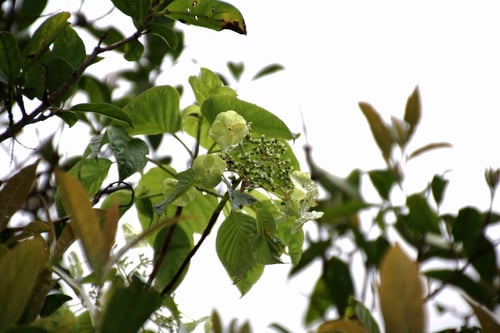
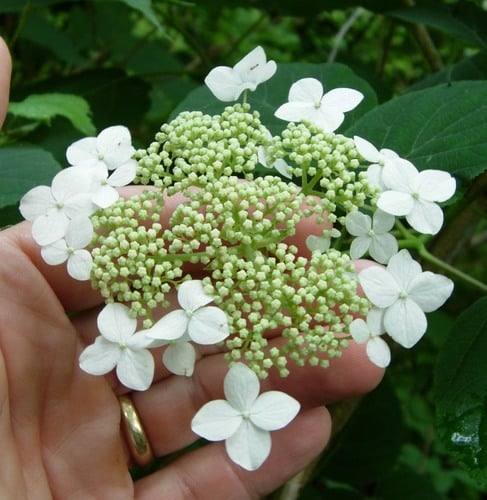
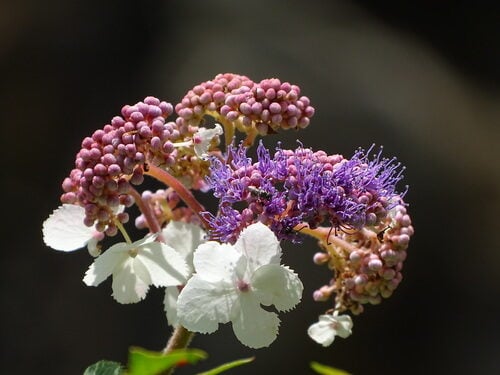
A herb that keeps growing from year to year. It grows 50 cm high and spreads 75 cm wide. The stems are erect and branching. The leaves are large and dark green and have 2 lobes. There are teeth around the edge. The leaf stalk is long. The flowers are creamy white. They have 4 petals. They are in groups at the top of the plant.
Edible Uses
Young leaves are eaten cooked. The root is also eaten cooked.
Medicinal Uses
No medicinal uses are known for this plant.
Distribution
It is a temperate plant. It will grow in most well-drained soils. It is best in rich soils and a protected partly shaded position. It is resistant to frost and damaged by drought.
Where It Grows
Asia, Australia, Japan*,
Cultivation
Requires a cool rich well-drained peaty soil with shelter from the wind. Intolerant of drought. Requires shade, at least from the morning sun, in spring and autumn. A slow-growing plant, it does well in a rock garden.
Propagation
Seed is best surface-sown as soon as it is ripe in a greenhouse, keeping the compost consistently moist. Germination usually occurs within 1–2 months at 18°C. Surface-sow stored seed in early spring. When large enough to handle, prick seedlings into individual pots and grow on in the greenhouse through at least their first winter. Plant out in early autumn or spring when large enough. Can also be propagated by division in spring.
Other Uses
No other uses are known for this plant.
Notes
There are 2 Deinanthe species. They have also been put in the family Saxifragaceae.
References (4)
- Bodkin, F., 1991, Encyclopedia Botanica. Cornstalk publishing, p 330
- Morley, B. & Everard, B., 1970, Wild Flowers of the World. Ebury press. Plate 99
- Plants for a Future database, The Field, Penpol, Lostwithiel, Cornwall, PL22 0NG, UK. http://www.scs.leeds.ac.uk/pfaf/
- Rev.Hydrang.3;mem.Acad.Petersb.Ser.Vii.10:2. 1867