Daphniphyllum himalayense
(Benth.) Mull. Arg.
wikimedia· cc-by-sa
DickDaniels (http://theworldbirds.org/) (via Wikimedia Commons)
wikimedia· pd
A,Ocram (via Wikimedia Commons)
wikimedia· cc-by
Sun Jiao (Interaccoonale) (via Wikimedia Commons)
Description
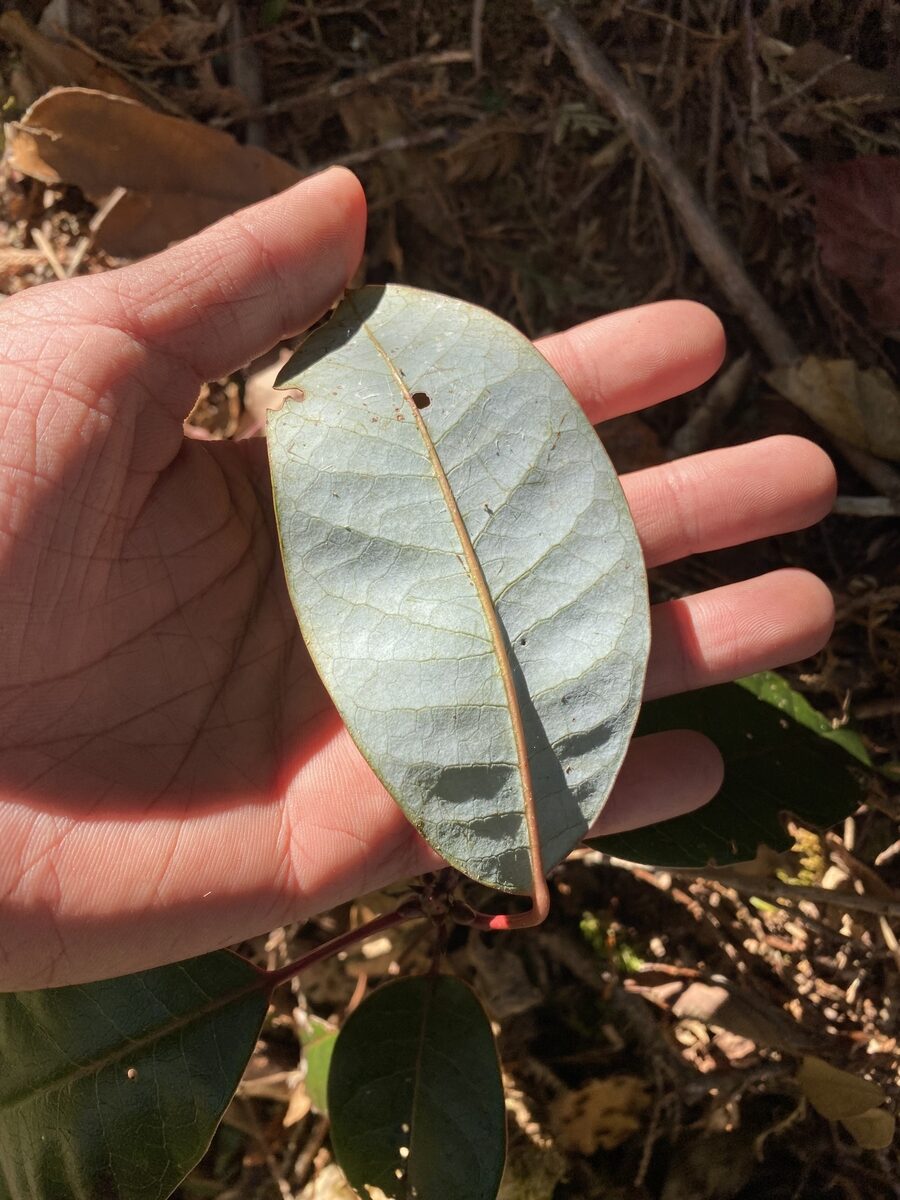
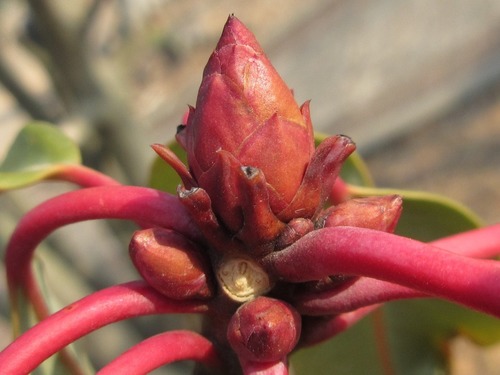
A small tree. It grows 3-15 m high and spreads 3-15 m wide. The flowers are small and do not have petals. The flowers have a strong smell. The fruit are pea shaped and bluish-black.
Edible Uses
The leaves and fruit are edible.
Distribution
It is a temperate and subtropical plant. It grows at 2,000-3,000 m altitude in the Himalayas. It suits hardiness zones 6-11. In Yunnan. Arboretum Tasmania.
Where It Grows
Asia, Australia, Bhutan, China, Himalayas, India, Indochina, Myanmar, Nepal, Northeastern India, SE Asia, Tasmania, Tibet,
Cultivation
Plants are grown from seed.
Notes
There are 15 Daphniphyllum species.
References (5)
- Ambasta, S.P. (Ed.), 2000, The Useful Plants of India. CSIR India. p 163
- Cundall, P., (ed.), 2004, Gardening Australia: flora: the gardener's bible. ABC Books. p 474
- A. L. P. P. de Candolle, Prodr. 16(1):4. 1869 "himalayense"
- Gangwar, A. K. & Ramakrishnan, P. S., 1990, Ethnobotanical Notes on Some Tribes of Arunachal Pradesh, Northeastern India. Economic Botany, Vol. 44, No. 1 pp. 94-105
- Plants for a Future database, The Field, Penpol, Lostwithiel, Cornwall, PL22 0NG, UK. http://www.scs.leeds.ac.uk/pfaf/